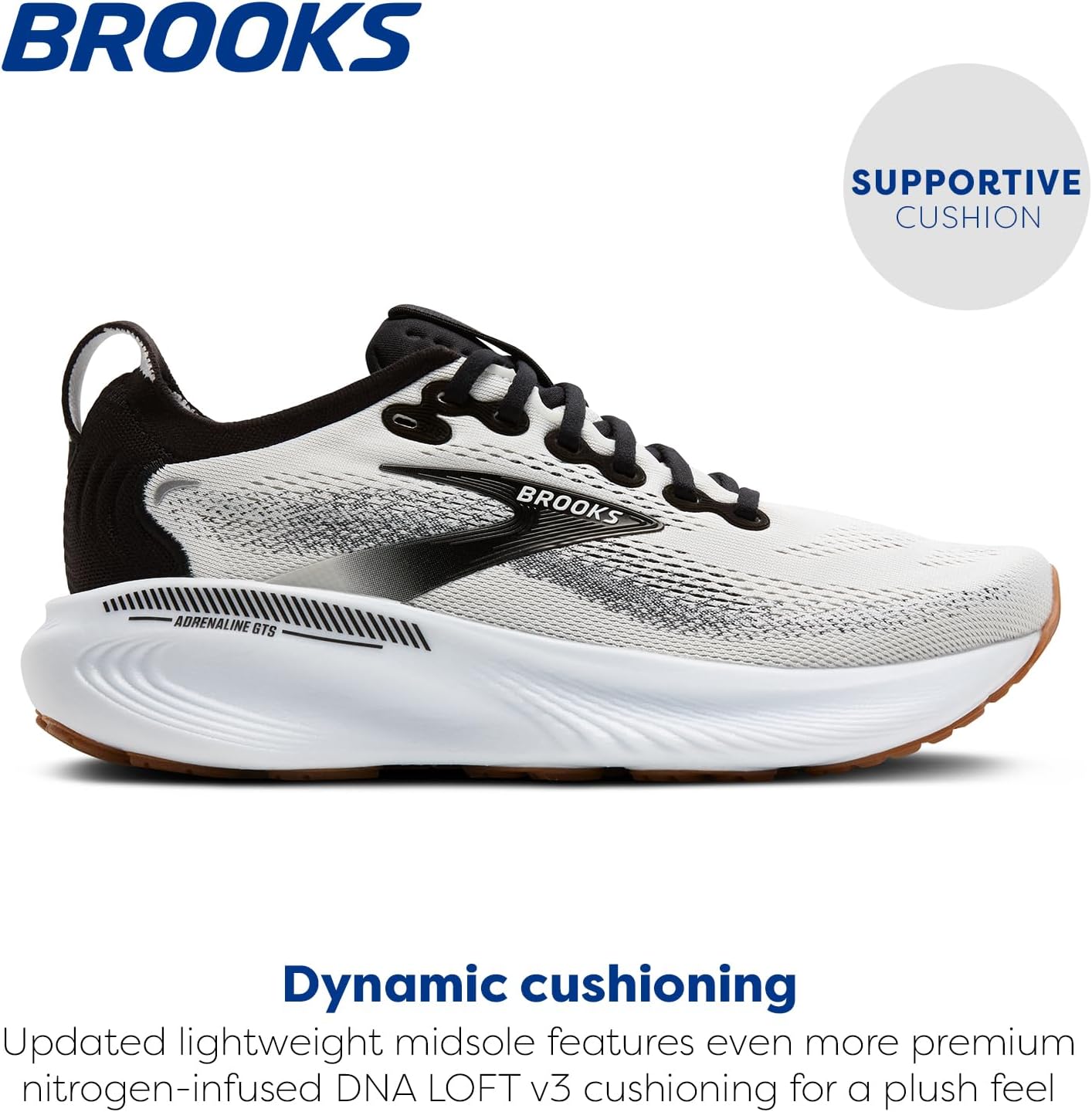
If you’ve been standing in the shoe aisle — or the digital equivalent of one — staring at two Brooks boxes and wondering what’s actually different between them, you’re in good company. Brooks is one of the most trusted names in running for a consistent reason: their shoes fit a wider range of foot shapes reliably, and they’ve built two distinct philosophies into these two models. The Adrenaline GTS 25 is a stability trainer, designed with built-in architecture to guide your foot through its natural motion and reduce excessive inward rolling. The Glycerin GTS 22 is a max-cushion trainer with a stability assist — think of it as a plush sofa that also keeps a gentle hand on your shoulder. This article breaks down which shoe fits which runner, organized around the real conditions and goals buyers bring to this decision.
| EDITOR'S PICKBrooks Men’s Adrenaline GTS 25… | Mid-tierBrooks Men’s Glycerin GTS 22 Su… | Budget pickBrooks Men’s Glycerin 22 Neutra… | |
|---|---|---|---|
| Support Type | Supportive | Supportive | Neutral |
| Size | 10.5 Wide | 10 | 10.5 |
| Model | Adrenaline GTS 25 | Glycerin GTS 22 | Glycerin 22 |
| Color | White/Black/White | Black/Grey/White | Black/Grey/White |
| Category | Running/Walking | Running | Running |
| Price | $154.95 | $104.06 | $99.95 |
| See on Amazon → | See on Amazon → | See on Amazon → |
The Core Tradeoff: Guided Motion vs. Maximum Softness
The simplest framing: the Adrenaline GTS 25 prioritizes control, and the Glycerin GTS 22 prioritizes comfort — but both offer enough of the other that the line isn’t as clean as the names suggest.
Adrenaline GTS 25 by the numbers:
- Stack height: 36mm heel / 24mm forefoot (12mm drop)
- Weight: ~9.6 oz (men’s size 9)
- Midsole: DNA LOFT v3 foam with GuideRails support system
- Upper: engineered mesh with 3D Fit Print overlays
Glycerin GTS 22 by the numbers:
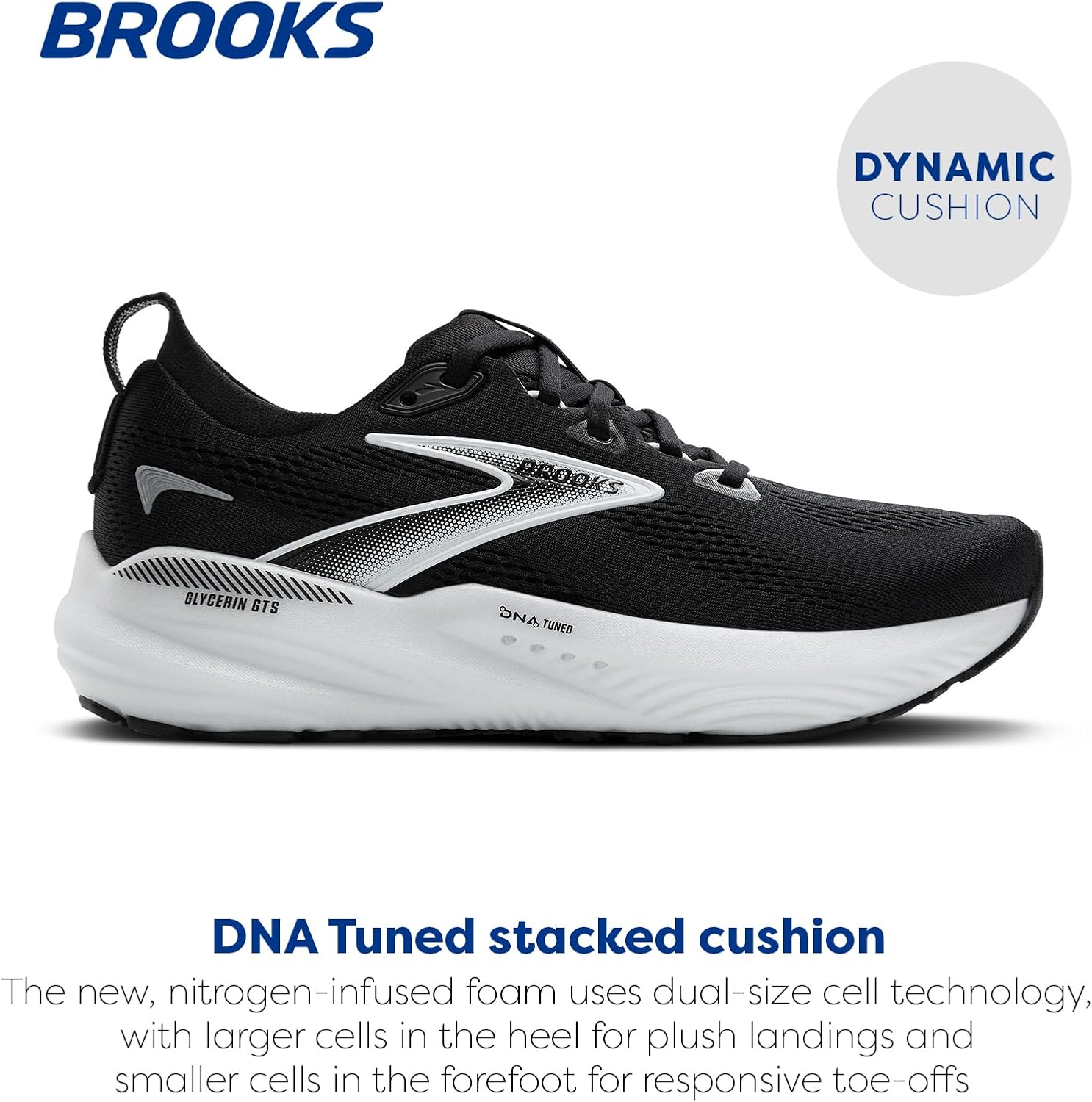
- Stack height: 37mm heel / 25mm forefoot (12mm drop)
- Weight: ~10.2 oz (men’s size 9)
- Midsole: nitrogen-infused DNA LOFT v3 foam
- Upper: engineered mesh, roomier forefoot box
The Glycerin GTS 22 is slightly taller and heavier, which maps directly to its identity: more foam underfoot, softer landing. The Adrenaline GTS 25 is the trimmer, more structured sibling.
GuideRails, the system present in both shoes but more pronounced in the Adrenaline, deserves a quick explanation. Rather than posting — adding a denser foam wedge to the arch side of the midsole, the approach older stability shoes used — GuideRails places extended crash pads along the heel’s inner and outer edges. The Running Clinic, in their overview of GuideRails technology and overpronation (2023), describes the intended effect as boundary-setting rather than corrective: the system catches your foot only when it strays outside your natural range of motion and does not redirect a neutral gait. Owners consistently report that the system feels passive in use — you don’t notice it until you need it.
How These Shoes Map to Real Runner Conditions
Most people choosing between these two aren’t asking “which shoe helps me run a 4:30 mile?” They’re asking “will this help my feet stop hurting?” Runner’s World’s Adrenaline GTS 25 review (2024) and RunRepeat’s Brooks Glycerin GTS 22 expert review (2025) both aggregate owner feedback across a wide population, and the patterns that emerge map neatly onto specific conditions and use cases.
Flat Feet and Plantar Fasciitis → Adrenaline GTS 25
Flat feet, meaning low or absent arch, tend to roll inward more aggressively during the stride cycle, placing sustained tension on the plantar fascia — the thick band of tissue along the bottom of the foot whose inflammation causes sharp heel pain. The Adrenaline GTS 25’s GuideRails system is built precisely for this gait pattern. Owners with both flat feet and plantar fasciitis consistently describe meaningful relief from the lateral support structure, particularly on longer runs where fatigue degrades gait control. The 12mm heel-to-toe drop also keeps the Achilles tendon in a slightly shortened, less strained position throughout the stride — relevant if Achilles tendinopathy is part of your history.
One nuance worth flagging: if you are primarily a forefoot striker — meaning your toes and the ball of your foot contact the ground first — the stability architecture of the GTS line may work against your natural mechanics. Several owner accounts in this gait category have redirected toward the ASICS Novablast 5, citing more responsive toe-off and less interference with their stride pattern. That is a genuinely useful real-buyer signal: forefoot strikers with stability concerns should cross-shop before committing to either shoe in this comparison.
Brooks
$104.06
In stock on Amazon
Check price on AmazonLong Shifts on Hard Floors → Glycerin GTS 22
Both shoes are legitimately worn by nurses, teachers, retail workers, and warehouse employees for 8–12 hour shifts. But the Glycerin GTS 22’s nitrogen-infused foam is the differentiator here. Nitrogen infusion changes the foam’s cell structure at the manufacturing level, producing smaller, more uniform bubbles that compress and rebound more consistently over thousands of repetitions. Owners who have run in previous Glycerin generations specifically call this out in RunRepeat’s Brooks Glycerin GTS 22 expert review (2025): heel impact is plush, but there is a push-off pop that prevents the dead, flat feeling that pure max-cushion foam can develop by hour six. If your feet swell during a long shift — a common complaint — the Glycerin GTS 22’s roomier forefoot box is also the better fit geometry.
For runners choosing between these two as daily trainers rather than work shoes, the same logic applies: the Glycerin GTS 22 earns its place on recovery days and high-mileage long runs where cumulative impact is the primary concern.
Brooks
$104.06
In stock on Amazon
Check price on AmazonTransitioning from Walking to Running → Adrenaline GTS 25
For someone who has been walking regularly and is now adding running intervals — couch-to-5K programs, run-walk progressions, or similar entry points — the Adrenaline GTS 25 is the more forgiving starting shoe. New runners have not yet built the stabilizer muscles that experienced runners rely on to manage lateral forces during the stride. The GuideRails system compensates for that gap during the early months of training, reducing the compensatory knee and ankle stress that often derails beginners before they reach a consistent rhythm. Runner’s World’s Adrenaline GTS 25 review (2024) and Podium Runner’s Brooks stability shoe roundup (2024) both position the Adrenaline line as a consistent recommendation for this population.
The cushion in the Adrenaline GTS 25 is ample enough for walk-run intervals, and its structured support reduces the small compensatory movements that can lead to overuse injuries in the shin, knee, and hip during the early adaptation phase.
Brooks
$104.06
In stock on Amazon
Check price on AmazonThe Glycerin GTS 22 Fit Warning You Shouldn’t Skip
This is not a minor footnote. It is the single most recurring complaint across Glycerin GTS 22 owner reviews aggregated by RunRepeat in their Brooks Glycerin GTS 22 expert review (2025): the wide version ran tight for some buyers. Not a little snug — tight enough to cause discomfort on longer runs. The resolution that appears across multiple accounts: going up a half size, even when ordering the wide-width variant.
If you’re ordering the Glycerin GTS 22:
- If you are between sizes, go up.
- If you have wide feet and planned to order the wide version, still consider going up a half size.
- If you have any forefoot width sensitivity, prioritize trying them on before committing to a long break-in run.
This is not a manufacturing defect — it is a fit geometry quirk consistent enough across buyer reports to factor into your purchase decision before the return window closes.
Head-to-Head: Comparing the Two Shoes Directly
The table below captures the key spec differences. The sections that follow break down the three most consequential comparison axes in detail.
| Feature | Adrenaline GTS 25 | Glycerin GTS 22 |
|---|---|---|
| Primary purpose | Stability trainer | Max-cushion trainer with stability |
| Stack height | 36mm heel / 24mm forefoot | 37mm heel / 25mm forefoot |
| Drop | 12mm | 12mm |
| Weight (men’s 9) | ~9.6 oz | ~10.2 oz |
| Foam type | DNA LOFT v3 | Nitrogen-infused DNA LOFT v3 |
| GuideRails intensity | More pronounced | Present, less aggressive |
| Best for | Flat feet, overpronation, new runners | Recovery runs, long shifts, high mileage |
| Fit note | True to size | Size up, especially in wide |
Cushion Feel and Foam Quality
The Glycerin GTS 22 wins this axis without debate. Its nitrogen-infused DNA LOFT v3 foam produces a noticeably softer heel strike and a livelier toe-off than the standard DNA LOFT v3 in the Adrenaline GTS 25. RunRepeat’s Brooks Glycerin GTS 22 expert review (2025) notes that this foam formulation holds its rebound characteristics over extended mileage better than previous Glycerin generations. The Adrenaline GTS 25 is not a harsh shoe — its cushion is genuinely comfortable — but if your purchase decision centers on softness per dollar, the Glycerin GTS 22 is the answer.
Brooks
$104.06
In stock on Amazon
Check price on AmazonStability Architecture and Gait Control
The Adrenaline GTS 25 wins this axis. Both shoes carry GuideRails, but the structural expression is more assertive in the Adrenaline. The Running Clinic’s overview of GuideRails technology and overpronation (2023) frames this distinction clearly: the Adrenaline line is engineered as a primary stability vehicle, while the Glycerin GTS line adds GuideRails as a secondary feature to a cushion-first platform. Runners with documented overpronation, flat feet, or a history of medial knee stress will feel a more meaningful intervention in the Adrenaline GTS 25 than in the Glycerin GTS 22.
Brooks
$104.06
In stock on Amazon
Check price on AmazonVersatility Across Run Types
This axis is closer. The Adrenaline GTS 25’s lighter weight and trimmer profile make it the more versatile shoe across training paces — it handles tempo efforts and longer easy runs without feeling sluggish. The Glycerin GTS 22’s additional foam depth and weight push it toward slower, higher-volume efforts: long runs, recovery jogs, and extended time on feet. Podium Runner’s Brooks stability shoe roundup (2024) positions the Adrenaline line as the go-to for runners who want one shoe for varied training, while the Glycerin line earns its place as a dedicated easy-day or recovery-day shoe in a multi-shoe rotation.
Brooks
$104.06
In stock on Amazon
Check price on AmazonThe Ghost 17 Comparison: Where Does It Fit In?
Some readers arrive at this comparison because they’re already running in the Brooks Ghost 17 and wondering whether to move into stability territory. The quick answer:
Ghost 17 → Adrenaline GTS 25: If you have noticed your knees aching inward or your inner ankle feeling stressed on longer runs, the GuideRails addition is a meaningful upgrade from the Ghost. The foam profile is similar enough that the transition feels familiar rather than jarring.
Ghost 17 → Glycerin GTS 22: If your only complaint about the Ghost is that you want more cushion underfoot — no structural issues, just a softer landing — the Glycerin GTS 22 is the natural step up. The nitrogen-infused foam makes a noticeable difference in heel softness relative to the Ghost’s DNA LOFT v2 formulation.
RunRepeat’s comparative coverage of Brooks family models positions the Glycerin above the Ghost in cushion rating and the Adrenaline above the Ghost in stability rating — they are upgrades along different axes, not direct replacements for each other.
Frequently Asked Questions
Is the Adrenaline GTS 25 good for flat feet and plantar fasciitis? Yes — it is one of the most consistently recommended shoes for this combination. The GuideRails system reduces inward rolling without overcorrecting a neutral stride, and the 12mm drop takes pressure off the Achilles and plantar fascia during heel strike. Owners with both conditions report meaningful comfort improvement on longer runs where fatigue degrades gait control. This assessment is consistent with Runner’s World’s Adrenaline GTS 25 review (2024).
How does the Glycerin GTS 22 differ from the Ghost 17 in cushion and stability? The Glycerin GTS 22 uses nitrogen-infused DNA LOFT v3 foam, which is noticeably softer and more responsive at heel impact than the Ghost 17’s DNA LOFT v2 foam. Both carry GuideRails, but the Glycerin’s taller stack gives it more give underfoot. Think of the Ghost 17 as the versatile daily trainer and the Glycerin GTS 22 as the recovery-day or high-mileage long-run option with a stability assist, as characterized in RunRepeat’s Brooks Glycerin GTS 22 expert review (2025).
Should I size up in the Glycerin GTS 22 even if I order wide? Based on recurring owner feedback documented in RunRepeat’s Brooks Glycerin GTS 22 expert review (2025): yes, probably. Multiple buyers who ordered the wide version still found the fit tight in the forefoot, and going up a half size resolved the issue. If you are on the border between two sizes, size up.
Can I wear Brooks GTS shoes all day at work, not just for running? Absolutely — many owners do. Nurses, teachers, and retail workers specifically name both the Adrenaline GTS 25 and Glycerin GTS 22 as their go-to all-day shoes. The Glycerin GTS 22’s extra foam depth has an edge for hard-floor, high-step-count environments. Both hold up to the repetitive compression of a long shift better than most lifestyle shoes.
What does the GuideRails system feel like in motion? Most owners describe it as passive — you don’t notice it when your gait is on track, and you feel a subtle catch only when your foot begins to roll outside its natural path. It does not feel like older medial-post stability shoes, which could feel like running with a wedge under one side. The Running Clinic’s overview of GuideRails technology and overpronation (2023) describes the intended effect as boundary-setting rather than corrective, and owner accounts match that framing closely.
Which Brooks shoe is better for someone transitioning from walking to running? The Adrenaline GTS 25. New runners have not yet built the stabilizer muscles experienced runners rely on to manage lateral forces. The GuideRails system compensates for that gap during early months, and the structured support reduces compensatory knee and ankle stress that often derails beginners. Both Podium Runner’s Brooks stability shoe roundup (2024) and Runner’s World’s Adrenaline GTS 25 review (2024) position this shoe as the go-to recommendation for this population.
The Decision Rule
If your primary concern is foot mechanics — flat feet, overpronation, plantar fasciitis, Achilles tenderness, or a gait that needs a guardrail — the Adrenaline GTS 25 is the right call. Its support system is functional rather than cosmetic, and the transition from an unstructured trainer is smoother than most stability shoes manage.
If your primary concern is comfort over distance or time on feet — long training runs, recovery days, extended work shifts, or simply wanting more foam without giving up all stability — the Glycerin GTS 22 is the move. Just size up, and if you are between sizes, do not negotiate with yourself.
If you are a forefoot striker with stability questions, cross-shop the ASICS Novablast 5 before committing to either. The GTS system is designed around heel and midfoot landing patterns, and a forefoot striker may find the architecture works against them rather than for them.
Both are excellent shoes. The right one depends entirely on what you are asking it to solve.