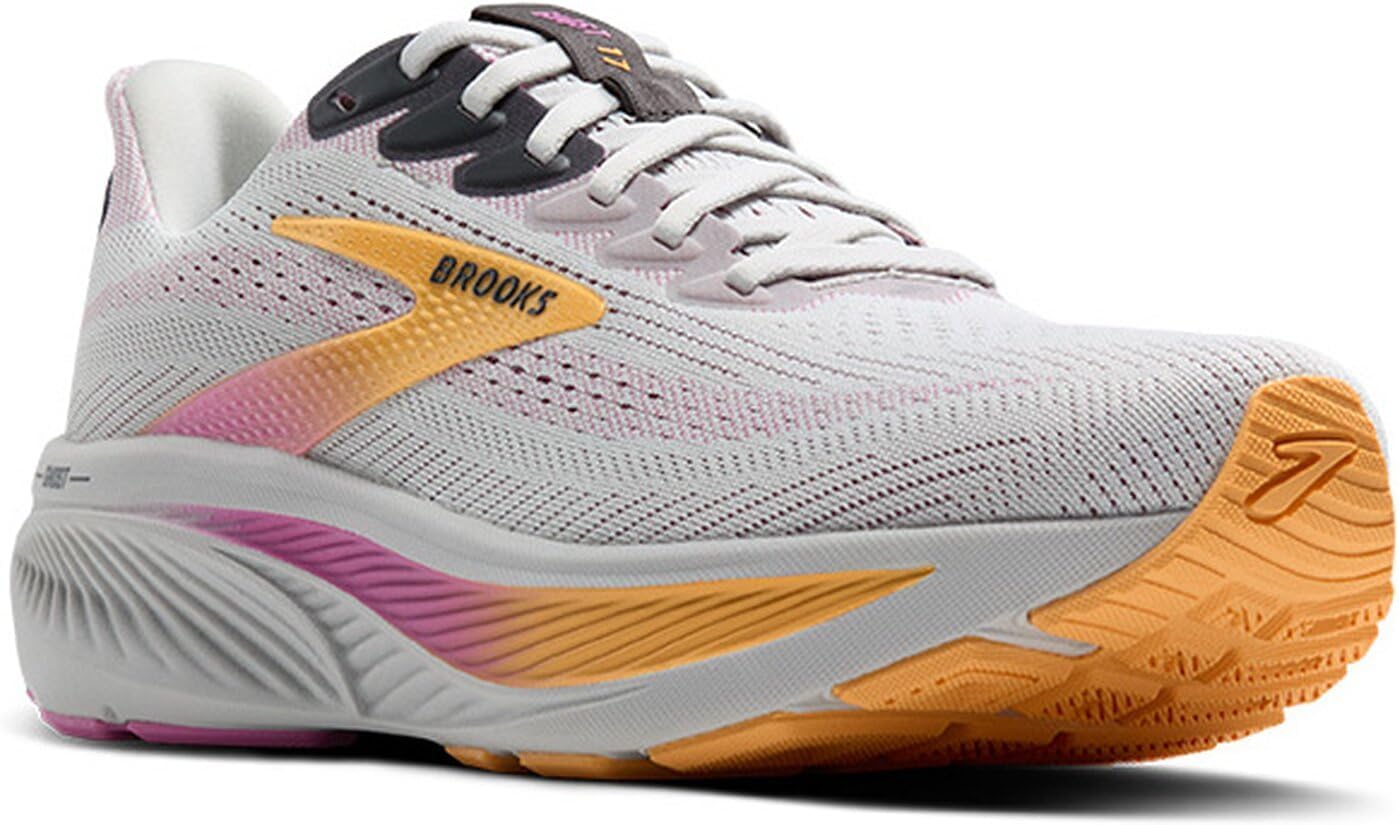
If you’ve ever searched for a reliable everyday running shoe and found yourself staring at two very similar-looking Brooks options — the Ghost and the Adrenaline — you’re not alone. Both are daily trainers, meaning shoes designed to handle the bulk of your weekly mileage at a comfortable, sustainable pace. They look alike, they’re priced similarly, and they’re both bestsellers. The difference that matters is one word: stability. The Ghost 17 is a neutral shoe, meaning it lets your foot move naturally through each stride without mechanical intervention. The Adrenaline GTS 25 is a stability shoe, meaning it includes built-in structure — Brooks calls it GuideRails — to gently limit excess inward roll of the foot, a motion called overpronation. If you’ve ever been told you pronate, or if you deal with knee pain, flat arches, or ankle fatigue on longer runs, that distinction is the whole ballgame. This article breaks down exactly what each shoe does, who it’s built for, and how to make the call with confidence.
What You’re Actually Comparing: The Specs That Drive the Decision
Before getting into feel and fit, here’s the numbers snapshot — because these two shoes are closer than most people expect.
According to Brooks Running’s official product spec sheets, both the Ghost 17 and the Adrenaline GTS 25 share a 36mm heel stack, 24mm forefoot stack, a 12mm heel-to-toe drop, and the same DNA LOFT v3 midsole foam compound. The Adrenaline GTS 25 is not a fundamentally different shoe — it’s the Ghost platform with a structural addition. That makes this comparison unusually clean: you’re not weighing different cushioning philosophies, you’re deciding whether you need the guardrails or not.
Runner’s World’s shoe database has documented this shared architecture across multiple review cycles, noting that the Adrenaline GTS line has long used the Ghost’s chassis as its foundation. The GuideRails system — dual-density posts positioned on the medial and lateral heel — is layered onto that base. Podium Runner’s stability shoe guide describes GuideRails as a “motion guidance” system rather than a traditional medial post, meaning it doesn’t aggressively correct your gait but instead acts as a bumper against extreme deviation. That’s a meaningful distinction for runners who’ve been burned by overcorrecting stability shoes in the past.
Both shoes are available in four widths: narrow (B), standard (D), wide (2E), and extra-wide (4E). That width range is broader than most running shoe brands offer and represents one of Brooks’ most underrated advantages for runners with non-standard feet.
Ghost 17: Neutral Cushion for Consistent Mileage
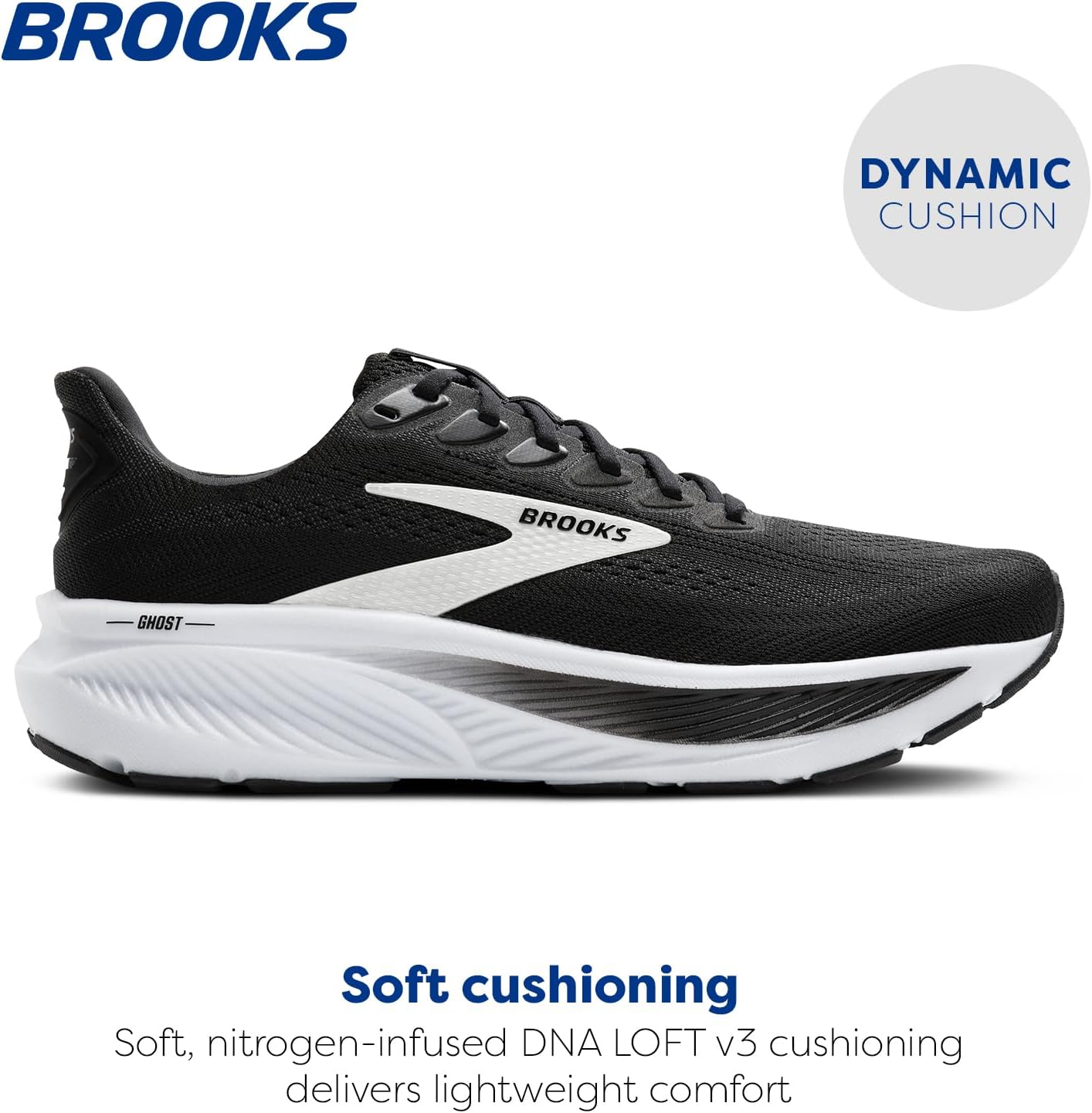
The Ghost has been Brooks’ anchor product for over a decade, and the 17th version continues a pattern that longtime owners find unusually consistent. RunRepeat’s aggregated analysis of Ghost owner reviews across multiple generations highlights strong marks for reliability and zero break-in time — a quality Runner’s World’s Ghost 17 review characterizes as one of the shoe’s signature traits, noting it as “one of the most consistent daily trainers on the market.”
The DNA LOFT v3 foam sits in a sweet spot: softer than older versions of the shoe, but not so plush that it destabilizes faster footstrikes. For runners who have trained in a previous Ghost version, the 17 reportedly delivers the same experience from mile one without a painful adjustment window. The 12mm heel-to-toe drop is on the higher end of the market — this is not a low-drop minimalist shoe. That drop favors heel strikers and runners transitioning from traditional athletic footwear, making it an accessible entry point rather than a specialist tool.
Who the Ghost 17 is for:
- Runners with neutral arches or high arches who don’t overpronate
- Anyone building 30–50 mile training weeks and needing a dependable mileage accumulator
- Runners who rotate multiple shoes and want a predictable easy-day option
- Anyone sizing into Brooks for the first time who has no stability-related injury history
Brooks
$109.95
In stock on Amazon
Check price on AmazonAdrenaline GTS 25: Structure for Stability-Dependent Runners
The Adrenaline GTS 25 enters the conversation the moment a runner has a specific complaint: knee tracking issues, flat feet that roll inward, plantar fasciitis (inflammation of the connective tissue along the bottom of the foot), or Achilles tendon sensitivity. These aren’t edge cases — they’re among the most common reasons recreational runners end up searching for a different shoe.
RunRepeat’s aggregated analysis of Adrenaline GTS 25 owner reviews surfaces a recurring theme: runners dealing with foot swelling, plantar fasciitis, and Achilles sensitivity report meaningful relief from switching to this shoe. High-volume walkers logging treadmill hours in a professional context — retail workers, healthcare staff — appear in the review data with notable frequency and consistently positive outcomes.
The GuideRails system is the reason. Rather than adding a dense wedge of foam on the inside edge of the shoe — the traditional medial post approach — GuideRails positions support on both the medial and lateral sides. Podium Runner’s stability shoe guide explains this as a design intended to encourage a runner’s natural gait pattern rather than force a correction. The foot uses the rails only when it strays outside its natural range. Runners who’ve tried older stability shoes and found them uncomfortable often respond better to this approach, according to owner feedback analyzed by RunRepeat.
One honest tradeoff: the GuideRails add a small amount of weight and slightly alter the shoe’s feel underfoot compared to the pure Ghost platform. If you’re a neutral runner trying the Adrenaline GTS 25 in search of extra cushion, you may find the structured feel unnecessary or faintly intrusive. The cushioning quantity is identical to the Ghost 17 — but neutrality has a texture, and the GTS changes it.
Who the Adrenaline GTS 25 is for:
- Runners with flat arches or diagnosed overpronation
- Anyone managing ongoing lower-leg injuries linked to gait instability
- High-mileage walkers or run-walkers who need all-day structure
- Runners whose physical therapist or sports podiatrist has recommended a stability shoe
Brooks
$109.95
In stock on Amazon
Check price on AmazonGhost Max 3: When Pain Management Is the Primary Goal
A shoe that comes up frequently in the same search sessions as the Ghost 17 and Adrenaline GTS 25 is the Ghost Max 3 — a maximum-cushion variant that sits above both in terms of stack height and softness. It’s worth addressing directly because runners shopping this comparison sometimes need a different tool entirely.
Ghost Max 3 reviews, as catalogued in RunRepeat’s owner review database, are anchored in pain management in a way that Ghost 17 and Adrenaline GTS 25 reviews simply aren’t. Owners with high arches, heel spurs, hammer toe, and degenerative foot conditions report extended walking hours pain-free — language that’s notably absent from Ghost 17 and Adrenaline GTS 25 reviews, which tend to focus on run feel and training consistency.
The Ghost Max 3 is also worth considering if you plan to run with custom orthotics. Its wider, flatter footbed accommodates insoles without significant volume issues, though Brooks’ official product guidance recommends removing the sock liner when adding aftermarket orthotics to preserve the intended fit geometry.
If your primary concern is injury recovery, chronic pain, or extended hours on hard surfaces rather than daily training mileage, the Ghost Max 3 deserves its own evaluation rather than being filtered out in a Ghost 17 vs. Adrenaline GTS 25 comparison. It’s a different tool for a different job.
Brooks
$199.95
In stock on Amazon
Check price on AmazonFit, Sizing, and Width: The Practical Details
On sizing: Brooks Running’s own fitting guidance recommends a thumb’s width of space at the toe box, which typically translates to going up a half size from your street shoe size. RunRepeat’s analysis of owner feedback confirms the half-size-up recommendation appears consistently from longtime wearers — particularly in the wider versions. If you’re ordering online without a prior Brooks reference point, going up a half size from your measured foot length is the safer call.
Runner’s World’s coverage of the broader Brooks stability lineup has documented a more pronounced half-size-up flag in the Glycerin GTS line — the premium stability sibling to the Adrenaline — particularly in wider widths. While the Ghost 17 and Adrenaline GTS 25 don’t carry the same intensity of that complaint, the underlying lesson applies across Brooks’ stability options: size conservatively, and when in doubt, go up.
Both the Ghost 17 and Adrenaline GTS 25 share the same four-width sizing range. For runners with wide or extra-wide feet, this is genuinely meaningful — many stability shoe options on the market stop at standard or wide, making the 4E availability a practical differentiator for this foot type.
Frequently Asked Questions
Is the Brooks Ghost 17 good for people with flat feet, or do they need the Adrenaline?
Flat feet — arches that contact the ground fully during standing — tend to correlate with overpronation, but not always. If you have flat feet and no pain, knee tracking problems, or gait-related injuries, the Ghost 17 may work fine. If flat feet are accompanied by any of those symptoms, the Adrenaline GTS 25’s GuideRails system is the clinically aligned choice. A gait analysis from a specialty running store or sports podiatrist removes the guesswork entirely and takes about 15 minutes.
Do Brooks shoes run true to size, or should I size up?
Brooks Running recommends sizing up a half size from your measured foot length to allow adequate toe room, particularly in the Ghost and Adrenaline lines. This is consistent with owner feedback aggregated in RunRepeat’s review database. Wide-width versions of the Glycerin GTS line carry a more prominent half-size-up flag from reviewers, and it’s reasonable to apply the same caution across Brooks’ stability options.
Can I use the Ghost Max 3 with custom orthotics?
Yes, with the standard caveat: remove the shoe’s removable sock liner before inserting a custom orthotic to avoid stacking volume that compresses your foot against the upper. The Ghost Max 3’s generous stack height and wide platform make it one of the more orthotic-friendly options in the Brooks lineup. Confirm fit with your orthotist or podiatrist if you’ve had issues with other max-cushion shoes.
What is the difference between the Adrenaline GTS 25 and the Glycerin GTS?
Both are stability trainers built on the same GuideRails platform, but the Glycerin GTS sits at a higher price point and uses a softer, more premium foam compound. The Glycerin GTS is positioned as a luxury daily trainer — more plush underfoot, more refined upper materials. The Adrenaline GTS 25 is the workhorse: durable, proven, and slightly firmer. Runner’s World’s coverage of the Glycerin GTS line consistently flags the half-size-up recommendation as more urgent than with the Adrenaline, particularly in wider widths.
How long do Brooks Ghost shoes typically last before needing replacement?
Brooks Running’s official guidance puts midsole lifespan at 300–500 miles, a range consistent with the guidance cited by Runner’s World and most specialty running retailers. For moderate runners logging 20–25 miles per week, that translates to roughly four to six months of primary use. Heavier runners or those training primarily on concrete should target the lower end of that range. The outsole rubber on the Ghost line is generally durable enough that visual wear doesn’t always track midsole compression — if the shoe starts feeling flat or your legs feel more fatigued after familiar runs, that’s the real replacement signal.
The Decision Rule
Here’s the clean framework for the Ghost 17 vs. Adrenaline GTS 25 decision:
If your arches are neutral or high, you have no active lower-leg injury history, and your current or previous trainers have felt comfortable without any stability assistance — then the Ghost 17 is your shoe. It’s the cleaner, more responsive ride on the same platform, and it won’t add structure you don’t need.
If you overpronate, have flat arches, or are managing plantar fasciitis, Achilles sensitivity, or knee tracking problems — then the Adrenaline GTS 25 is the correct call. The GuideRails system was built specifically for this profile, and the owner review evidence for pain relief in this cohort, as documented by RunRepeat’s aggregated analysis, is consistent enough to treat as reliable signal rather than noise.
If your primary concern is pain management from a chronic condition, post-surgical recovery, or extended hours on hard surfaces — then step back from this comparison and evaluate the Ghost Max 3 on its own terms. It’s a different tool for a different job, and it performs that job in a category that neither the Ghost 17 nor the Adrenaline GTS 25 was designed to occupy.
Both the Ghost 17 and the Adrenaline GTS 25 are dependable enough to build a full training cycle around. The decision isn’t about quality — it’s about matching the shoe’s architecture to your physiology.