Most runners start with one pair of shoes and wear them until the soles look like a sad pancake. That works — until it doesn’t. Once your weekly mileage climbs past 30 or 40 miles, or you’re stacking back-to-back training days, running in a single shoe stops making sense. A training rotation is simply the practice of owning two or more pairs of running shoes and cycling between them with intention — different shoes for different types of runs, so no single pair absorbs every footstrike and no single set of muscles and tendons gets loaded the same way every day. The payoff, according to research cited by The Running Clinic, is meaningfully lower overuse injury risk compared to single-shoe training. This guide walks you through exactly which slots to fill, which shoes are worth the money in each slot right now, and the decision logic to figure out what your rotation actually needs.
If you’re already deep into building a multi-shoe quiver and you’re trying to decide whether to add a second daily trainer or jump straight to a tempo shoe — this is the article to bookmark.
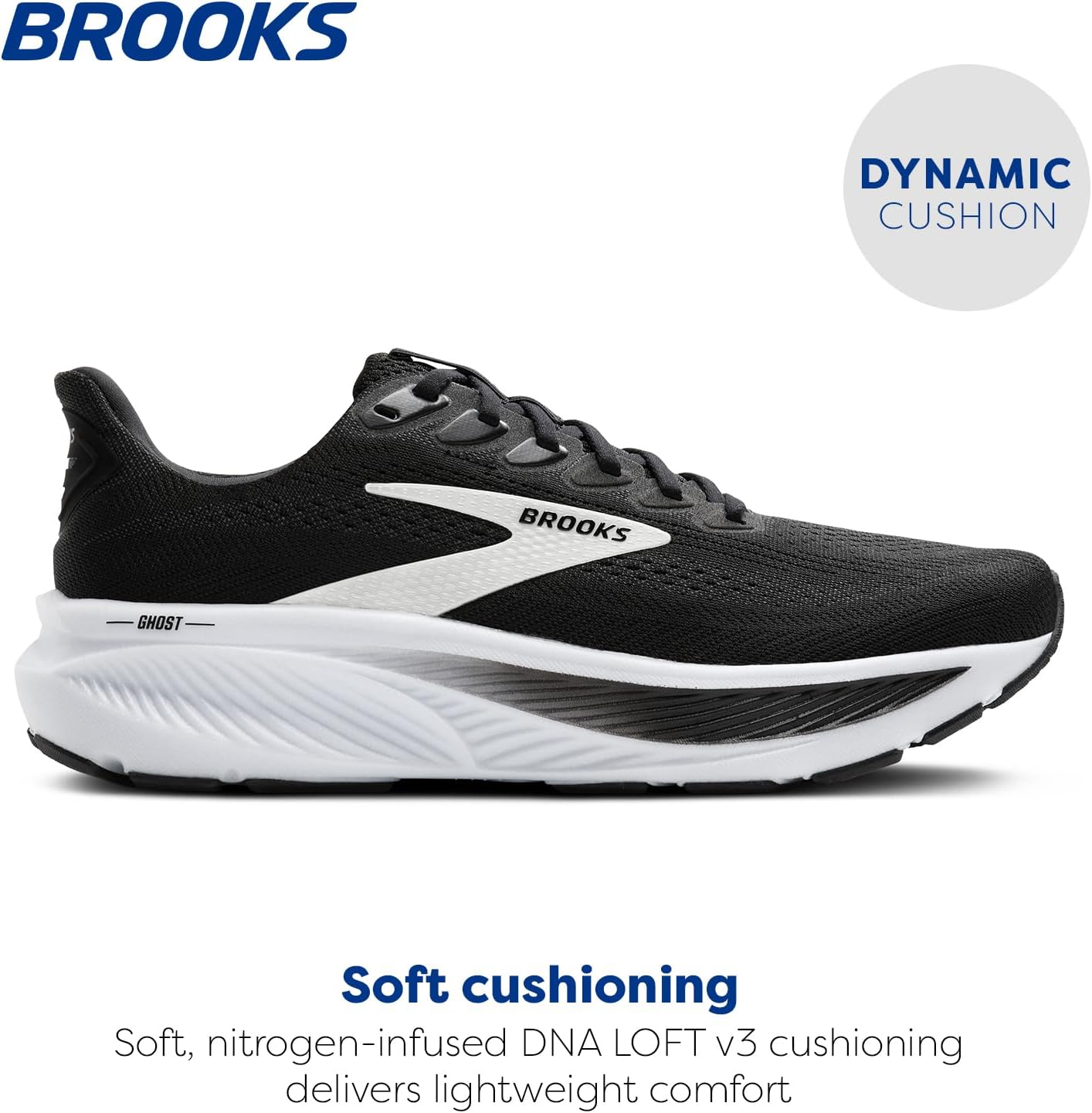
| EDITOR'S PICKHoka Womens Bondi 9 8.5 Black/W… | Mid-tierHoka Men's Bondi 9 9.5 Black/Wh… | Budget pickBrooks Men’s Ghost 17 Neutral R… | |
|---|---|---|---|
| Sizing | 8.5 | 9.5 | 10.5 |
| Gender | Women's | Men's | Men's |
| Model | Bondi 9 | Bondi 9 | Ghost 17 |
| Colorway | Black/White | Black/White | Black/Grey/White |
| Price | $167.95 | $144.12 | $109.95 |
| See on Amazon → | See on Amazon → | See on Amazon → |
Why Rotation Logic Matters More Than Any Single Shoe
Here’s the core mechanic: foam midsoles (the cushioned layer between your foot and the ground) need 24–48 hours to fully decompress after a run. When you run in the same shoe on back-to-back days, you’re landing on a midsole that hasn’t recovered — which means less protection than the specs on the box promise. Outside Online’s coverage of midsole longevity notes that rotating just two pairs of shoes can extend the effective life of each pair by 30–40% compared to running exclusively in one.
But rotation isn’t just about foam recovery. Different shoes load your body differently. A maximalist trainer with a high stack (think: a lot of cushioning between foot and ground) absorbs impact differently than a firmer, lower-to-the-ground shoe. Alternating between them distributes stress across a wider range of tissues and movement patterns — which is why Podium Runner’s rotation guides consistently frame multi-shoe training as a form of cross-training within the same sport.
The three slots most intermediate runners need:
- High-volume daily trainer — your workhorse. Handles easy runs, long runs, and recovery miles. Prioritizes durability and consistent cushioning over 500+ miles.
- Versatile everyday trainer — slightly more responsive, slightly less cushioned. Good for moderate-effort runs, progression workouts, and days when you want the shoe to feel a little more alive under your foot.
- Tempo / workout shoe — not a race shoe, but something with enough pop to make threshold runs feel honest. Optional at lower mileage; basically mandatory above 50 miles per week or in half-marathon and marathon build cycles.
If you’re in a 12–20 week marathon build, running 5–6 days a week, the math often works out to: 2–3 high-volume days in Slot 1, 1–2 moderate days in Slot 2, and 1 workout day in Slot 3. Your race-day carbon plate shoe, if you own one, lives outside this rotation entirely — it’s a precision instrument used sparingly, not a training tool.
The High-Volume Daily Trainer: What to Look for, What to Buy
This shoe does the dirty work. It should be comfortable from mile one, forgiving on tired legs, and durable enough that you’re not replacing it every 12 weeks. Owners of the best high-volume trainers consistently describe the same set of qualities: a wide, stable platform, cushioning that doesn’t feel mushy or unpredictable, and an upper that doesn’t create friction over 16-mile long runs.
Brooks Ghost 16 is the textbook answer for a reason. Spec sheets put it at roughly 12mm heel-to-toe drop with a DNA Loft v3 midsole rated for 300–500 miles of consistent cushioning. RunRepeat’s aggregated review data puts it among the highest-rated daily trainers in owner satisfaction, with reviewers across body types and paces converging on “reliable and forgiving” as the dominant descriptors. At $140, it’s priced where the math on durability makes sense — roughly $0.30–0.35 per mile over its lifespan if you rotate it properly.
ASICS Gel-Nimbus 26 sits in the same slot but with more cushioning underfoot and a softer ride character. Owners report it feels noticeably more plush on long efforts, which some runners love on recovery days and others find too soft for anything with purpose. At $160, it’s the right call if you’re running mostly easy miles or managing a recent soft-tissue issue. RunRepeat’s reviewer aggregation rates it highly for comfort-per-dollar in its category.
New Balance Fresh Foam X 1080v14 occupies the upper end of this slot. At $165, it carries a firmer-than-expected ride for a maximalist shoe — owners consistently note it rewards a natural midfoot strike and doesn’t bottom out under heavier runners the way some competitors do. Runners World’s coverage of the 1080 line has tracked its evolution across versions, and the v14 is considered the most balanced iteration to date.
By the numbers: Brooks Ghost 16 — ~$140, ~12mm drop, rated 300–500 miles ASICS Gel-Nimbus 26 — ~$160, ~10mm drop, rated 300–500 miles NB Fresh Foam X 1080v14 — ~$165, ~6mm drop, rated 400–500 miles
The Versatile Everyday Trainer: The Rotation’s Wildcard Slot
This is the shoe that gets underestimated. It’s not as cushioned as your workhorse, not as fast as your tempo shoe — but it’s often the one you reach for most. It should handle 8–12 mile moderate runs without feeling punishing, respond well when you push the pace, and transition cleanly into a strides session at the end of a base run.
Saucony Ride 17 is the clearest example of what this slot demands. Spec sheets show a PWRRUN midsole that runs slightly firmer than pure maximalists but still protective enough for 10–14 miles. Across aggregated owner reviews cited by RunRepeat, the Ride consistently earns marks for being the shoe that “disappears” on moderate efforts — meaning the shoe doesn’t fight you, it just runs. At $130, it’s also one of the better values in the current market.
Nike Pegasus 41 has occupied this slot in more runners’ rotations than probably any other shoe in the last decade. The React foam in recent iterations is reviewed by owners as lively but not twitchy — it has what shoe reviewers often call “snap-back,” meaning it returns energy on faster efforts without destabilizing you on easy days. Runners World’s ongoing Pegasus coverage notes the 41 as a refinement rather than a reinvention, which is exactly what you want from a middle-slot workhorse.
Hoka Clifton 10 splits the difference between this slot and the high-volume slot. At $145, it runs softer than either the Ride or the Pegasus, but owners consistently report that its lighter-than-expected weight (for the stack height) makes it more versatile than the pure maximalists. If your Slot 1 shoe is already on the firmer side, the Clifton 10 makes a logical Slot 2 pairing.
The Tempo Shoe: Optional Until It Isn’t
Once you’re running structured workouts — threshold intervals, tempo runs, progression long runs — a dedicated workout shoe earns its place in the rotation. This isn’t about carbon plates. Carbon-plated shoes, like the ASICS Metaspeed Sky+ or the On Running Cloudboom Echo 3, are race-day tools. They’re expensive, their foam degrades faster under frequent training loads, and using them for every hard workout is like using your best racing bike for grocery runs.
What the tempo slot actually needs: a shoe with more energy return and ground feel than your daily trainers, stable enough for interval work, durable enough for 20+ workout sessions before the foam loses its pop.
Saucony Kinvara 15 is the classic answer here — owners describe it as the rare shoe that feels fast without requiring you to run fast. At $110, it’s priced as a training tool, not a showcase piece. Its 4mm drop and lean midsole make it technically demanding but rewarding for runners who’ve developed their form.
Brooks Hyperion (not the Max — the standard Hyperion) earns consistent praise in workout-shoe discussions on Podium Runner and in aggregated owner reviews for its lightweight, responsive feel without the cost premium of carbon-plated options. At around $120–130, it fills the tempo slot efficiently.
Adidas Adizero SL2 has picked up attention in 2025–2026 as a training counterpart to the Adizero line’s race shoes. Runners World has flagged it as a shoe that delivers more ground feel and purpose than a standard daily trainer without the racing-flat aggression that wears on legs across a full training block.
The Decision Rule: Building Your Rotation Around Your Actual Week
Here’s the framework. Answer these three questions:
1. How many days per week are you running?
- 3–4 days: Two shoes is plenty. One high-volume daily trainer, one versatile everyday trainer.
- 5–6 days: Add the tempo shoe. Your Slot 1 shoe will thank you for not being used every single day.
- 7 days or a structured build above 50 mpw: Consider two pairs in Slot 1 — same shoe or close variants — so each gets full recovery between uses.
2. What’s your most common failure mode in a training block?
- Soft-tissue fatigue or plantar issues: bias toward more cushion in Slot 1 (Nimbus 26, Clifton 10) and save the firmer shoes for shorter efforts.
- Motivation and flat legs on easy days: a livelier Slot 2 shoe (Pegasus 41, Ride 17) can make easy runs feel less like a chore.
- Race-day fade from undertrained fast-twitch response: prioritize the tempo slot; use it every workout day, not just races.
3. What’s your budget ceiling for the rotation?
- Under $300 total: Ghost 16 ($140) + Kinvara 15 ($110). Simple, covers most cases, replace one at a time.
- $300–$450: Ghost 16 + Saucony Ride 17 + Kinvara 15. Full three-slot rotation at mid-market prices.
- $450+: Upgrade Slot 1 to the NB 1080v14 or Nimbus 26, add the Hyperion or Adizero SL2 in the tempo slot. Reserve carbon plated options strictly for race day and one or two tune-up efforts.
If X, then Y:
- If you’re building toward a first half-marathon on 4 running days per week → Ghost 16 + Saucony Ride 17.
- If you’re targeting a marathon PR on 6 days per week → NB 1080v14 (Slot 1, long/easy) + Pegasus 41 (Slot 2, moderate) + Brooks Hyperion (Slot 3, workouts).
- If you’re managing a previous injury and want maximum protection → Nimbus 26 (Slot 1) + Clifton 10 (Slot 2), skip Slot 3 until symptoms resolve.
The rotation isn’t about owning more shoes because shoes are fun (although they are). It’s about matching the tool to the task so that every run serves the training block — and the training block serves the race. Get the workhorse slots right, and the rest of the system takes care of itself.