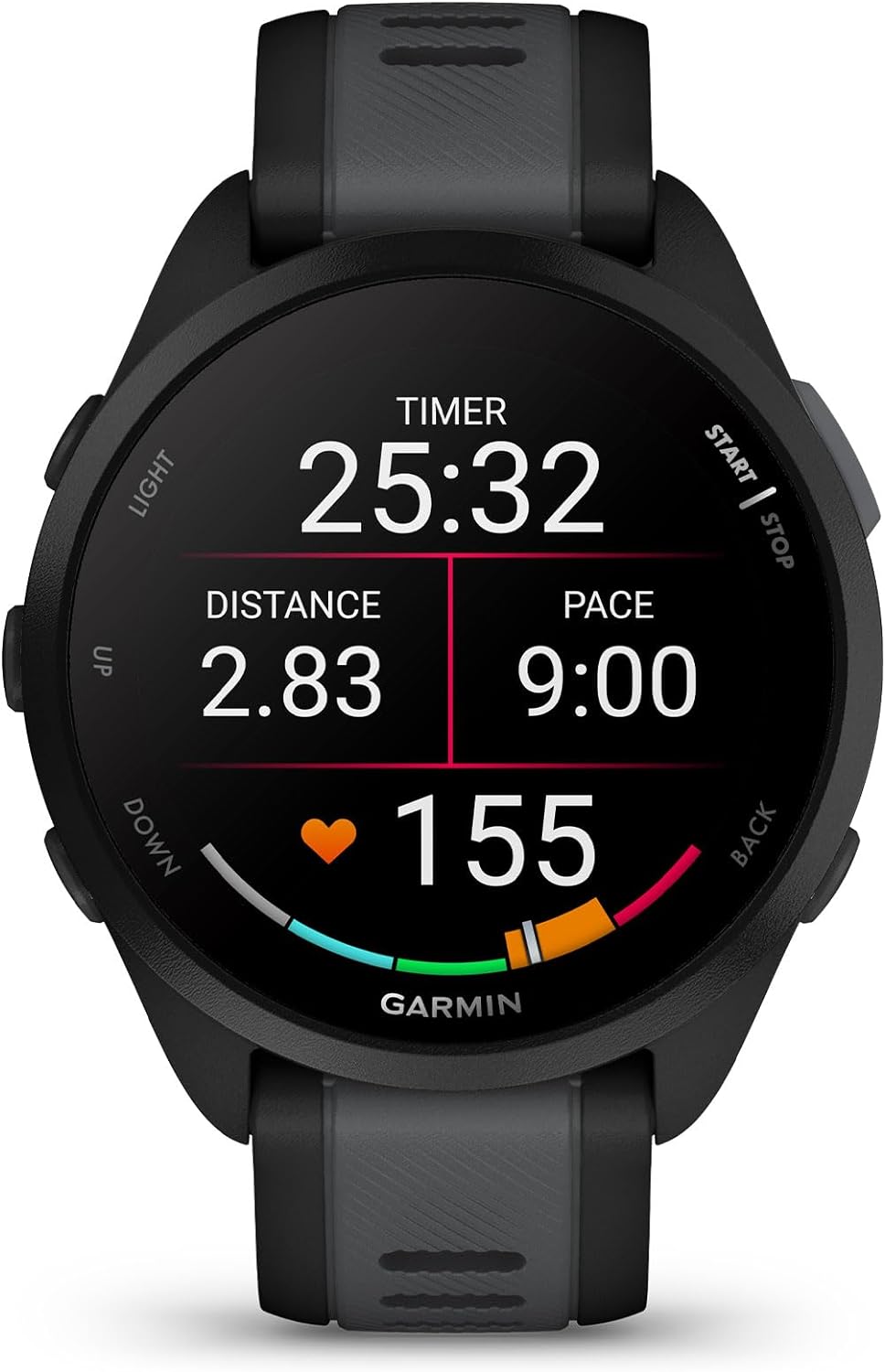
If you’ve been shopping for a GPS running watch — a wrist-worn device that tracks your pace, distance, and heart rate using satellite signals — you’ve probably noticed that “smartwatch” and “running watch” are no longer clean categories. Two products that blur that line more than almost any others right now are the Garmin Forerunner 165 and the Google Pixel Watch 4. Both feature AMOLED displays (bright, color screens with sharp contrast, the same technology in most flagship phones), both track runs via GPS, and both connect to your phone for notifications. But the similarities mostly stop there. One was designed from the ground up for runners. The other was designed for the Android ecosystem, with running as a capable add-on. If you’re training for a half-marathon or trying to build a smarter multi-sport routine, knowing which of those philosophies fits your life is the most important decision you’ll make before buying either one.
This article isn’t a breathless spec dump. It’s a decision framework — built from published spec sheets and in-depth editorial coverage from outlets that have reviewed both watches extensively. By the end, you’ll know exactly which watch to buy, and why.
The Core Tradeoff: Running-First vs. Ecosystem-First
Let’s be direct about what each company optimized for, because it shapes every other comparison.
Garmin built the Forerunner 165 to be the best running watch possible at its price point — full stop. The AMOLED screen is the headline upgrade over previous Forerunner generations (which used lower-contrast MIP displays), and Garmin stacked it with training-intelligence features: suggested daily workouts, recovery time estimates, training readiness scores, and a running dynamics profile that helps you understand whether your body is ready to push or needs rest. These aren’t gimmicks — they’re the same metrics Garmin offers in watches costing two or three times more, distilled into a $250 entry point.
Google built the Pixel Watch 4 to be the best Android companion watch possible. Running tracking is real and genuinely capable, but the purchase motivations reviewers surface are different. DC Rainmaker’s in-depth Pixel Watch 4 review (published on dc-rainmaker.com) notes that the watch’s health monitoring suite — including ECG (electrocardiogram, which measures your heart’s electrical activity) and AFib detection (atrial fibrillation, a potentially serious irregular heart rhythm) — drives purchase decisions in a way that has no equivalent in Garmin’s buyer feedback. That’s a fundamentally different product identity.
By the numbers:
| Spec | Garmin Forerunner 165 | Google Pixel Watch 4 |
|---|---|---|
| Battery (smartwatch mode) | ~11 days | 4–5 days |
| Battery (GPS active) | ~19 hours | ~10 hours |
| Display | AMOLED | AMOLED |
| ECG / AFib detection | No | Yes |
| Training intelligence | Yes (deep) | Limited |
| Price (MSRP) | ~$250 | ~$350 |
Battery figures sourced from published manufacturer specs via Garmin.com and the Google Store, corroborated by DC Rainmaker’s Forerunner 165 In-Depth Review and DC Rainmaker’s Pixel Watch 4 In-Depth Review (both available at dc-rainmaker.com).
Head-to-Head: Three Dimensions That Decide the Winner
Battery Life and Long-Run Stamina
Battery life isn’t a nerdy footnote in this comparison — it’s the sharpest practical dividing line between these two watches, and it has real consequences for how you train.
Owners of the Forerunner 165 consistently report getting into the 11-day range between charges in normal smartwatch use, with GPS battery holding comfortably through marathon-distance training runs. Podium Runner’s review of the Forerunner 165 (published on podiumrunner.com) specifically highlights this as a meaningful generational upgrade, noting that the AMOLED screen — which historically punished battery life in other watches — doesn’t gut Garmin’s endurance the way many expected.
The Pixel Watch 4 tells a different story. DC Rainmaker’s Pixel Watch 4 In-Depth Review puts real-world battery between four and five days in smartwatch mode, and GPS use eats through that significantly faster — expect roughly 8–10 hours of active GPS tracking, depending on workout intensity and heart-rate polling frequency. For a 5K runner or someone doing 45-minute lunch runs, that’s fine. For someone in the middle of a half-marathon training block doing back-to-back long runs on Saturday and Sunday, you may be reaching for a charger mid-weekend.
The practical implication: if you travel frequently, hate charging, or do any run longer than two hours on a regular basis, the Forerunner 165’s battery advantage is load-bearing — not a bonus.
Garmin
$149.99
In stock on Amazon
Check price on AmazonTraining Intelligence and Race Prep
Here’s where the comparison gets asymmetric in a way that matters for runners specifically.
Garmin’s training intelligence stack on the Forerunner 165 — which the brand calls “Daily Suggested Workouts” — analyzes your recent training load, recovery status, and fitness trends to recommend what you should do today: easy run, tempo intervals, rest, or something in between. Runner’s World’s coverage of the Garmin Forerunner lineup (available at runnersworld.com) consistently highlights this feature as the reason running-focused buyers choose Garmin over equivalent-priced smartwatches from other brands. Training readiness scores (a single daily number representing how ready your body is to perform) and recovery time estimates are also present — pulled from the same physiological data Garmin uses in its $500-plus multisport watches.
This matters for half-marathon prep. If you’re 10 weeks out from a race, juggling speed work, long runs, and easy recovery miles, having a watch that contextualizes your effort — rather than just recording it — is genuinely useful. It won’t replace a coach, but it will tell you, in plain terms, whether yesterday’s tempo run has left you ready for a workout or ready for a nap.
Google’s Pixel Watch 4 runs on Fitbit’s platform (now fully absorbed into Google’s ecosystem) for fitness tracking, and it does offer recovery insights, daily readiness scores, and workout detection. But across aggregated owner reviews and editorial analysis, the running-specific training intelligence depth simply doesn’t match Garmin’s. The Pixel Watch 4’s strength is health monitoring breadth — sleep tracking, stress tracking, ECG, AFib detection, and Pixel phone integration — not running-specific periodization tools.
The Wirecutter’s best smartwatches guide (published by Wirecutter at nytimes.com/wirecutter) positions the Pixel Watch 4 as the top pick for Android users who want health features and ecosystem integration — not as a running-first device. That framing from a widely read consumer guide captures the product’s identity precisely.
Garmin
$149.99
In stock on Amazon
Check price on AmazonHealth Monitoring and the ECG Question
This dimension is worth addressing directly, because it’s a genuine differentiator — not marketing noise — and it should move the needle for a specific subset of buyers.
The Pixel Watch 4’s ECG and AFib detection features have real-world significance. DC Rainmaker’s Pixel Watch 4 In-Depth Review notes that cardiac health history is a meaningful stated driver of purchase decisions for a segment of buyers. These are FDA-cleared features (in the United States) designed to surface potential heart irregularities between clinical checkups. Atrial fibrillation, if undetected, carries serious health risks — and having a passive, wrist-based screening tool available between annual physicals has genuine clinical value for the right person.
The Garmin Forerunner 165 does not have ECG or AFib detection. It has optical heart rate monitoring (the green-light sensor on the watch’s back), which tracks heart rate in real time during workouts and all-day. That’s the right tool for tracking running performance — zone-based training, max heart rate, lactate threshold estimation. It is not a cardiac diagnostic tool.
If you have a personal or family history of cardiac events, or a clinician has suggested monitoring for arrhythmia, the Pixel Watch 4’s health monitoring suite carries meaningful practical weight. For the majority of runners whose primary concern is training data and performance, this distinction won’t change the recommendation — but it’s worth naming explicitly.
Garmin
$149.99
In stock on Amazon
Check price on AmazonWearability and the Comfort Consensus
One genuinely surprising pattern emerges across both watch communities: buyers on both sides mention forgetting the watch is on their wrist. That’s a high bar — most fitness wearables still produce a vague awareness of “something on my arm” after a few hours — and the fact that reviewers in both camps praise this suggests both watches clear a real comfort threshold.
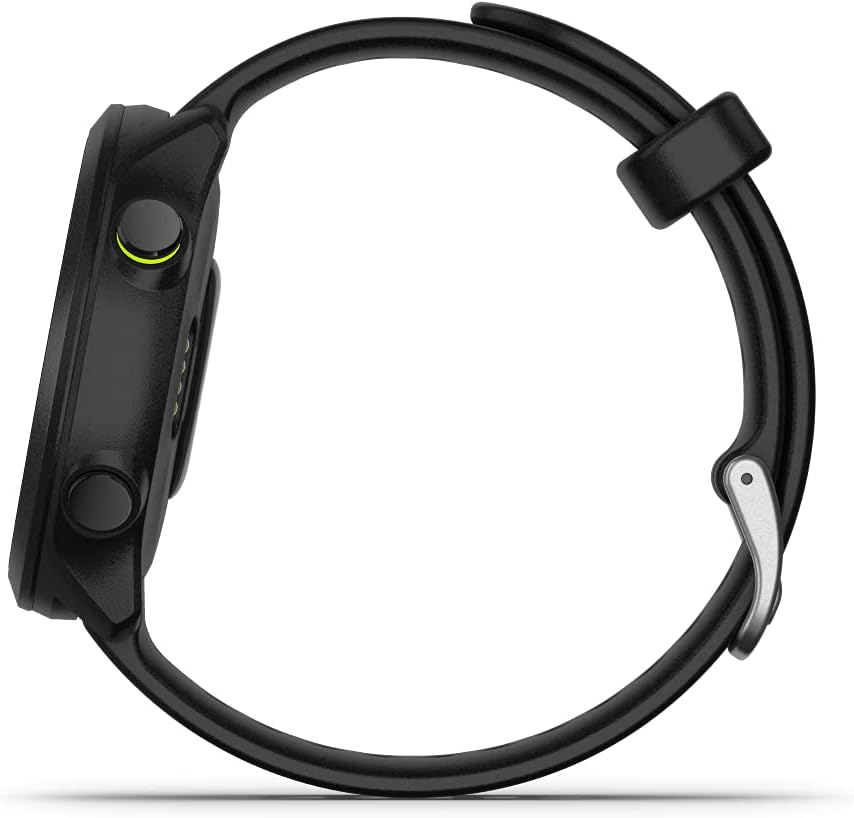
The Forerunner 165 is lightweight and slim in profile, consistent with Garmin’s running watch lineage. The Pixel Watch 4 leans slightly more toward a fashion-watch aesthetic — rounder, with a more polished casing — which makes it easier to wear in non-running contexts without looking like you just finished a 10-miler. Both ship with silicone sport bands as standard, and both have third-party strap ecosystems for those who want to dress them up.
For runners who wear their watch 24/7 (which is the right way to use sleep and recovery tracking), comfort during sleep matters as much as comfort during runs. Reviewers on both watches note no significant edge-irritation or pressure issues during overnight wear — worth flagging since some GPS watches still struggle here.
Frequently Asked Questions
Is the Garmin Forerunner 165 worth upgrading to from the Forerunner 55?
Yes, and the AMOLED display alone makes a visible difference — but the real upgrade is the training intelligence layer. The Forerunner 55 is a capable GPS watch; the 165 adds suggested workouts, training readiness, recovery tracking, and a significantly brighter screen. Owners who made this jump consistently describe it as a meaningful step up, not a marginal refresh. DC Rainmaker’s Forerunner 165 In-Depth Review (dc-rainmaker.com) describes it as one of the most complete mid-tier running watches Garmin has produced.
How accurate is the GPS on the Garmin 165 compared to older models?
The 165 uses multi-band GPS (supporting GPS, GLONASS, and Galileo satellite networks), which gives it stronger signal acquisition in dense urban environments and under tree cover compared to older single-band Forerunner models. DC Rainmaker’s testing methodology notes that multi-band GPS is a meaningful accuracy upgrade under canopy and near tall buildings — conditions where older Forerunner GPS traces sometimes showed drift.
Does the Google Pixel Watch 4 work well for running, or is it primarily a smartwatch?
It works for running — GPS tracking, pace, heart rate, and workout detection are all present and functional. But reviewers who bought it specifically for running training tend to note limitations compared to dedicated running watches: fewer training plan integrations, less deep performance analytics, and a shorter GPS battery window. The Wirecutter’s smartwatch coverage (nytimes.com/wirecutter) positions the Pixel Watch 4 as the top pick for Android users who want health features, not as a running-first device.
How long does the Pixel Watch 4 battery actually last with GPS active?
DC Rainmaker’s Pixel Watch 4 In-Depth Review puts continuous GPS use at roughly 8–10 hours depending on settings. For most runners, that covers a long training run or even a slower marathon finish. It won’t cover ultramarathon distances or multi-day adventures — that’s where the Forerunner 165’s 19-hour GPS rating becomes relevant.
Can the Pixel Watch 4 detect heart irregularities like AFib?
Yes. The Pixel Watch 4 includes an FDA-cleared ECG app and AFib detection — features designed to flag potential atrial fibrillation between doctor visits. It is not a replacement for clinical diagnosis, but it’s a meaningful health monitoring tool that the Garmin Forerunner 165 does not offer.
Which watch has better training plan and recovery features for half-marathon prep?
The Garmin Forerunner 165, clearly. Its Daily Suggested Workouts, training readiness score, and recovery time estimates are specifically designed for structured running training — the kind of 10–16 week block that builds you toward a half-marathon PR. Podium Runner’s Forerunner 165 review (podiumrunner.com) highlights this as the watch’s primary value proposition for dedicated runners. The Pixel Watch 4 offers recovery metrics, but the depth and running-specific calibration don’t match Garmin’s implementation.
The Decision Rule
If your primary goal is running performance — smarter training, better recovery awareness, GPS accuracy across long miles, and a battery that won’t quit mid-training-block — buy the Garmin Forerunner 165. It was built for exactly what you’re doing, and the training intelligence features punch well above the price point.
Garmin
$149.99
In stock on Amazon
Check price on AmazonIf you’re an Android or Pixel phone user who wants a capable everyday smartwatch with serious health monitoring (including ECG and AFib detection), seamless Google integration, and running as a secondary but real use case — the Pixel Watch 4 earns its price. Just plan to charge it every few nights.
Garmin
$149.99
In stock on Amazon
Check price on AmazonThe watches aren’t really competing for the same runner. The Garmin is for people who think of themselves as runners first. The Pixel Watch 4 is for people who think of themselves as Pixel users who also run. Know which one you are, and the decision makes itself.