If you’ve ever opened a training plan for a half marathon — that 13.1-mile race that sits in the sweet spot between speed and endurance — you’ve probably noticed it asks you to do very different things in a single week. Easy runs. Tempo runs (comfortably hard efforts you can sustain for 20–40 minutes). Long runs that go 10, 11, 12 miles. And maybe some strides or short speed intervals on top of that. Here’s the thing most plans don’t tell you: one pair of shoes was never designed to do all of those jobs equally well. A shoe built to protect your legs on a 12-mile Sunday run is actually working against you during a crisp Tuesday tempo. That’s the case for a shoe rotation — owning two or three pairs with different purposes and swapping between them based on what’s on your schedule. This guide will walk you through exactly which three shoes to build around, what to look for in each, and how to make the decision without second-guessing yourself.
Why Three Shoes, and Why These Three
The logic isn’t about filling a closet. It’s about load management — a physical therapy term for how much stress your body absorbs across a training week. The Running Clinic, a Canadian sports medicine education organization, notes in their training load resources that varying the cushioning and geometry of your shoes distributes mechanical stress across slightly different muscle groups and impact zones. Translation: you’re less likely to develop overuse injuries (stress fractures, plantar fasciitis, shin splints) when your foot isn’t landing in the exact same way on every single run.
RunRepeat’s research synthesis on shoe rotation found a measurable association between multi-shoe training and reduced injury rates — a finding that aligns with what most competitive training programs now recommend. That’s the injury-prevention case. The performance case is separate but just as strong: a plush daily trainer that feels like running on furniture will actually slow you down on a tempo run, and racing in a carbon-plated super shoe on every easy day will torch the foam before race morning.
The three categories you need for half-marathon training:
- Daily trainer — high cushion, forgiving, built for volume
- Tempo / versatile trainer — responsive, faster, handles workouts and moderate long runs
- Race-day shoe — carbon-plated or highly rockered, designed for race pace only
Here’s a quick look at how those roles break down across a typical training week:
| Shoe Role | Weekly Run Types | Target Mileage % |
|---|---|---|
| Daily trainer | Easy runs, recovery runs | 50–60% |
| Tempo / versatile trainer | Tempo, marathon-pace, medium long run | 25–35% |
| Race-day shoe | Time trials, tune-up races, race day | 5–10% |
Slot One: The Daily Trainer (Where Most of Your Miles Live)
This is the workhorse. It’s on your feet for every easy run, every recovery jog, every long aerobic base day. Its job is to be forgiving enough that your legs feel recovered the next morning. You want high stack height (the total thickness of foam under your foot — typically 35–40mm in modern trainers), a soft but not sloppy ride, and a fit that doesn’t require breaking in.
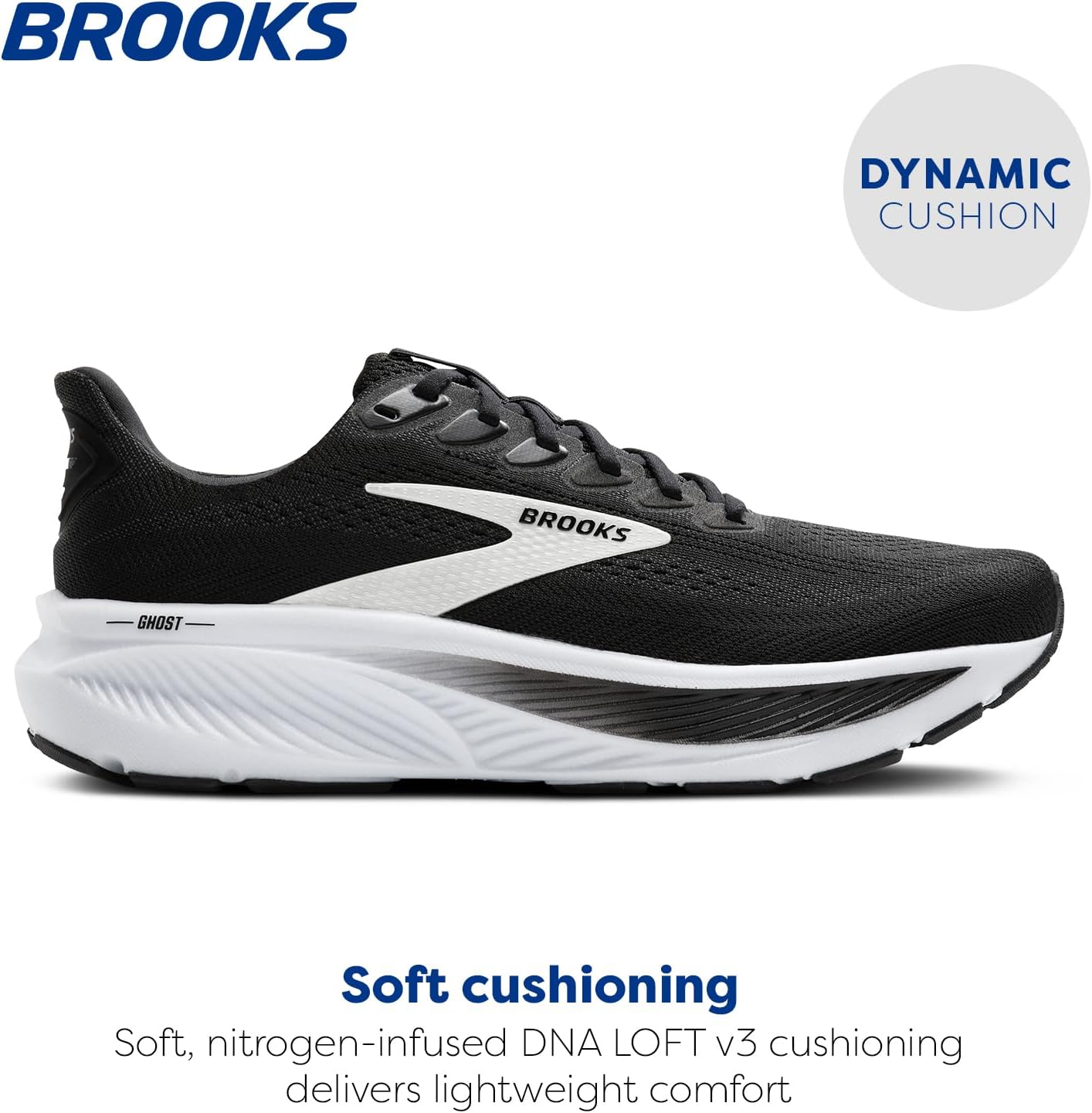
What reviewers consistently point to: Brooks Ghost, ASICS Gel-Nimbus, and New Balance 1080 are the perennial names in this category for a reason. Runners World’s running shoe coverage repeatedly highlights the Brooks Ghost (currently the Ghost 16, around $140) as one of the most consistently well-reviewed daily trainers across multiple years of testing — praised for its neutral, reliable feel and wide sizing availability. The ASICS Gel-Nimbus 26 sits at the premium end of this category ($180) and reviewers at Podium Runner have noted it as a standout choice for runners who want a plush long-run shoe that doesn’t sacrifice stability underfoot. The New Balance Fresh Foam X 1080v14 ($165) earns similar praise from the running community for its soft foam and versatility across easy paces.
The tradeoff to name explicitly: More cushion means more energy absorbed into the foam — which is exactly what you want on easy days (your legs don’t have to work as hard to dampen impact) but exactly what you don’t want on tempo days (you lose the snappy energy return that helps you hold a faster pace). Don’t try to use your daily trainer for workouts. That’s what slot two is for.
Decision rule for slot one: If your weekly mileage is under 30 miles and you’re primarily racing a half marathon, a mid-cushion trainer like the Brooks Ghost is the value play. If you’re logging 35–50 miles per week or your easy pace is slower (8:30/mile or above), move toward the Nimbus or 1080 for extra protection.
Slot Two: The Tempo Shoe (Your Performance Training Workhorse)
This is where most intermediate runners under-invest — and it shows up on race day. A tempo shoe is firmer and more responsive than a daily trainer, built for the 15–30% of your training that happens at a pace your body actually needs to feel fast. It might be a “performance trainer” or a “lightweight trainer” in marketing language. What you’re looking for: a lower-to-the-ground feel (stack height in the 28–34mm range is common), a stiffer, more energetic foam (PEBA or TPEE-based foams like ASICS’ FlyteFoam Blast+ or Saucony’s PWRRUN PB are popular options), and a shoe that rewards good form rather than compensating for sloppy mechanics.
The names reviewers keep returning to: The Saucony Kinvara 15 (~$120) is a consistent pick for runners who want a lightweight, snappy trainer that doesn’t require race-day legs to enjoy. Runners World’s training shoe coverage has called it one of the best value options in this category for several years running. The ASICS Kayano Lite and the Nike Pegasus series occupy a middle zone — more cushion than a true tempo shoe, less than a daily trainer — and work well as “tweener” shoes if you want slot two to also handle your medium-long runs (10–12 miles at a moderate effort).
At the premium end of this slot, the Saucony Endorphin Speed 4 ($180) and the New Balance FuelCell Rebel v4 ($140) use propulsive foam (and in the Endorphin Speed’s case, a nylon plate instead of carbon) to give you a race-ready feel at workout-appropriate prices. Across aggregated reviews, the pattern for the Endorphin Speed is consistent: it’s a shoe that makes your tempo runs feel easier without requiring you to save it for race day.
The tradeoff: A firmer, faster shoe puts more demand on your calf and Achilles. If you’re coming back from a calf strain or plantar issues, start with a smaller percentage of tempo miles in slot two and work up. The Running Clinic’s guidelines on Achilles load management suggest a gradual transition to firmer footwear when reintroducing speed work after any lower-leg issue.
Decision rule for slot two: If your half-marathon goal pace is faster than 8:00/mile, invest in the Endorphin Speed or FuelCell Rebel — the plate-assisted geometry will teach your body what fast feels like in training. If your goal is sub-2:00 and this is your first real workout shoe, the Kinvara 15 is the lower-risk entry point.
Slot Three: The Race-Day Shoe (Use It Sparingly, Race It Hard)
Carbon-plated shoes — shoes with a stiff carbon fiber plate embedded in the midsole — are the defining gear story of running in the last five years. The plate works in concert with ultra-soft, highly resilient foam (usually PEBA-based, like Nike’s ZoomX or ASICS’ FF TURBO) to return more energy with each stride. Independent research published in sports science journals and summarized by outlets including Runners World puts the efficiency benefit of top-tier carbon plated shoes at roughly 4% compared to conventional trainers — which, at a 2:00 half marathon, is roughly five minutes.
The catch: these shoes are expensive ($230–$280 at the top end), the foam degrades faster than conventional trainers, and they’re genuinely uncomfortable at easy paces. They’re designed for one specific use case: running fast.
The current field, per published specs and reviewer consensus:
- ASICS Metaspeed Sky+ (~$250): Designed for runners with a longer, lower-cadence stride. Spec sheets show a 40mm stack height and a rocker geometry that reviewers at Podium Runner describe as smooth and efficient rather than aggressive.
- On Running Cloudboom Echo 3 (~$270): Reviewers consistently flag its Helion HF foam as having a distinctive, springy pop that suits runners who like a more responsive, tactile ride.
- Hoka Cielo X1 (~$250): Hoka’s top-tier race shoe in 2026, spec-rated with a carbon plate and PEBA foam, drawing consistent comparisons to the Adidas Adizero Pro series in race-day reviews.
- Nike Vaporfly 3 (~$260): The shoe that started the carbon-plate revolution still earns top marks in aggregated running shoe reviews for a reason. Runners World’s race shoe round-ups consistently place it at or near the top of the category.
How many miles before you race in them? Podium Runner’s carbon shoe guidance, echoed by most specialty running retailers, recommends no more than 20–40 miles on a carbon-plated shoe before race day — enough to dial in the fit and ground feel, not enough to fatigue the foam.
Decision rule for slot three: If your half-marathon goal puts you under 1:45, a true carbon shoe is worth the investment — the efficiency gain compounds meaningfully at faster paces. If you’re targeting 1:45–2:10, a plated performance trainer like the Endorphin Speed in slot two can double as your race shoe and save you $100–$150. Only buy a dedicated carbon shoe if your goal pace will actually let you harness it.
Putting the Rotation Together: The Simple Rule
Here’s the framework: easy run = daily trainer, workout = tempo shoe, race = carbon shoe. That’s it. If you only have budget for two pairs right now, start with slots one and two — the daily trainer and the tempo shoe — and borrow the carbon shoe on race day (many specialty running stores offer demo programs or short-term loaners for race weekend). If budget allows all three, plan for roughly 400–500 miles per pair in slots one and two and treat slot three as a 200–250 mile asset you protect.
The rotation isn’t just gear-nerd logic. It’s the same system that sub-elite and competitive age-group runners use to arrive at the start line healthy, with legs that know exactly what fast feels like. The math is simple: three shoes, used with intention, get you to the finish line in better shape than one overworked pair ever could.