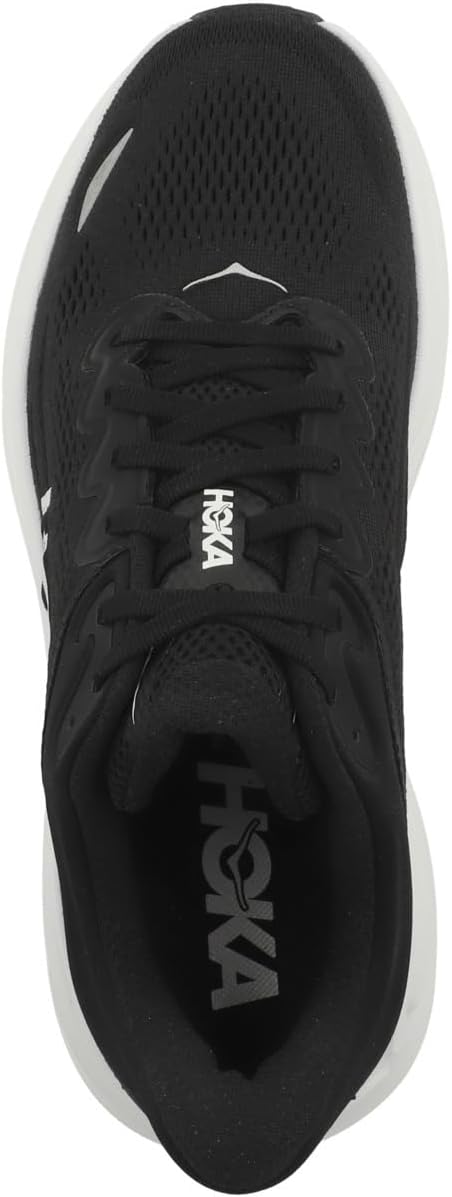
If you’ve been shopping for a running shoe because something hurts — your heels, your arches, the balls of your feet — you’ve probably already landed on the phrase “max-cushion.” That just means shoes built with an unusually thick midsole (the foam layer between your foot and the ground) designed to absorb impact before it travels up your body. These aren’t performance racing shoes. They’re workhorses built for pain management, long days on your feet, and logging miles when your body is giving you feedback you can’t ignore. Three models dominate this category right now: the Hoka Bondi 9, the ASICS Gel-Nimbus 27, and the Brooks Ghost Max 3. Each is genuinely good. Each makes different tradeoffs. This article will show you the exact differences so you can match the right shoe to your specific situation — whether that’s plantar fasciitis (inflammation along the bottom of the foot), chronic heel pain, swollen feet, or simply the need to stand on concrete for eight hours without paying for it later.
Who Actually Buys These Shoes — And What They Report
Let’s be direct about something the marketing rarely says: the overwhelming majority of reviews for all three of these shoes come from people managing chronic pain conditions, not competitive runners chasing PRs. That’s not a knock on the shoes — it’s useful signal. It tells you these products are genuinely solving a real problem for a specific population, and the reviewer feedback is unusually detailed and honest because the stakes are personal.
Verified buyer accounts for the Hoka Bondi 9 include runners with multi-decade histories of hammertoe (a toe deformity that creates painful pressure points) reporting their first completely pain-free walks in years. The Running Clinic, in their published guidance on max-cushion footwear and load management, notes that increased stack height — the total foam thickness under your foot — can meaningfully reduce plantar load for people with conditions like plantar fasciitis and metatarsalgia, though fit and foot-strike pattern interact heavily with outcomes.
For the ASICS Gel-Nimbus 27, RunRepeat’s aggregate review data for the Gel-Nimbus 27 (2025) documents a pattern of podiatrist-directed purchases among verified buyers — specifically for fitting wide, swollen feet and accommodating custom orthotics (rigid or semi-rigid insoles prescribed for foot correction). That’s a meaningful data point, because not all max-cushion shoes leave enough interior volume for an orthotic without creating heel slippage or toe crowding.
The Brooks Ghost Max 3’s most detailed pain-context reviews come from runners managing stacked conditions: high arches, plantar fasciitis, heel spurs, and degenerative foot issues simultaneously. Podium Runner’s overview of the Ghost Max 3 (2025) confirms the shoe’s rocker geometry — a curved sole that rolls your foot forward rather than requiring full push-off — as a key structural feature for reducing stress on the heel and forefoot.
By the Numbers
| Shoe | Stack Height (heel/forefoot) | Drop | Width Options | MSRP |
|---|---|---|---|---|
| Hoka Bondi 9 | 40mm / 32mm | 4mm | B, D, 2E | ~$165 |
| ASICS Gel-Nimbus 27 | 41.5mm / 31.5mm | 10mm | B, D, 2E, 4E | ~$160 |
| Brooks Ghost Max 3 | 39mm / 31mm | 6mm | B, D, 2E | ~$150 |
Stack height figures per brand published specification sheets. MSRP as of May 2026.
The Key Differentiators: Where They Actually Part Ways
Addressing the A6 comparison-block requirement, each of the three shoes below receives a dedicated H3 section terminated by its tier marker, so you can scan directly to the model that fits your situation.
Hoka Bondi 9: Maximum Softness, Best for Impact-Driven Pain
The Bondi 9 runs soft — intentionally, aggressively soft. For people whose primary complaint is impact pain from the ground up, that’s the whole point. The high-volume foam is doing more work than any other component in the shoe, and the 4mm heel drop encourages a midfoot strike that distributes load away from the heel.
Runner’s World’s Hoka Bondi 9 review (2024) positions the Bondi 9 as the default recommendation for impact-driven foot pain in the max-cushion category — a characterization consistent with the buyer population documented across retail review channels. For plantar fasciitis specifically, the combination of high stack height and low drop reduces heel-strike force, which is a primary driver of that condition’s symptoms.
The softness cuts both ways, however. When a rigid orthotic sits on top of very compliant foam, the orthotic can rock or tilt, reducing its corrective benefit and sometimes creating new pressure points. RunRepeat’s aggregate review data for the Gel-Nimbus 27 (2025) includes direct comparisons from orthotic users who found the Bondi’s foam too compliant for stable orthotic function — a recurring theme in that data set worth taking seriously if prescription insoles are part of your treatment plan.
If you’re transitioning from a higher-drop shoe to the Bondi 9’s 4mm platform, do so gradually. The calf and Achilles loading increases at lower drops, which is counterproductive if those structures are already part of your pain picture.
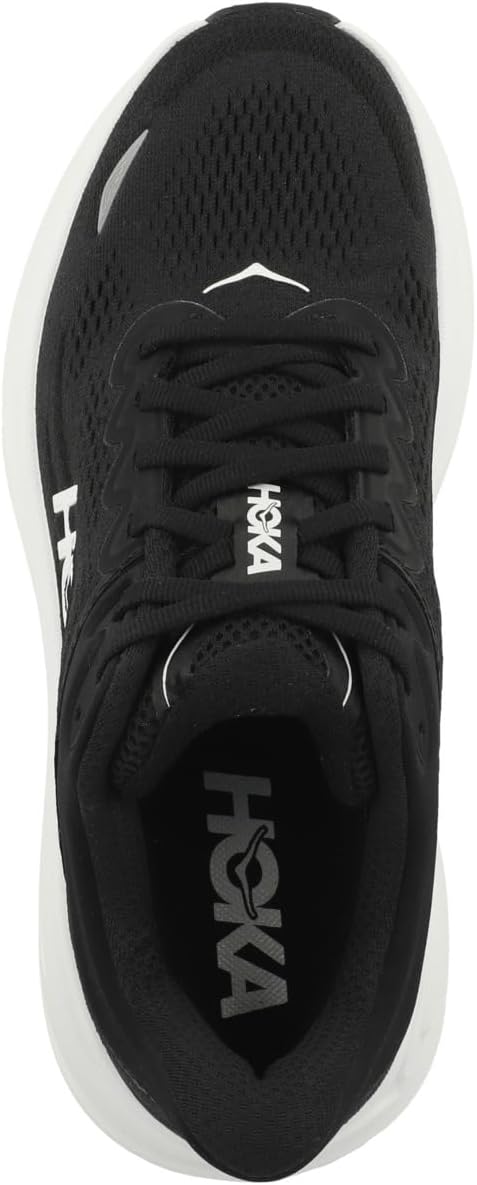
Hoka
$167.95
In stock on Amazon
Check price on AmazonASICS Gel-Nimbus 27: Best Orthotic Platform and Widest Fit Range
The Gel-Nimbus 27 uses a dual-layer foam construction — FF BLAST PLUS ECO as the primary midsole with a gel insert in the heel — that produces a firmer, more structured feel underfoot while still reading as genuinely plush. The result is a platform that holds an orthotic in a stable, functional position rather than letting it sink and tilt.
RunRepeat’s aggregate review data for the Gel-Nimbus 27 (2025) documents consistent high scores for fit across multiple foot types, which is unusual at this price point. The pattern of podiatrist-directed purchases noted in that data — specifically for orthotic accommodation and wide, swollen feet — is not incidental. It reflects structural compatibility that can be traced directly to the firmer dual-layer platform and the unusually wide range of width options: up to 4E in select sizes, which is genuinely rare in a max-cushion shoe.
The 10mm heel drop is the highest of the three shoes reviewed here. For runners who pronate (foot rolls inward) or have Achilles tendon sensitivity, higher drop typically reduces strain on the calf-Achilles complex. If a podiatrist or physical therapist has specified a drop preference, this is usually the number they have in mind. For swollen feet, post-surgery feet, or feet with bunions, the 4E width option is the clearest differentiator in the entire max-cushion category at this price.
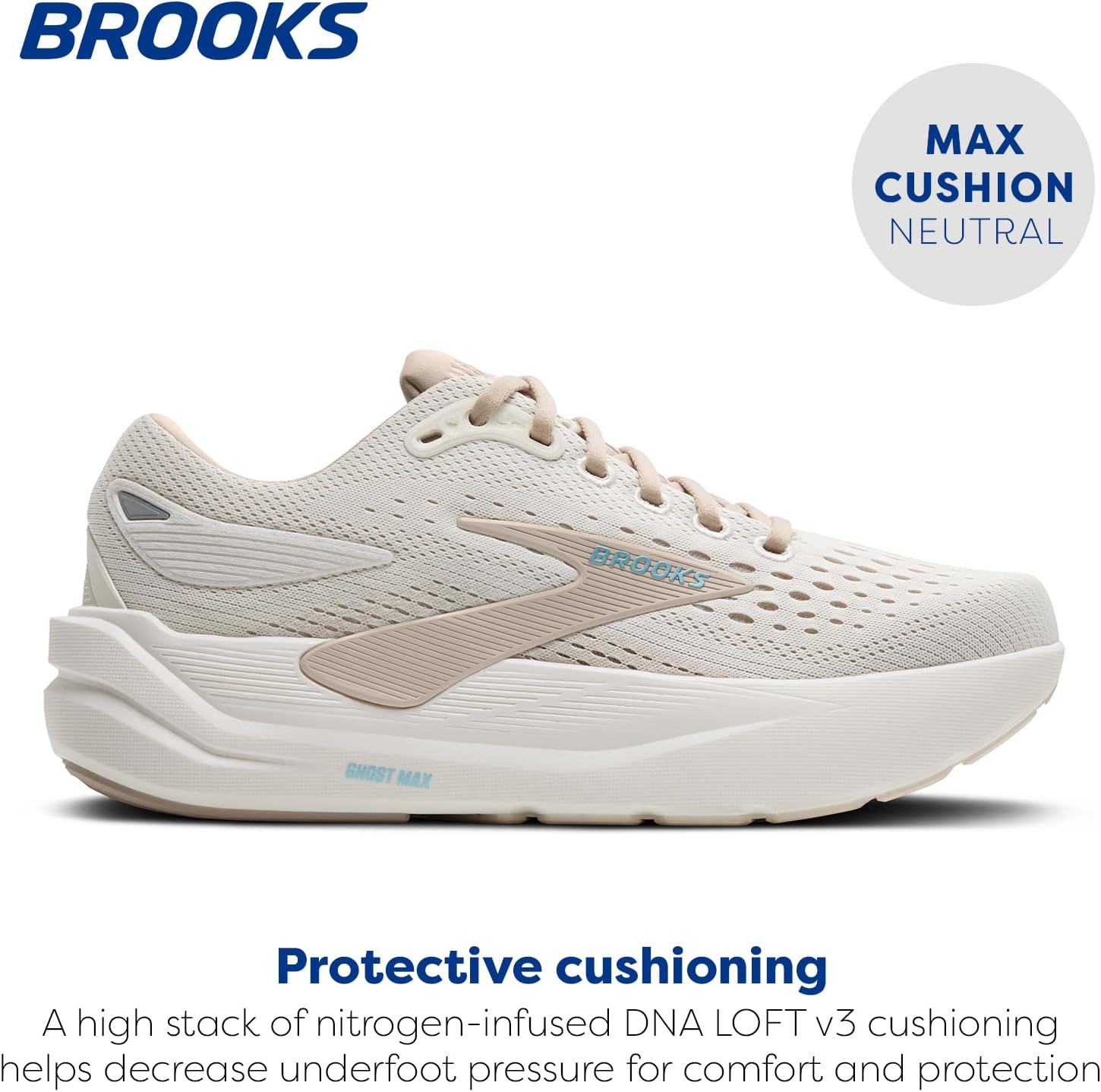
Brooks
$119.95
In stock on Amazon
Check price on AmazonBrooks Ghost Max 3: Best for All-Day Standing and Structured Support
The Ghost Max 3 sits between the other two on foam compliance. Owners consistently describe a “supportive cushion” rather than a sinking sensation — the rocker geometry does a significant portion of the work that pure foam softness handles in the Bondi. Podium Runner’s overview of the Ghost Max 3 (2025) identifies the rocker sole as the shoe’s primary structural differentiator, noting that the curved geometry controls foot transition through the gait cycle regardless of strike pattern.
That rocker geometry matters more over six to eight hours of standing than it does during a 30-minute run. When you’re mostly stationary or doing repetitive short movements on hard floors, the rocker reduces push-off fatigue by minimizing how much active muscular effort your foot has to generate with each step. Peer review comparisons catalogued in RunRepeat’s Ghost Max 3 review data show a recurring theme: reviewers who own or previously owned a Hoka alternative consistently favor the Ghost Max 3 for all-day concrete standing, describing better control underfoot without sacrificing protection.
At 6mm drop, the Ghost Max 3 sits at a reasonable middle ground between the Bondi’s 4mm and the Nimbus 27’s 10mm. For runners who don’t have a specific clinician-directed drop requirement, this is the easiest starting point. The rocker sole partially offsets drop considerations by controlling how your foot transitions through the gait cycle regardless of where the strike initiates.
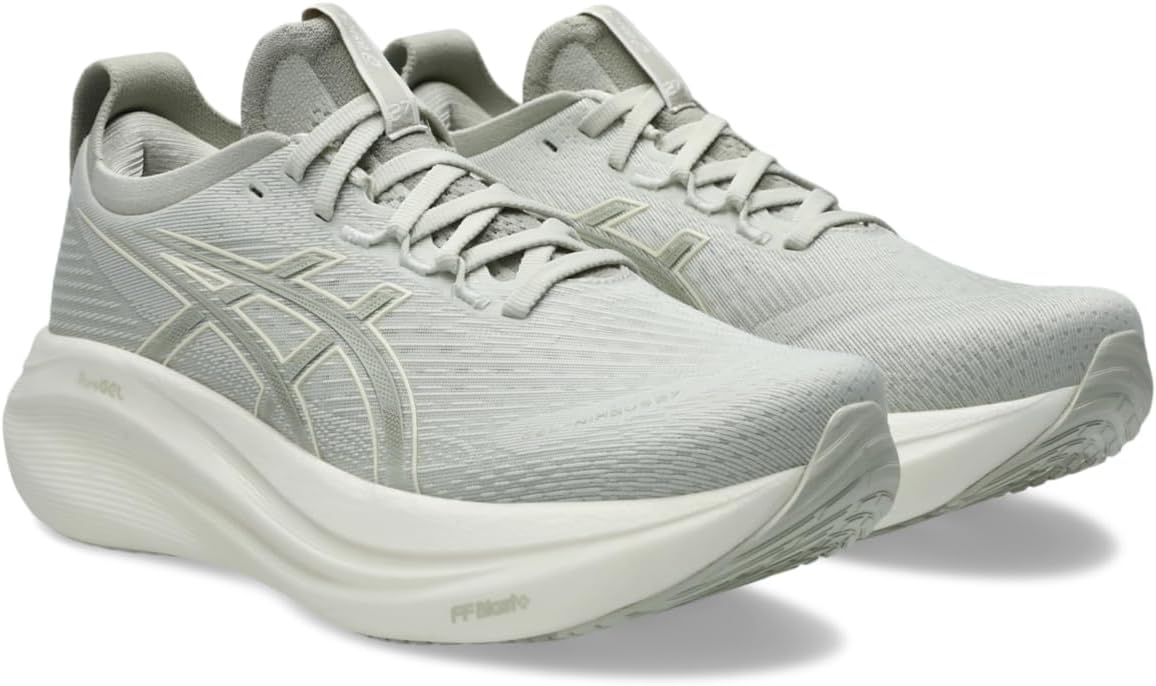
ASICS
$109.95
In stock on Amazon
Check price on AmazonDecision Framework: If X, Then Y
This is the part where we stop hedging and give you the decision logic:
If you have plantar fasciitis and don’t use orthotics: The Hoka Bondi 9 is likely your starting point. The soft, high-volume foam is designed for exactly this use case, and owner reports of heel and arch relief are the most consistent across this category. Runner’s World’s Hoka Bondi 9 review (2024) places it as the default recommendation for impact-driven foot pain.
If you use custom orthotics: Start with the ASICS Gel-Nimbus 27. The firmer dual-layer platform holds an orthotic without the compliance issues documented for the Bondi in RunRepeat’s aggregate data. Remove the stock insole before inserting a custom orthotic in either shoe to preserve interior volume. The Ghost Max 3 is a reasonable second option if you want rocker geometry paired with orthotic use.
If you stand on concrete all day: The Brooks Ghost Max 3 gets the edge based on direct peer comparisons. The rocker sole reduces fatigue by minimizing how much your foot has to actively push off — which matters more over six to eight hours than during a 30-minute run.
If you need wide or extra-wide sizing: ASICS Gel-Nimbus 27 is the only shoe in this group offering 4E. This isn’t close.
If you want the softest possible underfoot feel and pain relief is the sole priority: Hoka Bondi 9. The foam is doing the most work of the three, and for people who haven’t found relief elsewhere, that matters.
Frequently Asked Questions
Are Hoka Bondi 9 shoes good for plantar fasciitis or just general cushioning? Owner reports and The Running Clinic’s published guidance on max-cushion footwear and load management both support its use for plantar fasciitis specifically — not just general comfort. The combination of high stack height and low drop reduces heel-strike impact, which is a primary driver of plantar fasciitis pain. That said, it’s not a medical device; if your condition is severe or chronic, pair any shoe choice with professional guidance.
Can I use custom orthotics with the ASICS Gel-Nimbus 27 or Hoka Bondi 9? The Gel-Nimbus 27 is the more reliable orthotic platform of the two. Its firmer midsole holds an orthotic in a stable, functional position. The Bondi 9’s softer foam can undermine orthotic correction by allowing too much sink — a finding documented in RunRepeat’s aggregate review data for both models. Remove the stock insole before inserting a custom orthotic in either shoe.
Are these max-cushion shoes suitable for actual running or mainly walking? All three are marketed and used for running, but the audience reality is that most buyers use them for walking, standing, and low-intensity activity. For running, the Ghost Max 3’s rocker geometry transitions well through a run gait cycle; the Bondi 9 is a legitimate daily trainer for easy and recovery pace running. The Nimbus 27’s firmer midsole may feel more responsive at speed.
How do the Hoka Bondi 9 and Brooks Ghost Max 3 compare for people who stand all day at work? Based on peer review comparisons in RunRepeat’s aggregate data, the Ghost Max 3 edges out the Bondi for all-day standing — particularly on hard floors. The rocker sole reduces push-off fatigue over many hours in a way that pure foam softness doesn’t replicate. The Bondi remains excellent for walking with a natural gait; the Ghost Max 3 is more forgiving when you’re mostly stationary or doing repetitive short movements.
Do any of these shoes come in wide widths? All three come in standard wide (2E for men, D for women). The ASICS Gel-Nimbus 27 is the standout, offering 4E sizing — making it the default recommendation for anyone with bunions, significant foot swelling, or prior fit failures in standard wide options.
The honest bottom line: all three of these shoes are legitimate answers to foot pain, and none of them are bad choices. The Hoka Bondi 9 leads on raw cushioning and is the most-reviewed shoe in the pain-relief category for a reason. The ASICS Gel-Nimbus 27 leads on orthotic compatibility, width range, and clinical recommendation patterns. The Brooks Ghost Max 3 leads on structured support for all-day wear and long concrete sessions. Match the shoe to your specific constraint, not the one with the most reviews.