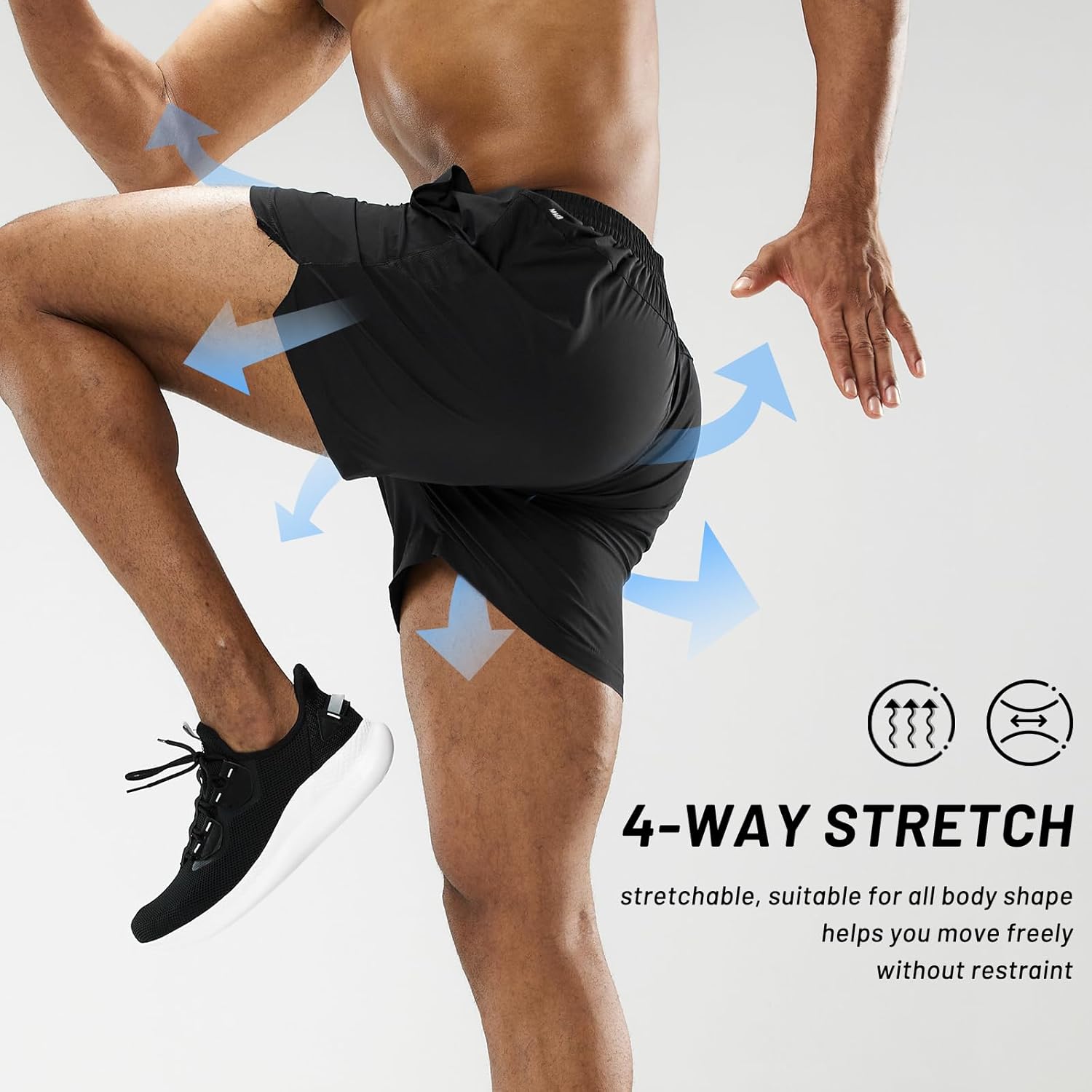
If you’ve ever grabbed a pair of gym shorts for a 10-mile long run and paid for it by mile six — seam chafe, sweat-soaked fabric clinging to your quads, a pocket that couldn’t hold your phone without slapping you with every stride — you already understand the core problem this guide addresses. Running shorts are not simply athletic shorts that happen to be worn while running. They’re purpose-built garments, engineered around specific problems: moisture management (how fast fabric moves sweat away from your skin), chafe prevention, liner construction, and the physics of stride mechanics. The difference between a $22 department store short and a $68 training short isn’t marketing — it’s in the cuts, the fabrics, and the small decisions that only show up at mile eight. This guide lays out the real decision variables, names the tradeoffs explicitly, and ends with clear if/then rules so you can match the right pair to how you actually train.
The Decision Variables That Actually Matter
Most shorts reviews spend too much time on aesthetics and not enough on the four variables that determine whether you’ll still want to wear these at the end of a 12-week marathon block.
Liner vs. no liner. The built-in liner — a thin, compressive inner short sewn inside the outer shell — is the single most divisive feature in running shorts. Liners support the inner thigh, reduce chafe, and eliminate the need for separate compression shorts. The trade-off: in high heat and humidity, a double layer traps more warmth and adds drying time. Outside Online’s gear coverage consistently notes that runners who prefer liner-free shorts typically either already wear compression tights or run in climates where airflow is the priority over support. If you’re building a training rotation in a humid summer climate, having one liner option and one no-liner option is worth considering.
Inseam length. Inseam length — the distance from the crotch seam to the hem — matters more than most guides admit. Options generally run from 2.5” (split/racing) to 5” (standard) to 7” (longer training). The split short (also called a racing short), with its extremely short inseam and notched side vents, maximizes stride freedom at pace. For tempo work and race day, the reduced fabric flutter and greater hip mobility are measurable advantages. For easy and long runs, a 5” inseam typically strikes the best balance of comfort and coverage. Wirecutter’s running shorts roundup highlights that a common mistake is buying only one inseam length and forcing it to do all jobs — a 3” split short on a slow recovery run is a different experience than a 5” trainer.
Fabric weight and construction. Lightweight woven fabrics (think: thin, structured, with some mechanical stretch) behave differently from knit stretch fabrics. Woven constructions — the kind used in most top-tier training and racing shorts — resist soaking, dry faster, and maintain their shape over hundreds of washes. Knit fabrics stretch more forgivingly but tend to retain moisture longer and can pill or stretch out with heavy mileage. Runner’s World’s testing archive flags that fabric pilling at the inner thigh is one of the top longevity complaints in budget running shorts; it’s almost entirely a fabric-weight problem.
Pocket architecture. Pocket placement sounds trivial until you’re 14 miles in carrying your phone in a bouncing back pocket. Front zip pockets at the waistband sit closer to your center of gravity and minimize bounce. Rear zippered pockets work for gels and cards but shift weight behind you. Side-seam pockets, common in longer-inseam styles, are a compromise — convenient but prone to slap on wider hips. If you run with your phone (most intermediate runners do, for safety if nothing else), front waistband zip pocket should be a non-negotiable spec.
The Price-to-Performance Reality
Here’s the honest math on running shorts pricing in 2026:
By the numbers:
- Budget tier ($20–$35): synthetic blend, basic liner or none, limited pocket options
- Mid-tier ($45–$65): technical woven fabric, better liner construction, at least one zip pocket
- Performance tier ($68–$95): race-grade fabrics, engineered liner, reinforced waistband, full pocket system
- Premium/specialty ($95–$130+): brand-identity fabrics, limited-run colorways (Satisfy Running, Tracksmith)
The jump from budget to mid-tier delivers the most objective performance improvement — better fabric dries faster, liners that actually stay put, pockets that don’t gap. The jump from mid-tier to performance tier is real but more incremental; you’re buying durability and refinement over dramatically new function. The premium/specialty tier, represented by brands like Tracksmith and Satisfy Running (whose shorts run $85–$130), is largely an aesthetics and identity play on top of legitimate technical construction. Podium Runner’s buyer coverage notes this plainly: the technical execution at the $60–$70 mark from mainstream running brands is often comparable to specialty brand construction; what you’re paying for above that is design language and community signaling.
That’s not a knock on Satisfy or Tracksmith — both brands build genuinely well-constructed product — but it’s a tradeoff worth naming if you’re equipping a full training rotation rather than buying one showcase piece.
How to Build a Two-Short Rotation (And Why One Pair Isn’t Enough)
The multi-shoe rotation principle — keeping two or three pairs in active use to extend mileage and match footwear to run type — applies just as cleanly to shorts. Most intermediate runners training 35–50 miles per week need at minimum two distinct short configurations in regular rotation:
Slot 1: The workhorse trainer. This is the 5” inseam, built-in liner, zip pocket short that handles 80% of your runs — easy miles, long runs, medium-intensity aerobic work. It should be machine-washable, quick-drying, and boring in the best way. You want this short to disappear — no chafe, no bounce, no second thoughts. Brands consistently well-reviewed in this slot by Runner’s World and Wirecutter include Nike’s Dri-FIT Challenger line, the Brooks Sherpa 5” Short, and the Rabbit EZ 5” Short. At the $45–$65 range, these are the shorts that log the real miles.
Slot 2: The split/tempo short. A 2.5”–3” inseam split short for workouts, tempo runs, and race day. No liner, maximum hip mobility, minimal fabric. If you’ve never run a tempo workout in a split short, the sensation of unrestricted stride is legitimately noticeable — reviewers across aggregated forums consistently describe it as the single biggest functional upgrade from standard training shorts. The New Balance RC Elite Split Short and the Soar Running Race Short are well-regarded in this category at the $55–$85 range.
Optional Slot 3: The long-run no-liner. If you train in heat and prefer compression tights for liner function, a lightweight no-liner short in a 5”–7” cut gives you airflow and coverage without the double-layer warmth. This is the most personal of the three slots — it depends entirely on your compression-short habits and your climate.
Training-Specific Tradeoffs: What to Sacrifice and What to Protect
The gear-obsessed reader deserves a frank conversation about tradeoffs at the workload level.
Heat vs. coverage. In summer training blocks above 75°F, a shorter inseam and single-layer construction is genuinely performance-relevant — not just comfort. Overheating accelerates cardiovascular drift (the gradual rise in heart rate at the same pace as body temperature increases), which distorts your training effort and heart rate data. Choosing a slightly shorter or lighter short on your long run day isn’t vanity; it’s thermal management.
Liner comfort vs. compression function. Built-in liners in most shorts provide light support, not the graduated compression that compression tights deliver. If you’re using shorts with liners as a replacement for compression work in training — expecting them to reduce muscle oscillation and accelerate recovery the way a true compression short would — you’re likely disappointed. The liner keeps things in place and prevents chafe; it doesn’t provide the same mechanical support as dedicated compression gear. Outside Online’s running gear coverage is clear on this distinction.
Pocket convenience vs. weight. A fully loaded phone + gel + card pocket adds meaningful weight in the second half of a marathon-length run. This sounds minor, but runners tracking data on Garmin and Coros devices frequently note in aggregated reviews that waist-level weight affects their cadence feel at high mileage. During marathon training long runs (18–22 miles), consider running your phone separately in a lightweight vest or arm band, using the shorts pocket only for nutrition.
If X, Then Y: The Decision Rules
You’ve read the variables. Here’s how to close the decision:
If you’re training for a half or full marathon and own zero running-specific shorts, start with a single 5” liner short from a mainstream running brand in the $50–$65 range. Get one pair working before building out the rotation.
If you already have one training short and are adding a second, add the split short. It will change how you experience tempo workouts and give you a genuine race-day option.
If you run in humidity above 80% regularly, prioritize single-layer construction and a 3”–5” inseam over a longer, heavier option, even if you sacrifice pocket real estate.
If you’re logging 45+ miles per week, budget for replacing your primary training short every 12–18 months. Fabric degradation — stretching, thinning, liner breakdown — happens on a timeline similar to shoe midsole compression. Podium Runner’s gear guidance puts the practical lifespan of a well-constructed woven short at 400–600 hours of use before you notice fit or performance compromise.
If you’re drawn to Satisfy Running or Tracksmith, buy one as your race-day or showcase piece after you’ve solved the workhorse rotation. The construction is real; the price is easier to justify when it’s your one elevated item rather than your entire drawer.
The best running short is ultimately a quiet one — the pair you never think about mid-run because it’s doing exactly what it’s supposed to. That’s the benchmark. Build toward it methodically, one slot at a time.