Plated Speed Shoes for Every Training Day: Saucony Endorphin Speed 5, ASICS Novablast 5, and New Balance FuelCell SuperComp Trainer V3
You don’t have to be chasing a Boston qualifier to benefit from a “plated trainer.” That term just means a running shoe with a stiff plate — usually nylon or carbon fiber — embedded in the midsole foam. The plate works with the foam to create a propulsive snap as your foot rolls through each stride, making faster paces feel a little more effortless. The category sits between a workhorse daily trainer (built for easy miles and longevity) and a full carbon-plated race shoe (explosive and expensive, but not meant for heavy mileage). Plated trainers are the sweet spot: fast enough to race in, durable enough to actually train in, day after day.
This article compares three of the most talked-about plated trainers heading into the 2026 fall marathon season — the Saucony Endorphin Speed 5, the ASICS Novablast 5, and the New Balance FuelCell SuperComp Trainer V3. If you’re building a training rotation and trying to decide which one earns a spot in it, this is the comparison you need.
How These Three Shoes Are Actually Different
Before getting into the numbers, it’s worth being honest about what separates these shoes philosophically, because the spec sheets alone don’t tell the whole story.
Saucony Endorphin Speed 5
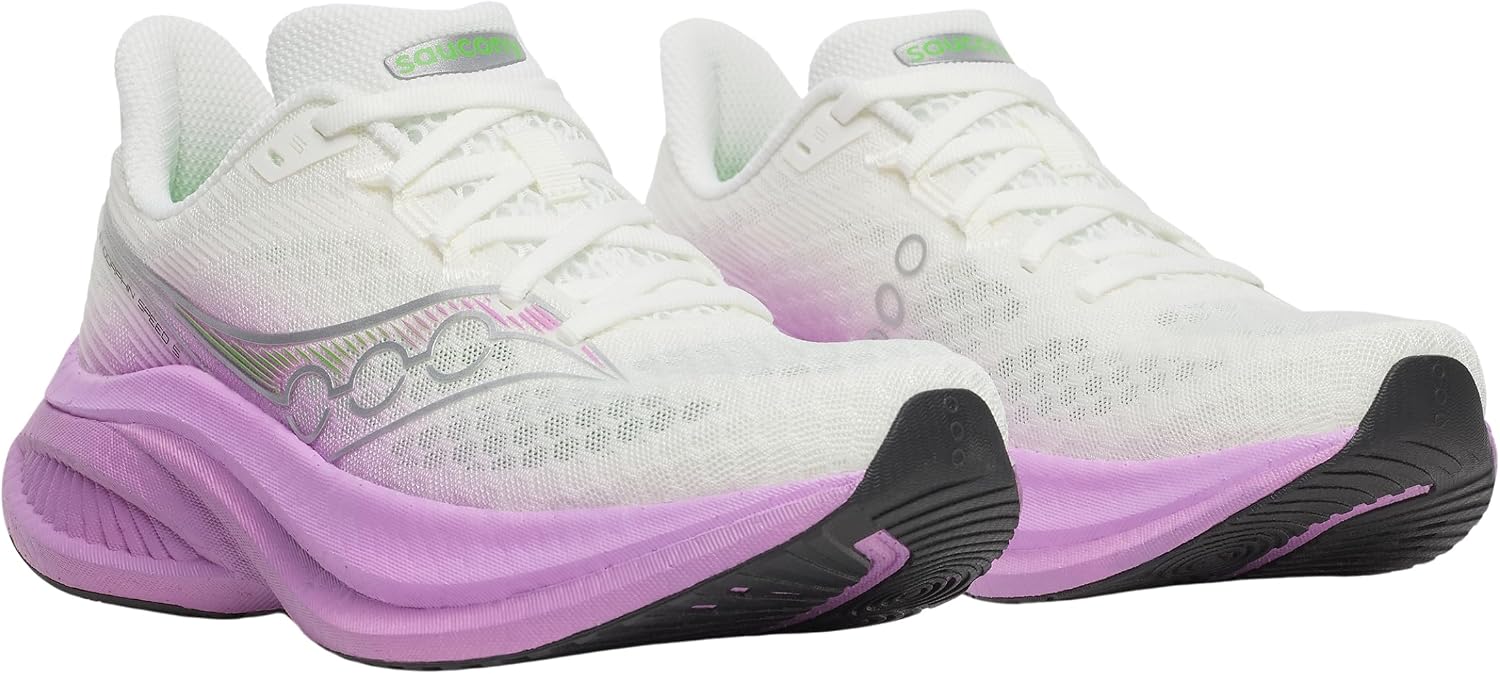
The Saucony Endorphin Speed 5 is built around a nylon speedboard plate — not carbon — embedded in Saucony’s PWRRUN PB foam, the same pebbled, poppy foam family that lives inside their full-carbon Endorphin Pro line. Runner’s World, in their Saucony Endorphin Speed 5 review, consistently describes it as the most versatile shoe in the Endorphin lineup: fast enough for tempo runs and 5K races, cushioned enough to feel comfortable on longer progression runs.
What stands out across long-form owner reviews is the breadth of use cases runners bring to it. People report logging back-to-back easy and hard days in this shoe while still finding it comfortable through extended standing and multi-day walking scenarios. That pattern suggests the Endorphin Speed 5 sits unusually far toward the “all-day comfort” end of the speed trainer spectrum — a meaningful differentiator when you’re shopping for a shoe that has to handle your whole training week.
Outside Online, in their roundup “Best Speed Trainers for Marathon Training,” lists the Endorphin Speed family as a lead recommendation for runners who want one shoe to anchor a training block rather than rotate through three specialized options. The nylon plate — rather than carbon — is a key reason: it delivers propulsion without the “too precious to train in” anxiety that full-carbon plates can create during heavy-mileage weeks.
ASICS
$129.95
In stock on Amazon
Check price on AmazonASICS Novablast 5
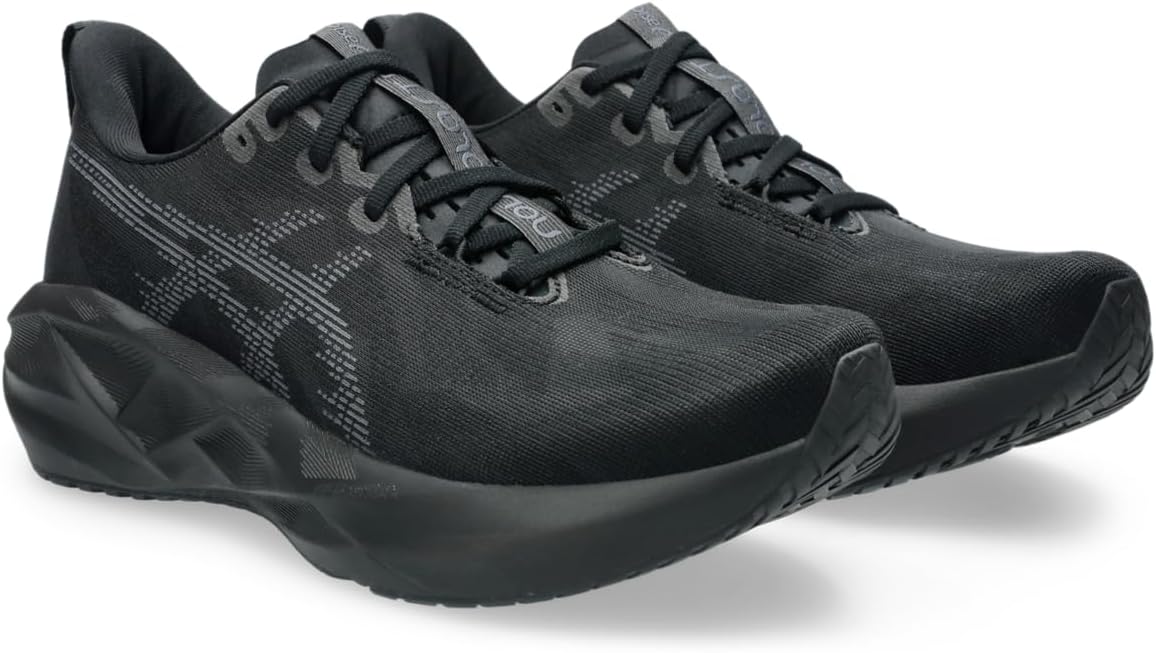
The ASICS Novablast 5 generates a different kind of enthusiasm. Podium Runner, in their “ASICS Novablast 5 First Look,” and aggregated consumer reviews consistently reach for language like “floating,” “bouncing,” and — memorably — “That Boy Bouncy,” a phrase that has become something of a community shorthand for the shoe’s distinctively lively ride character.
The Novablast 5 runs on FF BLAST+ MAX foam with a Guidesole rocker geometry — ASICS’ term for a curved, rigid sole construction that reduces ankle joint load at toe-off. It is notably the only shoe in this comparison offered in a confirmed wide width option, and reviewers with genuinely wide feet specifically call that fit meaningful, not just a label. The wide version accommodates real foot width rather than simply widening the upper on a standard last, which is a distinction worth paying attention to if wide sizing is a deciding factor for you.
The Novablast 5 reads more as a high-energy daily trainer with plated-trainer energy than a pure tempo weapon, which makes it an excellent choice for runners who want that bouncy, fun sensation across easy and moderate efforts without feeling like they’re wearing a specialist tool.
New
$127.25
In stock on Amazon
Check price on AmazonNew Balance FuelCell SuperComp Trainer V3
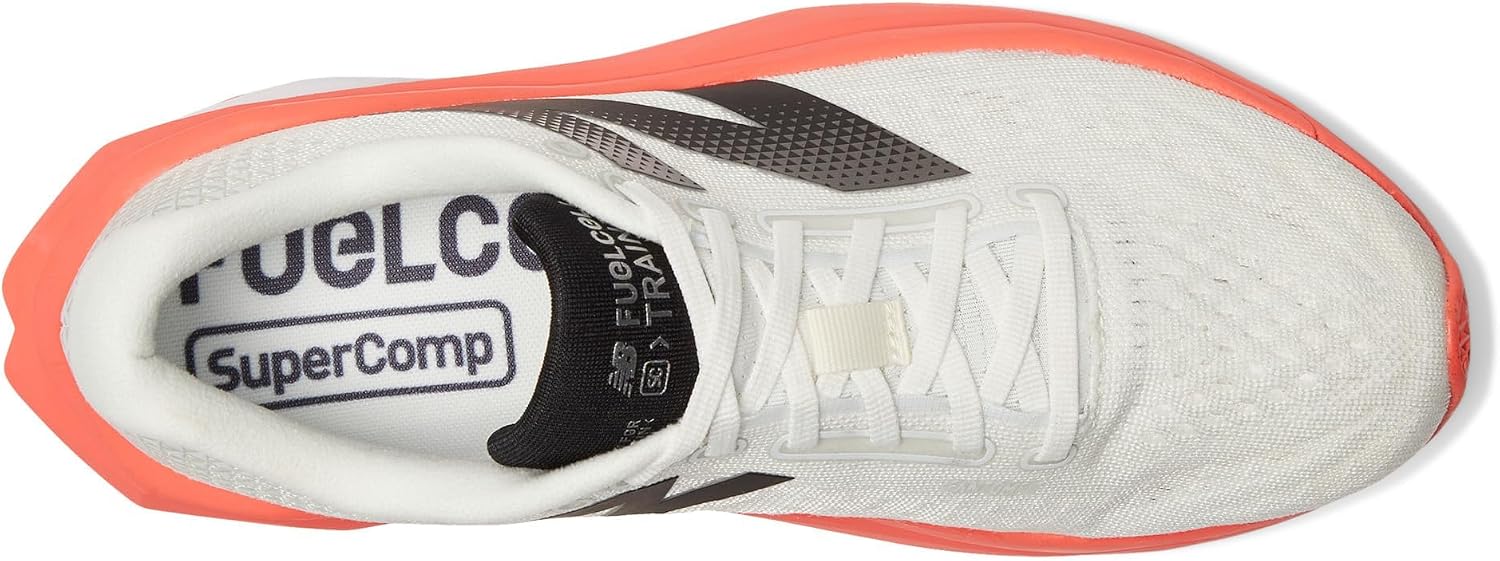
The New Balance FuelCell SuperComp Trainer V3 is the most performance-oriented shoe of the three. It uses a full carbon fiber plate embedded in FuelCell foam, which gives it more in common with race-day carbon shoes than the other two options. RunRepeat, in their “New Balance FuelCell SuperComp Trainer V3 Expert Reviews,” describes it as a legitimate race option that doubles as a trainer — not the other way around.
Owner reviews include striking crossover reports: runners who wear the V3 through long, demanding days on their feet describe it as among the most comfortable shoes for extended standing, which is notable given how firm and propulsive the ride feels during a run. The shoe rewards efficient form and works best for neutral-gait runners who train at tempo-to-threshold effort regularly.
There is one critical fit note for this shoe that must not be overlooked: reviewers of the women’s version consistently and emphatically recommend sizing up half a size. Multiple reviewers flag a narrow toe box and a snug midfoot fit that creates real discomfort at true-to-size. If you are buying the women’s colorway, size up half before your first run — this is not a minor preference note.
Saucony
$157.25
In stock on Amazon
Check price on AmazonBy the Numbers
The table below compares key specs sourced from manufacturer product pages and Runner’s World spec database entries for each model.
| Shoe | Plate Material | Stack Height (heel/forefoot) | Weight (men’s sz 9) | Wide Width |
|---|---|---|---|---|
| Saucony Endorphin Speed 5 | Nylon | 39 mm / 31 mm | ~7.6 oz | No |
| ASICS Novablast 5 | Guidesole (nylon-composite) | 40 mm / 32 mm | ~8.8 oz | Yes (2E) |
| NB FuelCell SuperComp Trainer V3 | Carbon fiber | 40 mm / 32 mm | ~8.4 oz | No |
The weight gap between the Endorphin Speed 5 and the other two is real and meaningful if you are racing. At roughly 7.6 oz, the Saucony is measurably lighter — close to race-shoe territory. The Novablast 5 is the heaviest of the three, which tracks with its cushion-first ride character. The FuelCell SuperComp Trainer V3 splits the difference in weight but leads the group in plate stiffness, which is what gives it the most race-ready feel underfoot.
Who Each Shoe Is Actually For
Choosing between three well-reviewed shoes in the same category comes down to what you need your shoe to do on most days — not just your best days.
Choose the Saucony Endorphin Speed 5 if you want one shoe that can legitimately do it all — tempo runs Tuesday, long run Saturday, and a 5K on Sunday if the opportunity arises. The nylon plate absorbs high-mileage weeks without complaint, and the PWRRUN PB foam is lively enough to keep faster paces feeling effortless while remaining cushioned enough for longer efforts. Runner’s World’s Saucony Endorphin Speed 5 review specifically notes its range across pace types as a standout quality. Runners who are logging serious variety — track workouts, progression runs, casual daily miles — will get the most out of this shoe’s design.
Choose the ASICS Novablast 5 if you have genuinely wide feet, you prioritize a fun and energetic ride sensation over clinical precision, or you are newer to plated trainers and want something forgiving and joyful rather than demanding. Podium Runner’s Novablast 5 coverage highlights the Guidesole geometry as particularly effective for runners who want a smooth, energy-returning transition across easy and moderate efforts. The wide-width availability is a genuine advantage in this category — plated trainers rarely come in meaningful wide sizing, and the Novablast 5’s 2E option has been confirmed by wide-footed reviewers as legitimately accommodating.
Choose the New Balance FuelCell SuperComp Trainer V3 if you want your daily trainer and race shoe to be the same shoe, you are a neutral-gait runner comfortable with a performance-oriented fit, and you are willing to follow the half-size-up guidance for women’s sizing. RunRepeat’s aggregated expert reviews for this model consistently position it as the most race-capable option in the plated-trainer category — a shoe that performs best when you are pushing the pace. Runners who overpronate or prefer a wide toe box will find better fits in the other two options, but for the right runner, the V3 delivers genuine carbon-plate energy without the fragility of a dedicated race shoe.
The Tradeoff No One Talks About
All three of these shoes are marketed as trainers, which implies durability. But they live in a gray zone — built more robustly than pure race shoes, but not as long-lasting as a workhorse neutral trainer. Runners across all three models report outsole wear becoming noticeable between 300 and 400 miles, which is earlier than a traditional daily trainer. If you are logging 50-plus mile weeks, budget for replacement accordingly or rotate these into your lineup alongside a higher-mileage workhorse.
The broader point: plated trainers are a reward category, not a replacement category. They work best when you have at least one other shoe in rotation — an easy-day workhorse — and you are reserving the plated trainer for quality sessions, long runs, and races. Treating them as your only shoe tends to accelerate wear and can be harder on legs that are not yet adapted to the added propulsion and rocker geometry.
Frequently Asked Questions
Can I use a speed trainer for both daily training and race day? Yes — that is the premise of the category. All three shoes reviewed here are designed to handle regular training mileage while still performing well on race day. The Saucony Endorphin Speed 5 and NB FuelCell SuperComp Trainer V3 are particularly strong dual-purpose options. The main caveat: rotate them with an easier-riding shoe if you can, to extend their lifespan and give your legs variety between sessions.
How does the ASICS Novablast 5 compare to the Saucony Endorphin Speed 5 for tempo runs? The Endorphin Speed 5 has the edge at tempo and faster efforts — it is lighter, and the nylon speedboard delivers a crisper toe-off. The Novablast 5’s ride is bouncier and more cushioned, which some runners love for tempo work but others find a touch too soft for true speed sessions. If tempo runs are your primary use case, the Endorphin Speed 5 is the sharper tool. If you want something that feels fun and energetic across a wide range of paces, the Novablast 5 holds its own.
Does the New Balance FuelCell SuperComp Trainer V3 run true to size? For men’s sizing, most reviewers report true to size. For the women’s version, size up half a size — this is a consistent and emphatic note across multiple owner reviews, citing a narrow toe box and snug midfoot fit. Do not skip this step.
Are these shoes suitable for runners who are not fast or elite? Absolutely. Plated trainers benefit any runner — the propulsive geometry and rocker profile reduce effort at any pace, not just race pace. You do not need to be chasing a PR to appreciate what these shoes do on a Tuesday afternoon run.
What is the difference between a speed trainer and a carbon plate race shoe? The main differences are durability and foam tuning. Carbon plate race shoes — such as the ASICS Metaspeed Sky+ or Nike Alphafly — use the most aggressive foam compounds and plates tuned purely for race-day performance. They are typically rated for 200 to 300 miles and can feel unstable at easy paces. Speed trainers use more durable foam, sometimes a nylon plate instead of carbon, and are engineered to handle repeated training loads across 400-plus miles while still offering meaningful speed benefits. Think of race shoes as Formula 1 tires and speed trainers as high-performance street tires: one is fastest in ideal conditions, the other works reliably every day.
The Decision Rule
If your rotation is currently built around one workhorse trainer and you are adding your first plated shoe: start with the Saucony Endorphin Speed 5. It is the most forgiving, the most versatile across pace ranges and surface types, and the most likely to work across your whole training week without feeling like a specialist tool.
If you have wide feet or are a newer runner who wants the energy of a plated trainer without the unforgiving precision of a full carbon plate: the ASICS Novablast 5 is your shoe, especially in the wide-width option.
If you are a neutral-gait runner who races frequently, wants one shoe to cover training and race day, and can commit to sizing up half in the women’s version: the New Balance FuelCell SuperComp Trainer V3 earns that spot in your rotation — and it may surprise you with how well it handles extended time on your feet outside of running, too.