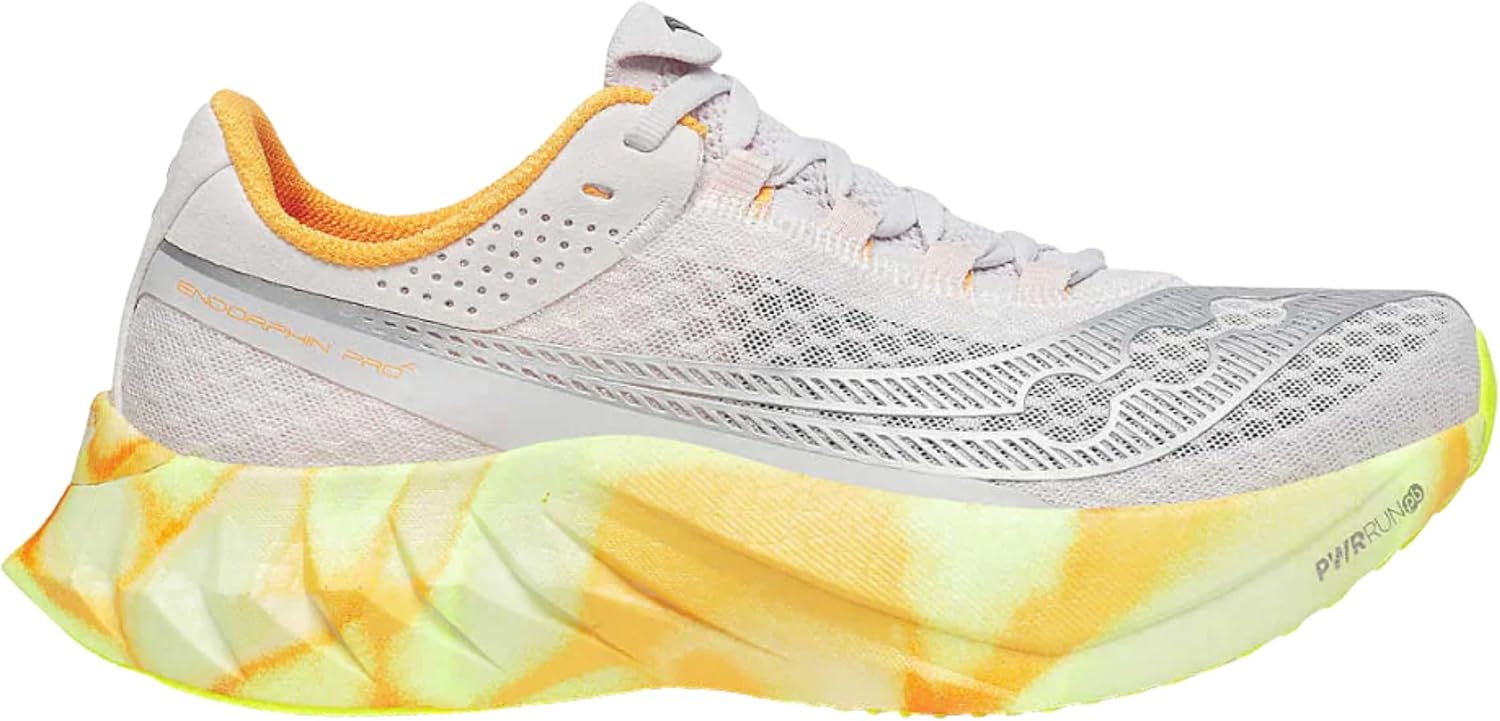
Race day is not the time to make decisions. The runners who go into a half-marathon or full marathon with a PR on the line — a personal record, meaning a faster finish time than any previous race — already know what they’re wearing, what’s on their wrist, and what’s sitting in their gear bag the night before the gun goes off. If any of those details are still open questions on the morning of the race, mental energy that should be powering your pace is going toward logistics instead. This checklist exists to close those questions. It covers the four categories that actually move the needle on race-day performance: footwear, wearable technology, apparel, and nutrition logistics. Whether you’re racing a 5K in workhorse trainers or lining up for a Boston qualifier in carbon-plated supershoes, the decision framework is the same — and the tradeoffs are worth naming explicitly.
Footwear: The Highest-Leverage Decision on the Checklist
No other gear choice has a bigger measurable impact on finish time than the shoe on your foot. This is not a marketing claim — it’s the conclusion of published biomechanics research cited repeatedly by Runner’s World and Podium Runner in their carbon shoe coverage. The mechanism is real: carbon-fiber plates embedded in thick, soft foam (called a “stack”) return energy with each footstrike in a way traditional foam cannot. The result, across aggregated race data, is a documented improvement in running economy — meaning you burn fewer calories to run the same pace.
The practical question for a practitioner isn’t whether to race in a carbon-plated shoe. It’s which one, and whether the tradeoffs fit your race distance and training volume.
The three shoes that dominate competitive age-group conversations in 2026:
| Shoe | Retail | Stack Height (heel/toe) | Best For |
|---|---|---|---|
| ASICS Metaspeed Sky+ | $250 | 40mm / 32mm | Longer stride, 10K–marathon |
| On Running Cloudboom Echo 3 | $270 | 39.5mm / 31.5mm | Versatile; half to full marathon |
| Hoka Tecton X2 | $225 | 37mm / 32mm | Trail racing; technical terrain |
Published specs sourced from manufacturer technical documents and confirmed by Podium Runner’s carbon shoe comparison. Stack height refers to the thickness of the foam between your foot and the ground — higher stacks typically mean more cushion and more energy return, but also a slightly less stable ride.
The decision rule: If you’re racing a road half-marathon or marathon and targeting a PR, the Metaspeed Sky+ or Cloudboom Echo 3 are the most commonly recommended options in that price tier, based on aggregated owner reports from Runner’s World forum coverage and iRunFar long-run reviews. The Sky+ is favored by runners with a longer, more powerful stride; the Cloudboom Echo 3 earns consistent praise for its versatility across both half and full marathon distances. The Tecton X2 is purpose-built for trail — if you’re racing a road event, it’s not the right tool.
The constraint nobody says out loud: The Running Clinic has published guidance noting that carbon-plated supershoes create stress-loading patterns that differ meaningfully from traditional trainers. Running your race in a shoe you haven’t logged meaningful mileage in is a real injury risk, not a minor asterisk. Owners consistently report that 3–5 “activation” runs in race shoes — typically 20–40 minutes each, done in the 2–3 weeks before the event — are enough to adapt without burning shoe durability. Don’t show up on race morning in shoes you’ve worn twice.
Wearable Technology: Your Pacer, Data Logger, and Safety Net
A GPS watch — a wrist-worn device that tracks your pace, distance, and heart rate via satellite — is no longer a nice-to-have for runners chasing a PR. It’s infrastructure. The question is how much infrastructure you actually need.
Entry-level: Garmin Forerunner 55 ($200) The Forerunner 55 does the core job: live pace, distance, heart rate, and post-race data. DC Rainmaker’s analysis of the Forerunner 55 notes GPS accuracy that’s entirely sufficient for road racing — within the margin of error that matters for pace targeting. If you’re running your first or second half-marathon and your goal is simply to run the right effort level, this watch handles it.
Premium: Coros Vertix 2S ($699) At nearly three and a half times the price, the Vertix 2S justifies its cost on a specific list of use cases: dual-frequency GPS for accuracy in urban canyons and tree cover, a dramatically extended battery life (relevant for ultra-distance athletes and marathon runners who want weeks of training data without charging anxiety), and advanced metrics like EvoLab training load analysis. DC Rainmaker’s review of the Vertix 2S confirms the dual-frequency GPS delivers meaningfully better track in environments where standard GPS struggles. For competitive age-groupers targeting sub-elite performance and logging 60–80 miles per week, that data density has real training value.
The decision rule: If you’re racing on a road course and your budget is under $300, the Forerunner 55 is the honest answer. If you’re a high-volume trainer who also races trail events and wants a single device to serve both contexts with maximum precision, the Vertix 2S earns the premium. Don’t pay the premium for the brand name — pay it for the dual-frequency GPS and battery life if those features match your actual use case.
One underrated feature: Any watch with auto-lap set to 1-mile splits gives you real-time pacing accountability. Runners who review their race data on platforms like Garmin Connect or Coros’s EvoLab consistently report that the first two miles of a PR attempt are where race plans fall apart — going out too fast is far more common than going out too slow. Use the splits.
Apparel: Where Fit and Comfort Are the Same as Performance
The conversation about race-day apparel is simpler than footwear or technology, but the stakes are real. Chafing, overheating, and poorly-fitting gear have derailed genuine PR attempts. The practitioner framework here is: minimize variables, maximize body confidence.
The brands worth knowing:
Tracksmith’s race apparel — particularly their Session Short and Twilight Collection — has built a strong reputation among competitive age-group runners for technical fit and aesthetics that hold up at race pace. The fabrics are engineered for low-friction and moisture management, and owner reports consistently note that Tracksmith gear runs true to size in a way that supports pre-race purchasing decisions without in-store fitting. Prices range from roughly $80 to $180 for shorts and singlets.
Satisfy Running occupies a different aesthetic lane — deconstructed, intentionally textured fabrics that look unlike anything else on the start line — but the performance case is equally strong. Their Justice Short, in particular, has developed a following among ultra runners and road marathoners alike for its freedom-of-movement fit and chafe resistance. Satisfy pieces run $120–$300 and are worth treating as long-term investments.
The non-negotiables for race morning:
- Nothing new. Every single apparel item should have been worn on a run of similar duration before race day. No exceptions.
- Body Glide or equivalent anti-chafe balm on inner thighs, underarms, and anywhere fabric creates repetitive contact. Runner’s World’s race day preparation coverage repeatedly flags this as the most overlooked item on race-day checklists.
- Race-specific socks. Thin, moisture-wicking, with a snug heel cup. Injinji toe socks or Balega Hidden Comfort are the most consistently recommended options in owner reviews across running communities.
Nutrition Logistics: Fueling Before and During the Race
This is where practitioners often have the right instincts but incomplete execution. The goal of race-day nutrition is not to discover anything new — it’s to replicate exactly what has worked in training. The general framework, supported by sports nutrition guidance cited in Runner’s World’s marathon training content:
By the numbers:
- 30–60g of carbohydrate per hour during efforts over 75 minutes
- First gel or chew at 45 minutes into the race, not when you feel depleted
- 150–250ml of water with each gel to support absorption
- Nothing tried for the first time on race day — gels, chews, electrolyte drinks included
The practical checklist:
- Pre-race meal: 2–3 hours before gun time, high carbohydrate, low fiber, low fat. Whatever you’ve eaten before your longest training runs.
- Gels on body: For a half-marathon, 2 gels minimum. For a full marathon, 4–6 gels depending on pace and body weight. Most race singlets have rear pockets; if yours doesn’t, a simple race belt (like a Naked Running Band or similar) keeps gels accessible without affecting arm swing.
- Know the course aid station locations. Most major race organizations publish aid station maps in their pre-race communication. If you’re carrying your own hydration, a handheld soft flask is lighter than a vest for road distances under 26 miles.
The Night-Before Gear Audit
Every item should be physically laid out and confirmed the night before. Not mentally reviewed — physically staged. This is standard practice among experienced marathoners and the single habit that eliminates race-morning panic.
Full checklist, in staging order:
Footwear
- Race shoes (worn in, not brand new)
- Race-specific socks
Technology
- GPS watch (fully charged)
- Heart rate strap if used separately
Apparel
- Race singlet or top (previously run in)
- Shorts or tights (previously run in)
- Sports bra if applicable (previously run in)
- Anti-chafe product (Body Glide or equivalent)
- Race bib + safety pins or race bib belt
Nutrition
- Gels (number matched to race distance + pace)
- Race belt or pockets confirmed accessible
- Pre-race meal ingredients confirmed at home
Logistics
- Bag drop bag packed (post-race layer, phone charger, ID)
- Transportation to start confirmed
- Warm-up plan confirmed (easy 10–15 minutes before corral time)
If X, Then Y: The Decision Rules
The goal of a checklist isn’t to carry everything — it’s to carry the right things and make the big calls before race morning.
If you’re racing a road half or full marathon and have a time goal: Race in a carbon-plated shoe you’ve run at least 3 activation sessions in. Set your GPS watch to 1-mile auto-lap. Carry gels numbered for your distance. Wear nothing you haven’t run in before.
If you’re racing a trail event: The Hoka Tecton X2 is the right footwear conversation. Battery life on your watch matters more than on a road event. Hydration vest logistics replace gel-belt logistics.
If you’re early in building your gear rotation and the budget is limited: Prioritize shoes and watch over premium apparel. The performance delta between a $140 trainer and a $270 carbon shoe is larger than the delta between a $30 singlet and a $150 Tracksmith singlet. Spend the marginal dollar on your feet first.
The gear won’t run the race for you. But the wrong gear, the wrong fuel timing, or a decision made at 5 AM that should have been made the night before will make the race harder than it needs to be. Close the open questions. Lay it out. Then run.