If you’ve spent any time training for a half marathon or marathon, you’ve probably heard the term “carbon-plated race shoe.” Here’s the plain-language version: these are specialized running shoes built with a rigid carbon fiber plate embedded inside a highly responsive foam midsole. The plate acts like a spring lever, storing energy as your foot compresses the foam and returning it forward at toe-off. The result, for runners who fit the geometry, is a measurable boost in running economy — meaning you burn less energy to hold the same pace. They are not everyday trainers. They are purpose-built performance tools, typically reserved for races and hard workouts, and they cost $200–$300. This article compares three of the most-discussed options in the sub-elite category right now — the Saucony Endorphin Pro 4, the ASICS Metaspeed Sky (including the Tokyo variant), and the Brooks Hyperion Elite 5 — so you can figure out which one actually fits your foot, your pace, and your race-day situation.
Let’s be direct about methodology: this is an editorial analysis drawing on aggregated owner reviews, published spec comparisons, and reporting from Runners World, Podium Runner, RunRepeat, and Outside Online. What follows is the most useful distillation of what real owners and reviewers report, presented with enough specificity to help you make a high-stakes gear decision.
The Core Tradeoffs: What Separates These Three Shoes
Before going model by model, it helps to understand the decision axes that actually matter at this level.
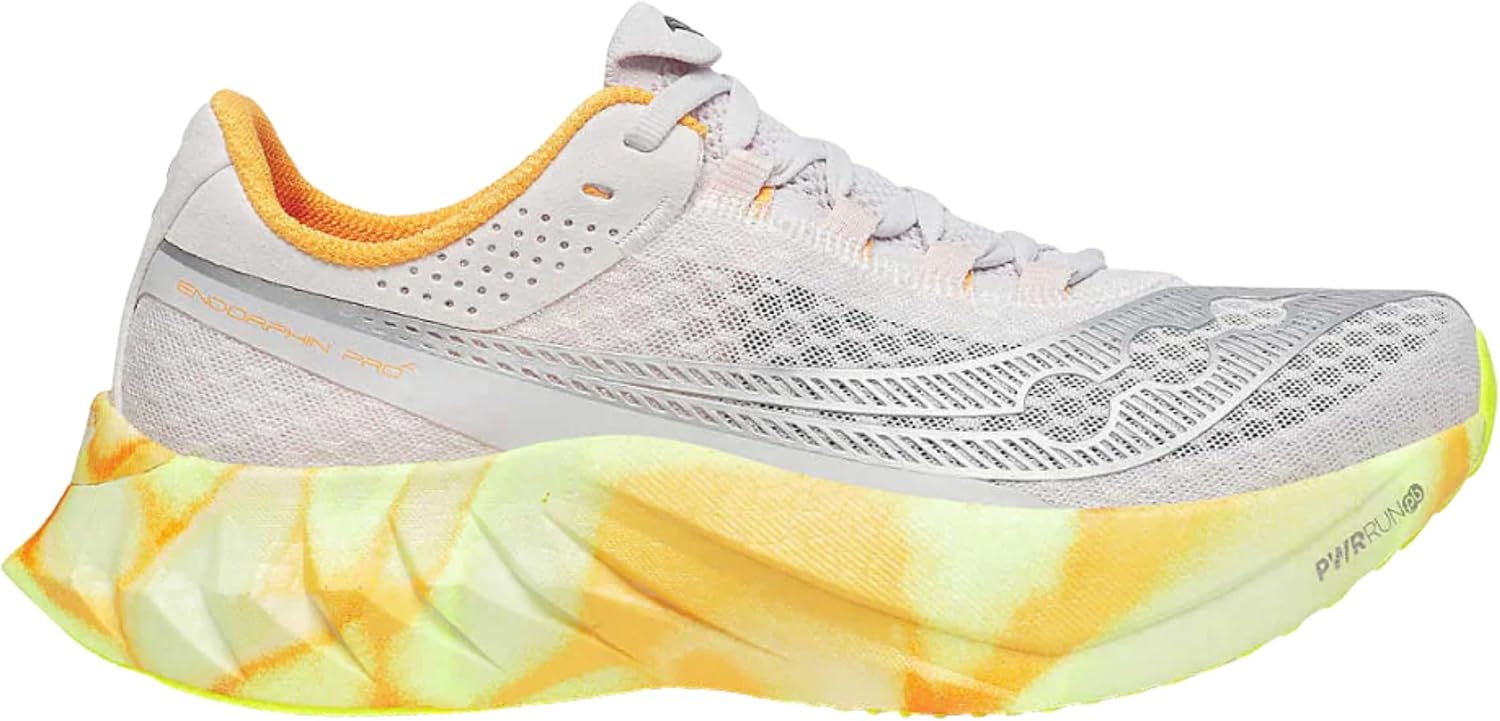
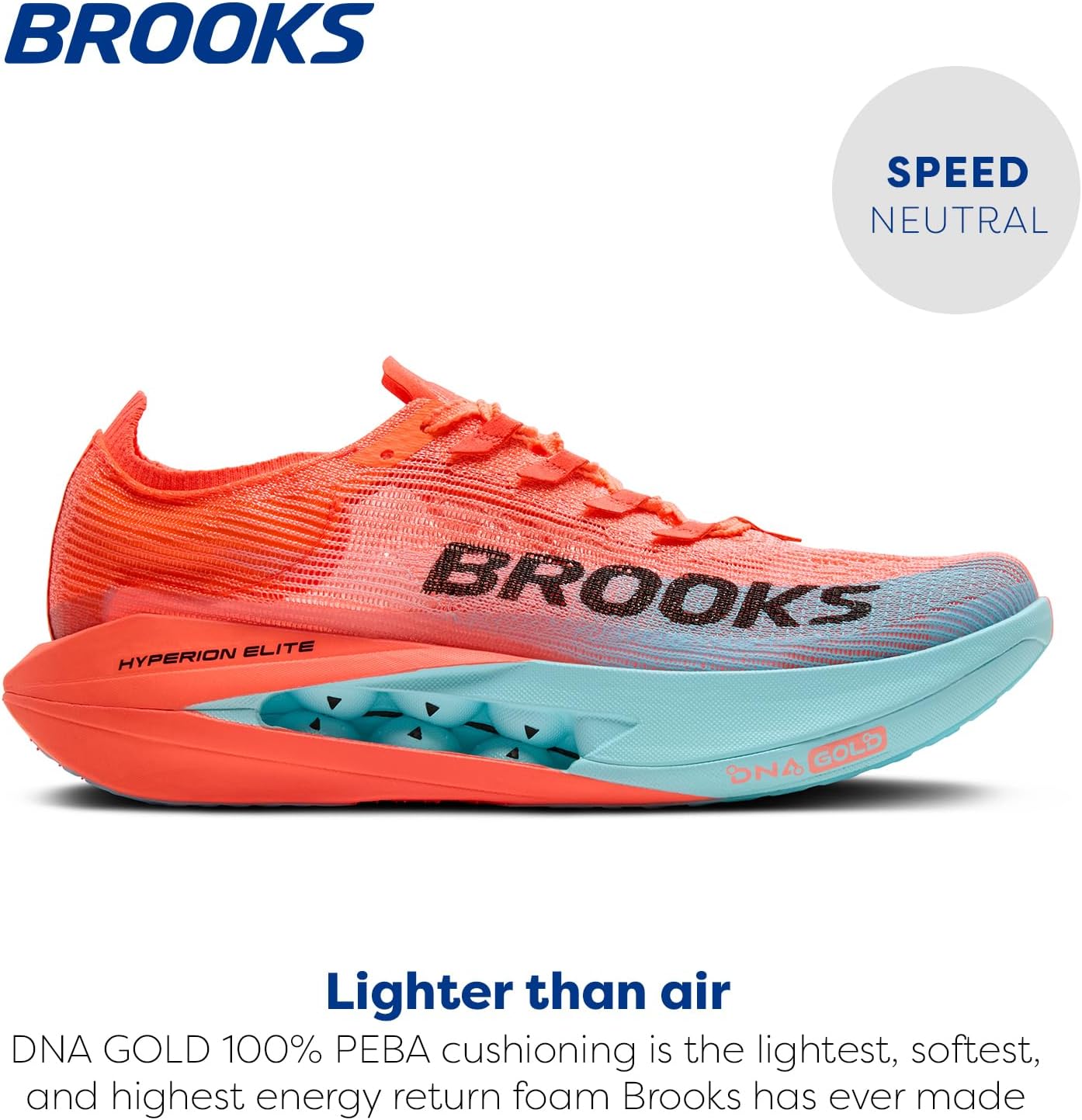
Stack height and geometry. Stack height — the total thickness of foam between your foot and the ground — determines how much energy the foam can store and return. Higher stack generally means more cushioning and a more pronounced “rolling” sensation. The Metaspeed Sky runs tall and is tuned for stride-frequency runners. The Endorphin Pro 4 sits in a mid-stack range designed to balance responsiveness and stability. The Hyperion Elite 5 is the most aggressive geometry of the three, with a narrower heel that places you in a high-leverage, heel-to-toe rocker position.
Heel fit and foot shape. This is the most polarizing variable in this comparison, and it’s worth naming loudly before anything else.
Energy return character. How the foam feels — bouncy and poppy versus smooth and propulsive — is subjective but consistently described differently across these three shoes by owners.
By the numbers:
| Shoe | Approx. Stack Height (heel/forefoot) | Plate Material | Foam | Target Runner Profile |
|---|---|---|---|---|
| Saucony Endorphin Pro 4 | ~39mm / ~31mm | Full-length carbon | PWRRUN HG | Cadence + stride runners |
| ASICS Metaspeed Sky Tokyo | ~45mm / ~35mm | Full-length carbon | FF Blast Turbo+ | High-cadence runners |
| Brooks Hyperion Elite 5 | ~38mm / ~28mm | Full-length carbon | DNA Flash v2 | Forefoot/midfoot strikers, narrow heel |
Figures based on published manufacturer specifications and spec-sheet reporting by Podium Runner in their Carbon Plate Race Shoe Guide.
Saucony Endorphin Pro 4: The Refined Middle Ground
Who It’s For and How It Feels
Owners who’ve run the full Endorphin line — Speed 3, Speed 4, and the Pro series — describe a clear hierarchy in feel. The Endorphin Speed models have a bouncier, more playful sensation. The Pro 4 is reported as more refined and directional: less vertical bounce, more forward propulsion. Runners World’s Saucony Endorphin Pro 4 review describes the PWRRUN HG foam as delivering “more of a pop than a plush,” which aligns with what owners say: this shoe feels fast and efficient without the exaggerated trampoline sensation of some competitors.
This is actually useful framing for buyers. If you’ve run in the Endorphin Speed 4 and wished it felt more purposeful for race day — less like a fun workout shoe and more like something tuned specifically for a PR attempt — owners consistently describe the Pro 4 as that step up. If you’ve never tried an Endorphin and are coming from a neutral trainer, the Pro 4 is a well-documented, low-drama entry point into the category.
The caveat is that “less bouncy than the Speed but more refined” can also read as: less sensation of assistance. Runners who want to feel the carbon plate working — who want that distinctive energetic ride that’s become the calling card of the category — may find the Pro 4 a touch understated. That’s a preference, not a flaw.
Fit is relatively conventional by race-shoe standards. Owners with medium to slightly narrow feet report good lockdown without the heel-drama that characterizes the Hyperion Elite 5.
Saucony
$138.09
In stock on Amazon
Check price on AmazonASICS Metaspeed Sky Tokyo: Big Stack, Big Promise, Fit-Dependent Results
Who It’s For and How It Feels
The Metaspeed Sky line has accumulated some of the most polarized owner feedback in the category. RunRepeat’s aggregated review data for the Metaspeed Sky Tokyo captures the split cleanly. High-praise reviewers describe it as a race-day transformation — owners report running at paces they hadn’t hit in training, attributing it to the shoe’s energy return and forward geometry. This aligns with Podium Runner’s characterization of the Sky as a shoe designed specifically around stride frequency, where the tall stack and pronounced rocker work together to accelerate turnover.
Then there are the disappointed reviews — owners who describe the shoe as not living up to its billing. It’s worth taking this seriously rather than dismissing it as an outlier. The Metaspeed Sky’s geometry is specific. The tall stack and aggressive rocker mean that if your running mechanics don’t align with the shoe’s designed motion path — particularly if you’re a heel striker or have a longer, lower-cadence stride — the shoe may feel like it’s fighting you rather than helping you. The expectation mismatch those reviews signal is almost certainly a fit-or-mechanics issue rather than a product defect.
If you’re considering the Metaspeed Sky Tokyo, the honest qualifier is this: runners who’ve described it as transformative tend to share a profile — midfoot to forefoot strike pattern, higher natural cadence, and race pace at or below 7:00/mile for the half. If you’re in that window, the reviews suggest it can be genuinely special. If you’re outside it, you may be buying a shoe that the geometry works against.
Outside Online’s coverage of the broader Metaspeed line notes that ASICS engineered the Sky variant specifically for cadence-dominant runners, as opposed to the Metaspeed Edge, which targets stride-length runners. Knowing which type you are before purchasing is not optional — it’s the core buying decision.
Brooks
$199.95
In stock on Amazon
Check price on AmazonBrooks Hyperion Elite 5: A High-Variance Shoe You Need to Know About
Who It’s For and How It Feels
No shoe in this comparison generates more polarized signal than the Hyperion Elite 5, and the full picture deserves honest treatment on both sides.
On the performance side: multiple owners report running races significantly faster than their training pace predicted, including in adverse weather conditions. That pattern appears consistently enough in high-praise reviews to be credible — reviewers describe the Hyperion Elite 5 as exceptionally responsive and confidence-inspiring at race pace.
On the construction side: a portion of reviewers have raised concerns about build quality, describing issues with materials and packaging on arrival. Whether this reflects a production variance or a broader pattern is not definitively established in the review pool, but it’s a documented complaint that a buyer paying $250+ deserves to know about.
The fit question is the most important variable for most buyers. Outside Online’s Hyperion Elite 5 first-look coverage and owner review aggregates consistently surface the same description: the shoe has a notably narrow heel. One wide-footed owner described the experience as “running on a tightrope.” Critically, that same reviewer frames this as a design feature, not a defect — the narrow heel geometry is intentional, creating a high-leverage midfoot-to-forefoot rocker that rewards runners whose biomechanics are built around a quick heel exit and forward midfoot strike.
If your foot shape includes a wide heel or if you supinate, the Hyperion Elite 5’s geometry is genuinely not designed for you, and no amount of lacing adjustment will fix that. This is not a criticism of the shoe; it’s a specification. The shoe is built for a specific foot shape and running mechanic, and for runners who match it, the reviews suggest it delivers at a high level.
Brooks
$199.95
In stock on Amazon
Check price on AmazonWhere the LI-NING Feidian 6 Fits This Conversation
One shoe that keeps appearing in comparative owner reviews alongside this trio is the LI-NING Feidian 6 Elite — a carbon plate racer that has built a serious reputation in the sub-elite community, particularly among wider-footed runners who find the Western field restrictive.
Owners with wide feet who’ve raced in the Feidian 6 Elite provide the most detailed comparative breakdowns available: they describe the upper as more accommodating than both the Hyperion Elite 5 and the New Balance SC Elite V5, the midsole response as more “poppy and immediate” than the Endorphin Pro 4, and the lockdown as secure without the tightrope sensation of narrow-heeled options. For wider-footed runners who’ve been bouncing between the Pro 4 and the Hyperion Elite 5 without finding a comfortable home, this review pattern is worth taking seriously as a third direction.
Saucony
$99.99
In stock on Amazon
Check price on AmazonFrequently Asked Questions
Are carbon plate race shoes worth buying if I run a half marathon slower than 1:45?
The honest answer is: it depends on what “worth it” means to you. The performance benefit of carbon-plated shoes — improved running economy in the range of 1–4% according to biomechanics research summarized in Runners World’s carbon shoe coverage — compounds more noticeably at faster paces because you’re on your feet for less time and your mechanics are more likely to align with the shoe’s intended geometry. That said, Podium Runner’s coverage of the category notes that recreational runners who enjoy the experience of a responsive, well-cushioned race shoe and race occasionally are not making an irrational purchase. If budget is a constraint, the Saucony Endorphin Speed 4 (the non-carbon sibling) delivers meaningful performance for less.
What makes the Brooks Hyperion Elite 5 heel so narrow, and is it a problem for wide feet?
The narrow heel is an intentional design choice. Brooks engineered the Hyperion Elite 5’s heel geometry to create a quick, high-leverage transition from heel contact to toe-off, reducing the time your foot spends on the ground. For runners with a naturally narrow heel and a midfoot or forefoot strike pattern, this works as designed. For wide-heeled or wide-footed runners, owners consistently describe instability and discomfort. Try before you buy, or confirm a generous return policy.
How does the LI-NING Feidian 6 compare to the Saucony Endorphin Speed 4 in feel?
Based on owner comparisons from runners who’ve worn both for race efforts, the Feidian 6 Elite is described as noticeably poppier and more immediately responsive underfoot, where the Endorphin Speed 4 reads as smoother and more cushioned. If you run the Speed 4 and wish it had more snap at toe-off, Feidian 6 owner reviews suggest it delivers that. Upper fit is also notably more accommodating for wider feet.
Can I train in a carbon plate race shoe, or should it only be used on race day?
Podium Runner and Runners World both address this consistently in their carbon shoe coverage: carbon plate race shoes can be used in training, but the conventional recommendation is to limit mileage to preserve the foam’s responsiveness, which degrades faster than traditional EVA foams. Most coaches and reviewers suggest 20–30% of weekly mileage at most, concentrated in race-pace workouts and tune-up races. Daily training in a carbon plate shoe also risks adapting your mechanics too specifically to the shoe’s rocker geometry, which can create issues in your other training footwear.
Is the Saucony Endorphin Pro 4 significantly bouncier than the Speed models?
No — it’s the opposite. Owners who’ve used both describe the Pro 4 as less bouncy and more directionally propulsive than the Speed 4. The Speed is the “fun” shoe in the line; the Pro is tuned more specifically for race-pace efficiency. If you want maximum perceived energy return and a playful sensation, the Speed 4 may actually satisfy you more. If you want a shoe that feels tuned to go fast rather than feel lively, the Pro 4 is the right step up.
What do I need to know before buying a race shoe for my first half marathon?
Three things. First, these shoes are designed for race pace, not your easy training pace — the geometry rewards faster turnover and forward lean. If you’ve never run in a carbon plate shoe, do at least one or two race-effort workouts in it before race day. Second, fit matters more than reviews. A shoe that transforms one runner’s race-day experience can be uncomfortable and destabilizing for another because of heel width and foot shape differences. Third, know that the biggest gains come from matching the shoe’s intended mechanics to your own. The Metaspeed Sky is for cadence runners; the Hyperion Elite 5 is for narrow-heeled forefoot strikers; the Endorphin Pro 4 is the most versatile of the three. Start with the one whose fit profile matches your foot.
The decision rule:
- Wide or medium heel, first carbon race shoe, pace around 1:45–2:00 for the half: Saucony Endorphin Pro 4. Documented, versatile, low-drama.
- Narrow to medium heel, midfoot striker, pace sub-1:45, high natural cadence: ASICS Metaspeed Sky Tokyo. Transformative when it matches your mechanics; mediocre when it doesn’t.
- Narrow heel, forefoot/midfoot striker, willing to accept high variance in fit: Brooks Hyperion Elite 5. The reviews suggest a ceiling that few shoes match — but the floor is real too.
- Wide foot, want more snap than the Pro 4 delivers: LI-NING Feidian 6 Elite deserves a serious look before you write off the category.