If your last shoe fitting ended with a well-meaning store employee handing you a chunky brick of a trainer and saying “you overpronate,” you may have walked out equal parts grateful and skeptical. Overpronation — when the foot rolls inward more than a neutral degree during each footstrike — is one of the most commonly flagged gait traits at running specialty stores. It’s real, and for some runners it contributes to knee pain, shin splints, and plantar fascia stress. But the prescription hasn’t always kept up with the science, and the older generation of “motion control” shoes that tried to stop pronation cold often sacrificed so much cushion and energy return that running in them felt like slogging through wet sand.
The good news is that the shoe market has evolved dramatically. Modern stability shoes use medial posts (a denser foam wedge on the inner edge of the midsole), guide rails, or asymmetric plate geometry to guide the foot rather than lock it down — and they’re being built on the same high-energy foam platforms that power neutral daily trainers and even carbon-plated racers. This article is for the runner who has accepted they need some support but refuses to trade their tempo pace for it. We’ll break down how stability technology actually works, which shoes the running community points to in 2026 for fast-oriented support, and how to build a rotation that handles both mileage and race day.
What “Stability” Actually Means in a Modern Running Shoe
The terminology here matters because brands use it inconsistently. Three tiers exist in most retailers’ vocabulary:
Neutral: No added structural bias. Works for runners whose foot tracks reasonably straight through the gait cycle.
Stability: A moderate intervention — usually a medial post (firmer foam on the arch side of the midsole), a guide rail system like Brooks’ external bumper design, or a slightly asymmetric rocker. The goal is not to prevent pronation entirely but to reduce excessive inward roll and the rotational stress it transfers up the kinetic chain to the ankle, knee, and hip.
Motion Control: Maximum rigidity. Stiffer last (the form the shoe is built around), heavy thermoplastic shanks, aggressive dual-density foam. These still have a role for runners with severe overpronation, flat feet, or conditions like posterior tibial tendon dysfunction — but they are categorically slow.
The Running Clinic’s clinical notes overview on gait and load management makes an important distinction worth internalizing: mild-to-moderate overpronation is extremely common and does not automatically predict injury. What matters is whether your current shoe matches your load and your tissue capacity. That framing gives you permission to shop aggressively in the stability tier without automatically sliding all the way to motion control.
RunRepeat’s aggregated owner review data on overpronation running shoes (2025) shows a consistent pattern: runners who self-select into the stability category report highest satisfaction scores in shoes that offer guidance without a significant heel-to-toe drop increase — meaning the shoe doesn’t add an artificial ramp angle on top of the support features, which can itself alter Achilles loading.
The Speed-Support Tradeoff: Where It Used to Break Down (and Where It Doesn’t Anymore)
Here’s the historical problem: medial posts were typically made from EVA foam compounds that were noticeably denser and deader than the surrounding midsole. You got a two-zone shoe — one zone responsive, one zone a speed bump. The interface between them created an abrupt feel that runners described as “hitting a wall” on every step.
The shift began around 2021-2022 when brands started building stability features into next-generation foam platforms rather than just inserting a dead wedge into existing designs. The practical result for 2026 buyers:
By the numbers:
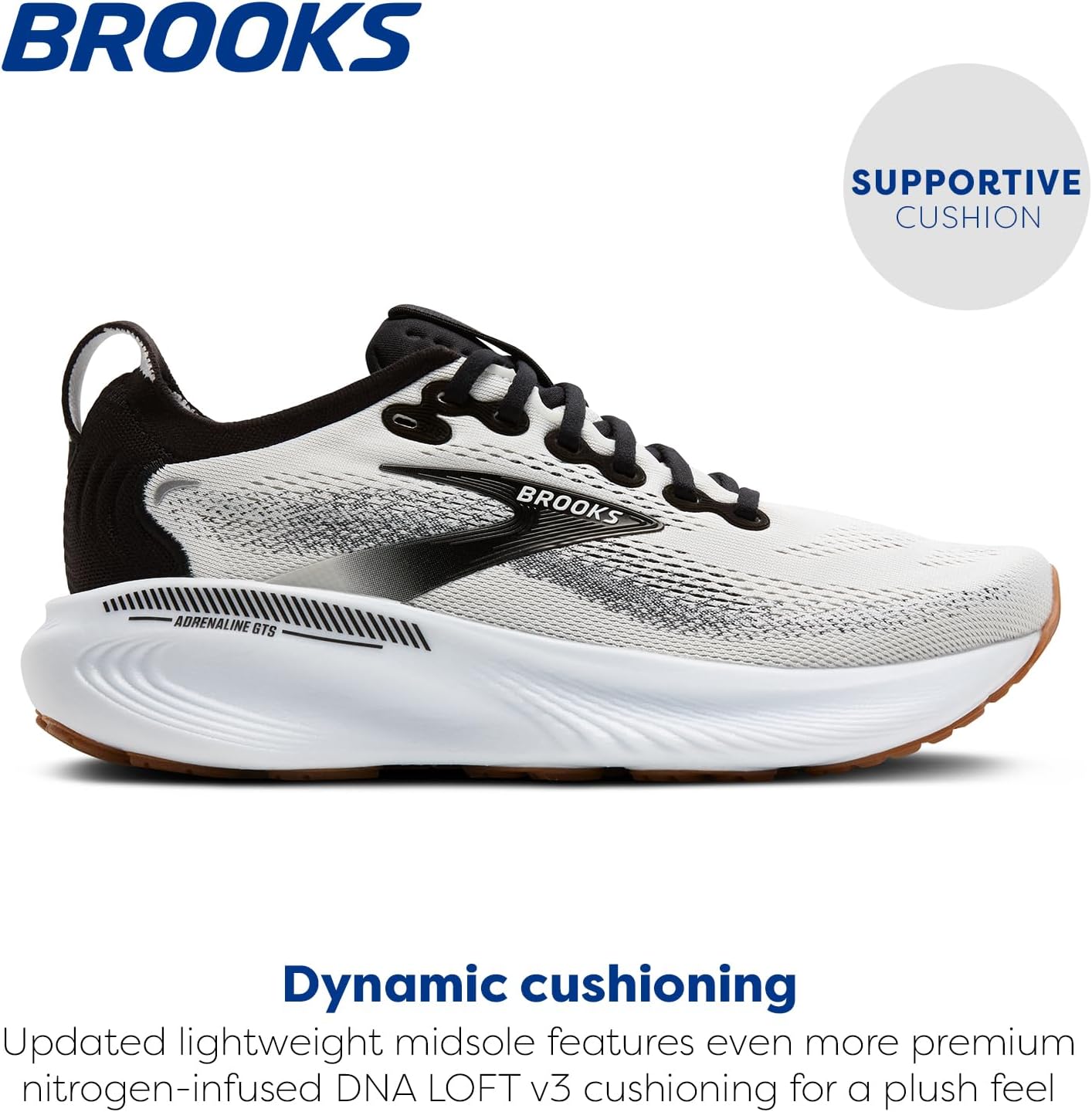
- Brooks Adrenaline GTS 24: 8mm heel-to-toe drop, GuideRails system, DNA LOFT v3 midsole, ~10.3 oz (men’s size 9). Reviewed as a daily trainer with legitimate tempo versatility.
- ASICS Kayano 31: 10mm drop, FF BLAST+ ECO midsole with 3D Space Construction (an internal lattice that replaces the old dual-density post), ~10.6 oz. Owners report a significantly livelier ride than any previous Kayano generation.
- New Balance Fresh Foam X 860v14: 10mm drop, dual-density Fresh Foam X midsole, ~9.8 oz. Frequently cited by Runners World’s stability roundup as the leanest-feeling support shoe in the category.
- Saucony Guide 17: 8mm drop, PWRRUN midsole with a medial TPU guidance frame, ~9.6 oz. Positioned explicitly at runners who want stability without sacrificing the snappiness of a daily trainer.
None of those weights are far off equivalent neutral trainers. Compare the Saucony Guide 17 at ~9.6 oz to the neutral Saucony Ride 17 at ~9.0 oz — you’re looking at half an ounce of weight difference for meaningful structural support.
Building a Rotation That Includes Stability Without Anchoring It to Every Run
Podium Runner’s 2024 feature “Do You Really Need a Stability Shoe?” raises a point that doesn’t get enough airtime: most runners with mild-to-moderate overpronation don’t need stability in every shoe in their quiver. What they likely need is stability in their high-volume, high-impact training days — and they can absolutely run in neutral shoes on shorter recovery miles, track workouts (where foot strike patterns differ), and tempo sessions depending on their individual mechanics.
Here’s the practical rotation logic:
Daily trainer slot (3+ days/week, 60-70% of mileage): This is where your stability shoe earns its keep. The Adrenaline GTS 24, Guide 17, or 860v14 are purpose-built for this role. They absorb cumulative pronation stress across 40-60 mile training weeks when fatigued running form is most likely to amplify mechanical inefficiency.
Tempo / workout shoe slot: This is where you have room to experiment. If your overpronation is mild, a neutral trainer with a firmer, more responsive midsole — something like the Brooks Hyperion 2 or the ASICS Novablast 4 — often works fine for shorter, faster efforts where your cadence is higher and ground contact time is shorter. Shorter ground contact time mechanically reduces the window for excessive pronation to express itself. Outside Online’s 2025 stability roundup notes that many overpronating runners do their workouts entirely in neutral shoes without issue.
Race day: This is the highest-stakes decision in the rotation. If your goal race is a half-marathon or marathon and you’re targeting a PR, you’re almost certainly looking at a carbon-plated super shoe. The good news here is that several carbon-plated shoes have mild stability geometry built in. The ASICS Metaspeed Edge+ is specifically designed for heel-strikers and incorporates asymmetric midsole geometry. The Brooks Hyperion Elite 4 carries over some of the GuideRails DNA from the Adrenaline line. Owners on running forums — as aggregated by RunRepeat — consistently report that the stiffness of a carbon plate itself acts as a passive stabilizer for mild overpronators, reducing the need for an explicit medial post.
If you have moderate-to-severe overpronation: Don’t race in a neutral carbon plate. The midsole geometry of most super shoes is optimized for a neutral gait path; putting a significant inward-rolling foot on a laterally-tipped rocker creates the exact asymmetric loading you’re trying to avoid. In this case, either accept a slightly slower shoe (the Saucony Endorphin Shift 3 offers mild guidance with decent energy return), or work with a sports medicine professional on whether orthotics in a neutral plate shoe is a viable race-day strategy.
Orthotics, Insoles, and the “Do I Still Need a Stability Shoe?” Question
A common decision point for intermediate runners: you’ve been prescribed custom orthotics. Does that mean you can now run in neutral shoes?
Sometimes yes, sometimes no. The Running Clinic’s guidance is nuanced: orthotics address foot alignment from beneath the foot, but a stability shoe’s medial post also works from beneath and slightly inside the midsole. They can stack or conflict depending on the orthotic’s posted angle and the shoe’s existing geometry. A high-volume medial post in a motion-control shoe combined with an aggressive custom orthotic can actually overcorrect, transferring stress to the outer foot and IT band.
The safer general rule, consistent with how most running specialty fitters approach this: if you’re running with a well-fitted custom orthotic, drop to a mild stability shoe (not motion control) or — depending on the orthotic’s design — a neutral shoe with a relatively flat midsole geometry. A podiatrist or sports physio who works with runners is the right person to finalize that call.
The Decision Framework: If X, Then Y
After reading through the research from Runners World’s stability roundup, RunRepeat’s owner sentiment data, and Outside Online’s field reports, here’s how to map your situation to a shoe choice:
If you have mild overpronation, no current injury, and train 30-50 miles/week: Start with the Saucony Guide 17 or New Balance Fresh Foam X 860v14. Both offer guidance without a punishing weight or stiffness penalty. Use these as your daily trainers and run your workouts in a neutral trainer or your race shoe.
If you have moderate overpronation and a history of medial knee pain or plantar fascia issues: The Brooks Adrenaline GTS 24 or ASICS Kayano 31 are the consensus daily trainer recommendations. The GuideRails system in the Adrenaline and the 3D Space Construction in the Kayano both show up consistently in long-run owner reviews as genuinely supportive without feeling restrictive.
If you want to race fast and still need some support: Look at the ASICS Metaspeed Edge+ (designed for heel-strikers, some asymmetric geometry) or accept that your goal race shoe may be a neutral plate paired with your orthotic, after getting clearance from a physio.
If you’ve been in motion-control shoes and feel “imprisoned” in them: You’re probably over-supported for your actual gait. A gait analysis at a serious running specialty store — the kind with a treadmill and video — is worth an hour of your time before your next shoe purchase. Podium Runner’s 2024 piece specifically calls out that motion-control shoes are overprescribed relative to the population that genuinely needs them.
If you’re building a rotation from scratch: Spend your daily trainer budget on one solid stability shoe and your workout budget on a neutral trainer or carbon racer. Don’t put stability requirements on every slot in the rotation. Reserve maximum support for maximum mileage.
The underlying principle across all of these scenarios: stability and speed are no longer mutually exclusive. Modern foam platforms, lighter medial post materials, and smarter plate geometry have collapsed the gap. The right stability shoe for a competitive age-group runner in 2026 looks a lot more like a performance daily trainer than it does the motion-control relics of a decade ago — and that’s exactly the market shift that makes this category worth revisiting.