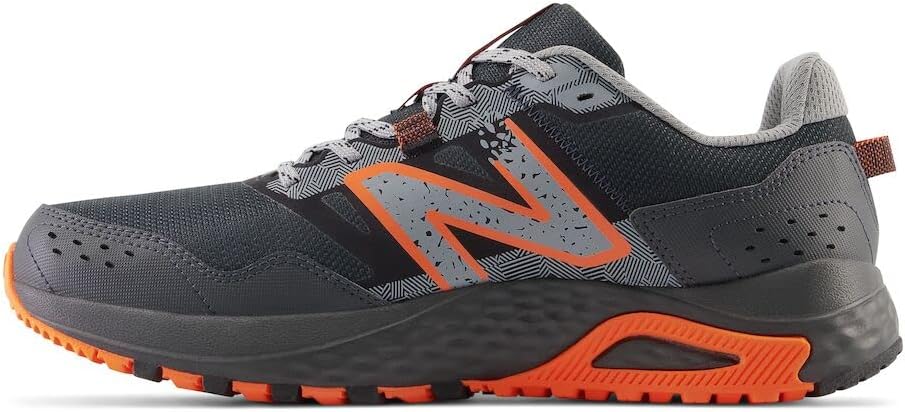
You’ve been running roads for a while. You know your pace, you trust your shoes, and your weekly mileage is consistent. Then someone invites you on a Saturday trail run — dirt singletrack, some roots, maybe a short rocky climb — and suddenly your road shoes feel completely wrong. That’s not your imagination. Road running shoes are engineered for flat, predictable pavement; trail shoes are built for surfaces that push back, twist unpredictably, and demand grip where your road trainers offer almost none. The difference matters enough that most runners who go trail-curious end up needing a dedicated pair. This guide breaks down exactly what makes trail shoes different, which features actually matter for your first year of dirt running, and how to match a shoe to the terrain you’re actually going to run on — not the terrain on a marketing page.
If you’re already comfortable spending $130–$200 on road trainers and you understand terms like “stack height” (the total thickness of foam between your foot and the ground) and “drop” (the height difference between heel and forefoot), you’re in the right place. We’ll build on that foundation and add the trail-specific vocabulary you need to make a confident first purchase.
What Actually Changes When You Leave the Pavement
The core tradeoffs are real and worth naming directly, because they shape every buying decision that follows.
Grip vs. ground feel. Road shoes use smooth or lightly textured outsoles optimized for even asphalt. Trail shoes use lugs — raised rubber knobs, typically 3–6mm tall — that bite into soft dirt, mud, and loose gravel. Deeper, more widely spaced lugs work better in soft or muddy conditions; shallower, closer-spaced lugs handle hardpack (firm, compacted dirt trails) better and feel less awkward on the occasional road crossing. Per iRunFar’s Trail Running Shoe Buyer’s Guide, matching lug depth to your most common terrain is one of the highest-leverage decisions in the whole category.
Rock protection. Rocks on trail don’t just feel uncomfortable — they can destabilize your stride and, over longer runs, cause real fatigue in the small muscles of your foot. Many trail shoes include a rock plate, a thin semi-rigid layer embedded in the midsole (the foam cushioning layer) that distributes point pressure from sharp rocks across a wider area. Road shoes almost never include this. As Podium Runner’s explainer on trail shoe construction notes, rock plates range from flexible TPU (thermoplastic polyurethane, a common midsole plastic) inserts that barely affect ground feel, to stiffer full-length plates that significantly firm up the ride.
Lateral stability. On a road, you’re almost always moving forward. On trail, you’re constantly making micro-corrections — stepping around roots, landing on angled surfaces, catching yourself mid-stride. Trail shoes tend to have wider bases, lower stack heights relative to their cushioning volume, and more structured sidewalls than their road equivalents. This translates to a more planted, stable feel that road shoe geometry doesn’t prioritize.
Weight and stack height tradeoffs. Road runners moving to trail often notice that trail shoes feel heavier and more “clunky” — this is partly lug rubber adding weight and partly stack height being managed conservatively to keep your center of gravity lower on technical terrain. Outside Online’s guide to trail shoe selection consistently flags this as the primary comfort adjustment for road-to-trail converts: the shoes aren’t slow, they’re just calibrated for a different kind of efficiency.
The Four Trail Terrain Categories (And Why They Actually Matter)
The trail running footwear market doesn’t offer a universal “trail shoe.” Reviewers at RunRepeat’s trail running shoe database consistently note that pairing shoe to terrain type is the single most common source of beginner dissatisfaction — runners buy a gnarly mountain racing shoe for groomed local trails, or a lightweight fastpacker shoe for muddy technical routes, and neither experience goes well.
Here’s a practical framework:
Groomed / hardpack trails. Think well-maintained state park loops, crushed gravel rail trails, or fire roads with firm dirt. These surfaces look like trail but behave closer to road. You want a shoe with moderate, closely-spaced lugs, a reasonable stack height (25–32mm at the heel is common), and good breathability. Shoes in this category often work fine as a road/trail hybrid for runners who split time between surfaces.
Mixed / intermediate trails. The most common scenario for road runners transitioning to trail: a mix of hardpack, some rooty sections, occasional loose rock, and unpredictable surface changes within a single run. This is the sweet spot for most first trail shoes. You want versatile, medium-depth lugs (4–5mm), a rock plate, and enough stack height to handle varied cushioning demands. Runner’s World’s road vs. trail shoe comparison identifies this category as where most beginner trail shoes compete.
Technical / rocky terrain. Exposed rock slabs, boulder fields, aggressive mountain trails. Here grip on rock becomes the priority — look for sticky rubber compounds (Vibram Megagrip and Continental Rubber are two outsole materials reviewers frequently single out for rock traction) and a more protective, structured upper. Stack height often drops here to keep ground feel honest.
Soft / muddy / wet terrain. Deep lugs (5–6mm+), wide lug spacing so mud can clear between knobs, and drainage ports in the upper. Most road-to-trail runners don’t start here unless they’re in the Pacific Northwest or similar high-precipitation environments.
By the Numbers: Key Spec Ranges by Terrain Type
| Terrain | Lug Depth | Rock Plate | Typical Stack (heel) | Drop Range |
|---|---|---|---|---|
| Groomed / hardpack | 2–4mm | Optional | 28–34mm | 4–10mm |
| Mixed / intermediate | 4–5mm | Recommended | 24–32mm | 0–8mm |
| Technical / rocky | 4–6mm | Recommended | 20–28mm | 0–6mm |
| Soft / muddy | 5–8mm | Optional | 22–30mm | 0–6mm |
Spec ranges compiled from manufacturer published data and iRunFar’s 2025 trail shoe category breakdowns.
The Decision Frame: Matching Your Road Background to a Trail Starting Point
Here’s where the practitioner voice earns its keep. You’re not buying a trail shoe in the abstract — you’re buying a first trail shoe given a specific road running background. These are the tradeoffs worth naming explicitly.
If you’re a high-cushion road runner (Brooks Ghost, Hoka Clifton, New Balance 1080-type shoes), you’re accustomed to 32–38mm stack heights and a soft, forgiving ride. Going directly to a highly minimal trail shoe will feel punishing and may cause calf or Achilles strain. Reviewers across the RunRepeat trail database consistently recommend high-cushion trail options in the 28–34mm stack range as the most natural entry point. You’ll sacrifice some ground feel but maintain the ride quality your legs are trained for.
If you’re a moderate-cushion, neutral runner (Saucony Ride, ASICS Gel-Nimbus range, Adidas Supernova territory), you have the most flexibility. The widest range of intermediate trail shoes fit your background. Prioritize the terrain framework above over cushioning level — you can adapt to most stack heights in this category without significant adjustment.
If you’re already running in low-drop or minimalist road shoes (4mm drop or less, lower stack), your ankles and calves are adapted to that geometry. Moving to a trail shoe with 8–10mm drop may actually feel awkward. Prioritize drop consistency with your road shoe first; a mismatch here causes more biomechanical disruption than lug pattern or stack height differences. Outside Online’s trail shoe selection guide flags drop consistency as underappreciated by first-time trail buyers.
Sizing note worth flagging: Across aggregated reviews on iRunFar and RunRepeat, trail shoe owners consistently report needing a half-size up from their road shoe size. Feet swell more on longer trail efforts, and a locked-down fit that works on roads can cause significant black toenails on descents when your foot slides forward in the shoe. Build in that extra room intentionally.
Three Feature Calls That Separate Good Trail Shoe Decisions From Regrettable Ones
Don’t skip the rock plate on your first shoe. It’s tempting to choose the lighter option without one — but road runners aren’t accustomed to scanning terrain for sharp rocks, and the muscle memory that trail veterans use to naturally step around hazards takes months to develop. A rock plate buys you forgiveness while that skill develops. Per Podium Runner’s construction breakdown, modern TPU rock plates add less than 15–20 grams and are nearly undetectable in softer terrain.
Upper waterproofing is almost never worth it for a first shoe. Gore-Tex and similar waterproof membranes reduce breathability significantly, add weight, and trap heat in anything above 50°F. They’re purpose-built for winter trail running and specific cold/wet conditions. Most road runners transitioning to trail run in spring and summer. The standard mesh uppers on most trail shoes handle light stream crossings fine and dry faster. Save the waterproof version for a second pair if you discover you run in genuinely wet conditions regularly.
Outsole rubber matters more than brand marketing suggests. The specific rubber compound used on trail outsoles varies significantly in wet-rock and root traction. Across reviewers at iRunFar, Vibram Megagrip and Continental rubber receive consistently high marks for wet traction; standard OEM rubber compounds used on entry-level trail shoes often disappoint in wet conditions even when lug geometry is correct. If you’re running in a climate with any meaningful rainfall, checking whether a shoe uses a premium outsole rubber compound is worth the thirty seconds of spec research.
The If/Then Decision Rules
This is where the framework collapses into actual guidance:
-
If you run groomed or hardpack trails within easy reach of pavement, and you want one shoe for both: Look at road/trail hybrids in the 28–32mm stack range with moderate lugs. You’re not overbuying grip you’ll never use.
-
If you’re running mixed terrain with some technical elements and you’re coming from a high-cushion road background: Prioritize a high-stack trail shoe (28–34mm) with a rock plate and 4–5mm lugs. Grip on rock matters; go with a proven outsole rubber if trail reviews mention wet conditions in your region.
-
If you’re already low-drop on roads and targeting technical terrain: Match your drop first (4mm or less), accept a lower stack, and don’t compromise on outsole rubber quality. Your feet can handle the firmness; prioritize stability and traction.
-
If you’re unsure and just want to try trail running without overthinking it: The mixed/intermediate category with a rock plate at your normal road shoe budget ($130–$180) is almost always the right starting place. You won’t be over-shod for easy trails or under-protected for moderate ones. Buy a half-size up. Run.
Trail running rewards the same methodical approach you’ve already applied to road gear. The learning curve is steeper than most road runners expect — not because the shoes are complicated, but because the terrain demands more from them. Nail the terrain-to-shoe match, respect the sizing adjustment, and give yourself a four-to-six week adaptation window on actual dirt before forming strong opinions about whether a shoe is working. The conversion rate from “first trail run” to “trail runner” is remarkably high once the right gear removes the friction.