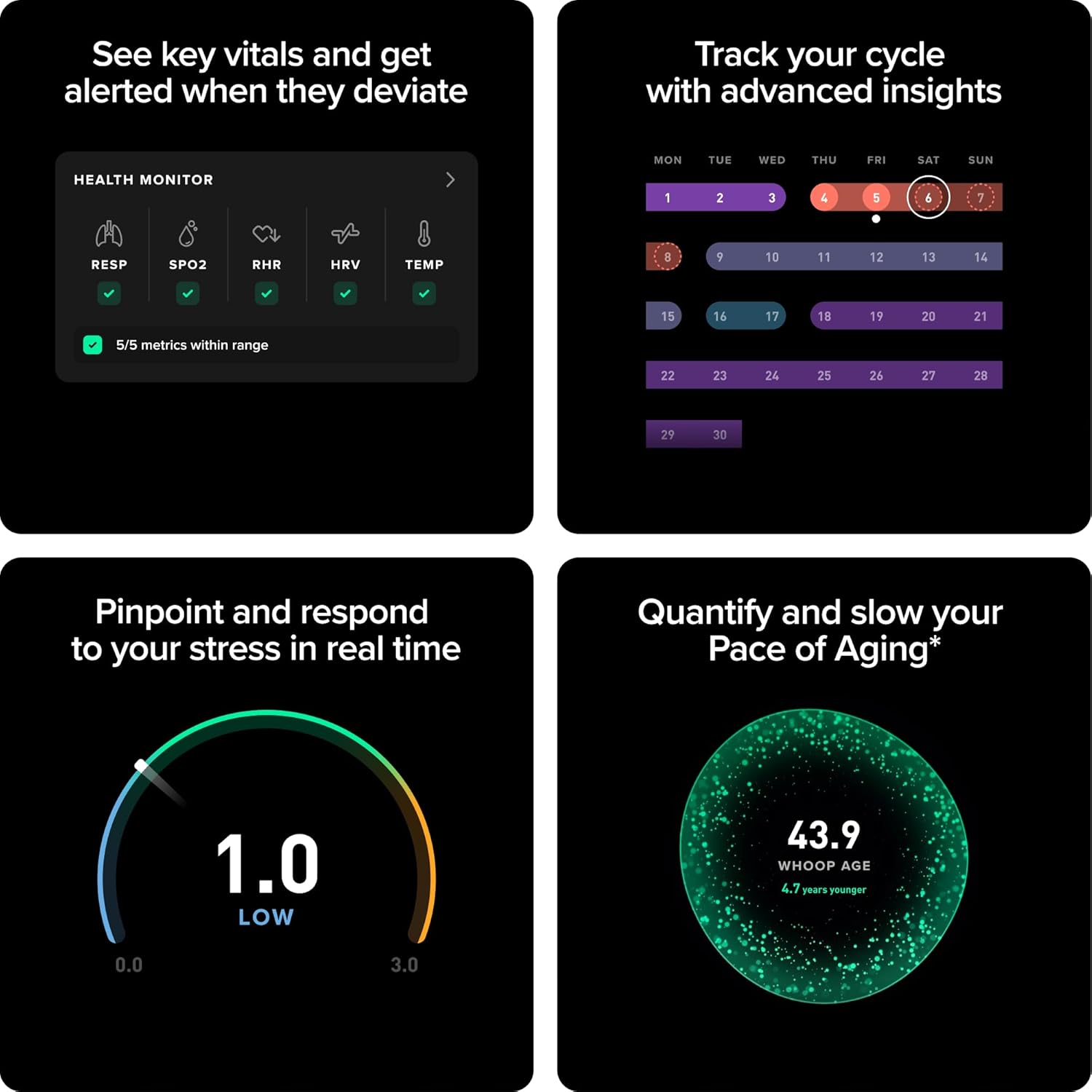
If you’ve ever finished a hard workout and wondered whether your body is ready to push again tomorrow — or whether you’re quietly digging a hole — you’ve already identified the exact problem that wrist-worn fitness trackers are trying to solve. A GPS running watch (like those made by Garmin) uses satellite signals to map your routes, measure your pace, and log your training load. A recovery wearable (like WHOOP) skips the GPS entirely and focuses on reading your body’s internal signals — heart rate variability, sleep quality, resting heart rate — to tell you how recovered you actually are before you lace up. Both categories sit on runners’ wrists. Both promise to make you train smarter. But they’re answering different questions, and buying the wrong one for your situation is a genuinely expensive mistake. This article breaks down the real tradeoffs so you can decide which one earns a spot in your training setup — or whether you need both.
| EDITOR'S PICKCOROS PACE 4 Ultralight Sport G… | Mid-tierGarmin Forerunner 55 | Budget pickGarmin Forerunner 165 | |
|---|---|---|---|
| Battery Life | 19 days | 2 weeks | — |
| Display Type | AMOLED | — | AMOLED |
| Touchscreen | ✓ | — | — |
| Heart Rate | ✓ | — | — |
| Voice Features | ✓ | — | — |
| Suggested Workouts | — | ✓ | — |
| Price | $249.00 | $149.99 | $129.00 |
| See on Amazon → | See on Amazon → | See on Amazon → |
What WHOOP Is Actually Doing (And What It Isn’t)
WHOOP is a screenless band. There’s no display, no step-count summary, no GPS dot tracking your Saturday long run on a map. That’s not an oversight — it’s the entire design philosophy. WHOOP’s job is to sit on your wrist 24 hours a day, continuously sampling your heart rate and movement, and then synthesize that data into three daily scores: strain (how hard your body worked), recovery (how ready you are for today’s load), and sleep (duration plus quality metrics like sleep efficiency and time in each sleep stage).
The recovery score is where WHOOP earns its most devoted fans. It’s built primarily around heart rate variability (HRV) — the millisecond variation in time between heartbeats. Higher HRV generally correlates with a nervous system that’s well-rested and ready to absorb hard training; low HRV often signals accumulated fatigue or incoming illness. WHOOP takes your personal HRV baseline over weeks and compares each morning’s reading against it, giving you a percentage score. A score in the green means go hard. Yellow means be thoughtful. Red means back off.
DC Rainmaker’s WHOOP 4.0 In-Depth Review characterizes the platform as genuinely sophisticated on the physiological side, with a data depth that mainstream trackers don’t match. That assessment aligns with the pattern in owner feedback: people describe understanding their body at a different level than they did with a step-counting smartwatch, and the granularity of the sleep data alone is frequently cited as a revelation for athletes who’ve never paid close attention to sleep architecture before.
What WHOOP does not do: GPS route tracking. No map. No pace. No distance during a run. Runners who buy WHOOP have almost universally accepted this tradeoff before purchasing — it’s a feature-scope choice, not a hardware limitation to work around.
The subscription model is WHOOP’s most contested feature. Access to WHOOP’s platform requires an ongoing monthly or annual membership — the hardware itself is bundled into the subscription. DC Rainmaker’s WHOOP 4.0 In-Depth Review flags this as a meaningful long-term cost consideration. Depending on how long you use it, the lifetime cost can exceed premium GPS watches. That math matters for budget-conscious runners and should factor into your decision explicitly.
What Garmin Does Differently — and Why Runners Keep Choosing It
Garmin’s running watch lineup covers a wide range of price points and complexity, but the core value proposition is consistent: GPS-based training data with enough physiological context to inform your decisions.
Entry-Level GPS: Garmin Forerunner 55
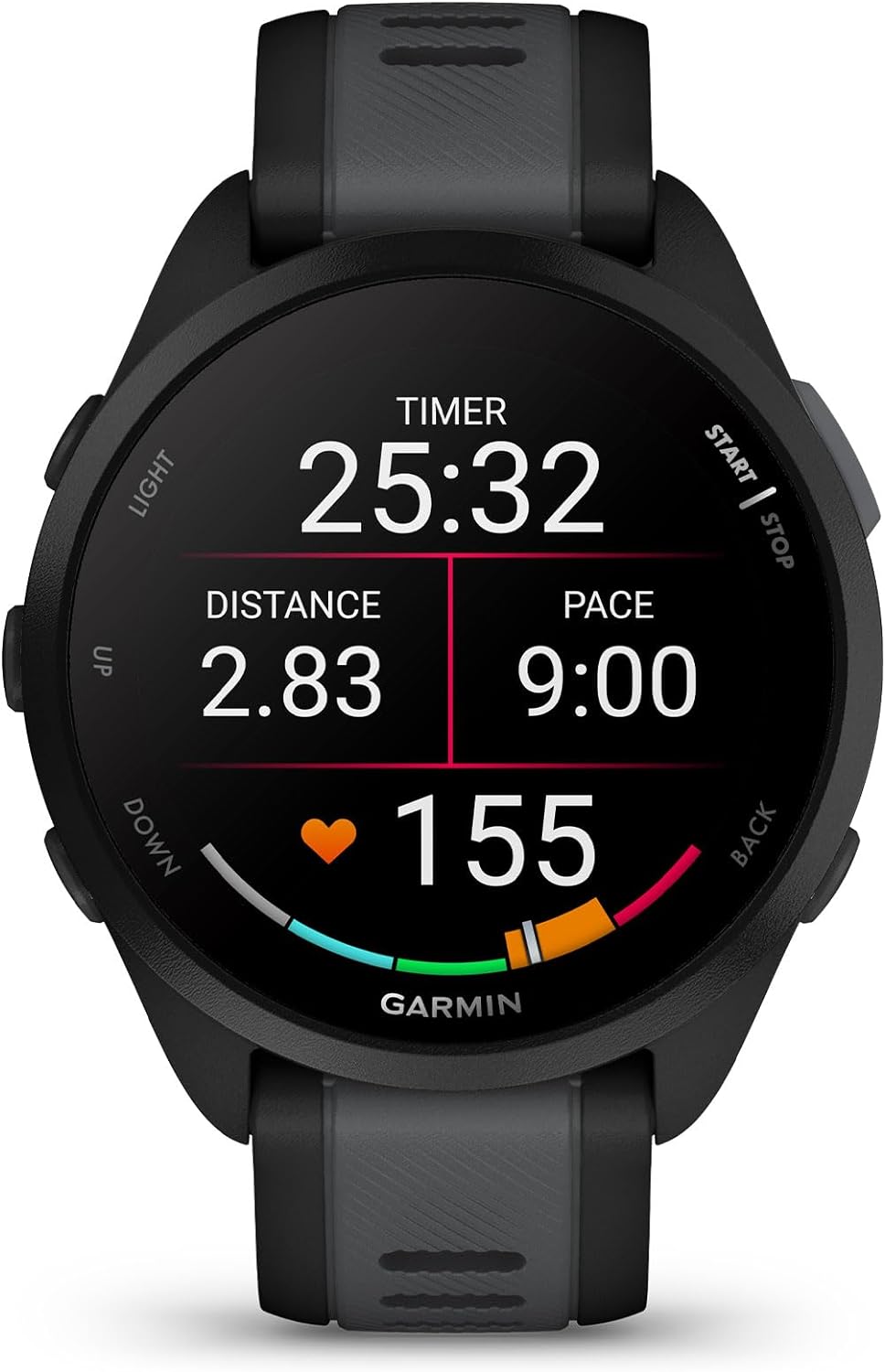
The Forerunner 55 is Garmin’s dedicated entry point for runners. It logs GPS routes, pace, distance, heart rate, and cadence. Runners upgrading from general fitness wearables or non-running-specific Polar and Fitbit devices consistently describe it as a meaningful functional upgrade — not just a different brand of the same thing, but a device actually built around the mechanics of running. DC Rainmaker’s Garmin Forerunner 55 In-Depth Review notes that the watch delivers core GPS training data reliably at its price point, making it a sensible first dedicated running watch for athletes who don’t need advanced physiological metrics yet.
Garmin
$129.00
In stock on Amazon
Check price on AmazonMid-Range GPS with Recovery Features: Garmin Forerunner 265
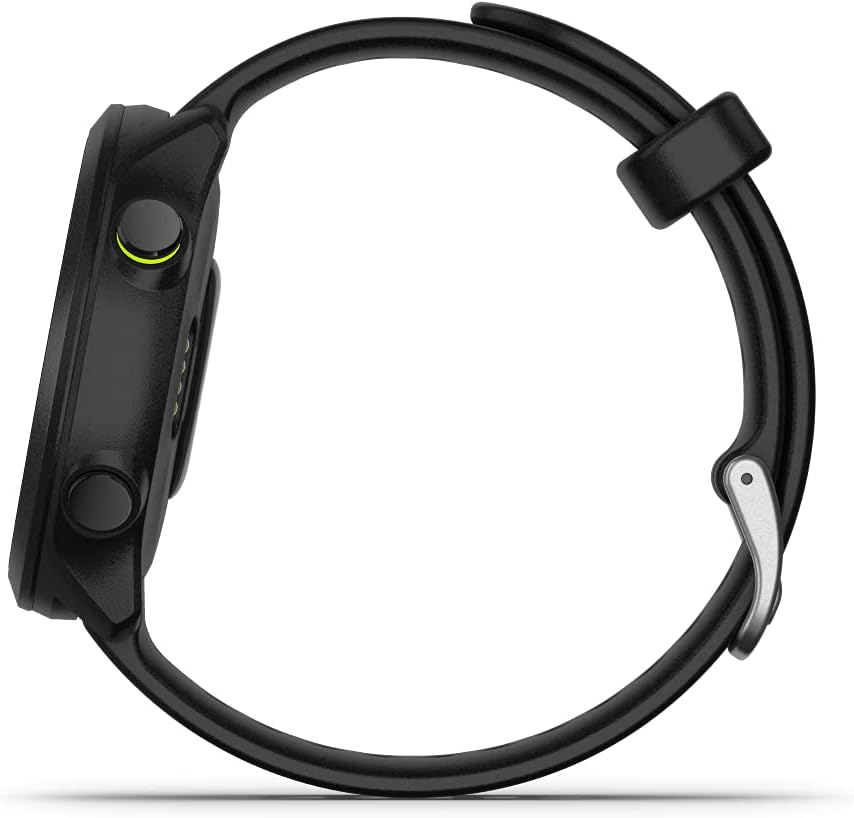
At the mid-range level, Garmin introduces Body Battery (its fatigue estimation metric), more detailed sleep tracking, HRV Status, and training load analysis that starts to overlap with WHOOP’s territory. DC Rainmaker’s comparative coverage of Garmin’s physiological metrics across Forerunner generations notes meaningful improvement in how the platform uses overnight HRV readings to contextualize training readiness — the gap between a Garmin at this tier and WHOOP’s recovery score has narrowed, though the depth of WHOOP’s baseline modeling remains more granular for athletes who make recovery a primary training variable.
Runner’s World’s Best GPS Running Watches guide acknowledges that wrist-based heart rate accuracy during actual running is a genuine consideration at every price tier. Garmin’s optical sensors perform well at steady aerobic paces but are known to lose accuracy during high-intensity intervals, where arm movement and blood flow patterns create noise. For interval workouts where zone accuracy matters, pairing any Garmin with a chest strap heart rate monitor remains the practical solution. Garmin supports external HR monitors across its lineup.
Garmin
$149.99
In stock on Amazon
Check price on AmazonPremium GPS with Advanced Metrics: Garmin Forerunner 965
At the top of the Forerunner family, the 965 adds a full-color AMOLED display, advanced training status analysis, race predictor tools, and detailed recovery time recommendations. Outside Online’s reporting on recovery trackers — in the article “Do Recovery Trackers Actually Work?” — notes that premium GPS watches at this tier have meaningfully closed the gap with dedicated recovery wearables for athletes who don’t need 24/7 continuous HRV sampling. The 965 stops short of WHOOP’s round-the-clock physiological monitoring but handles GPS training data, structured workout guidance, and recovery estimation in a single device at a one-time hardware cost.
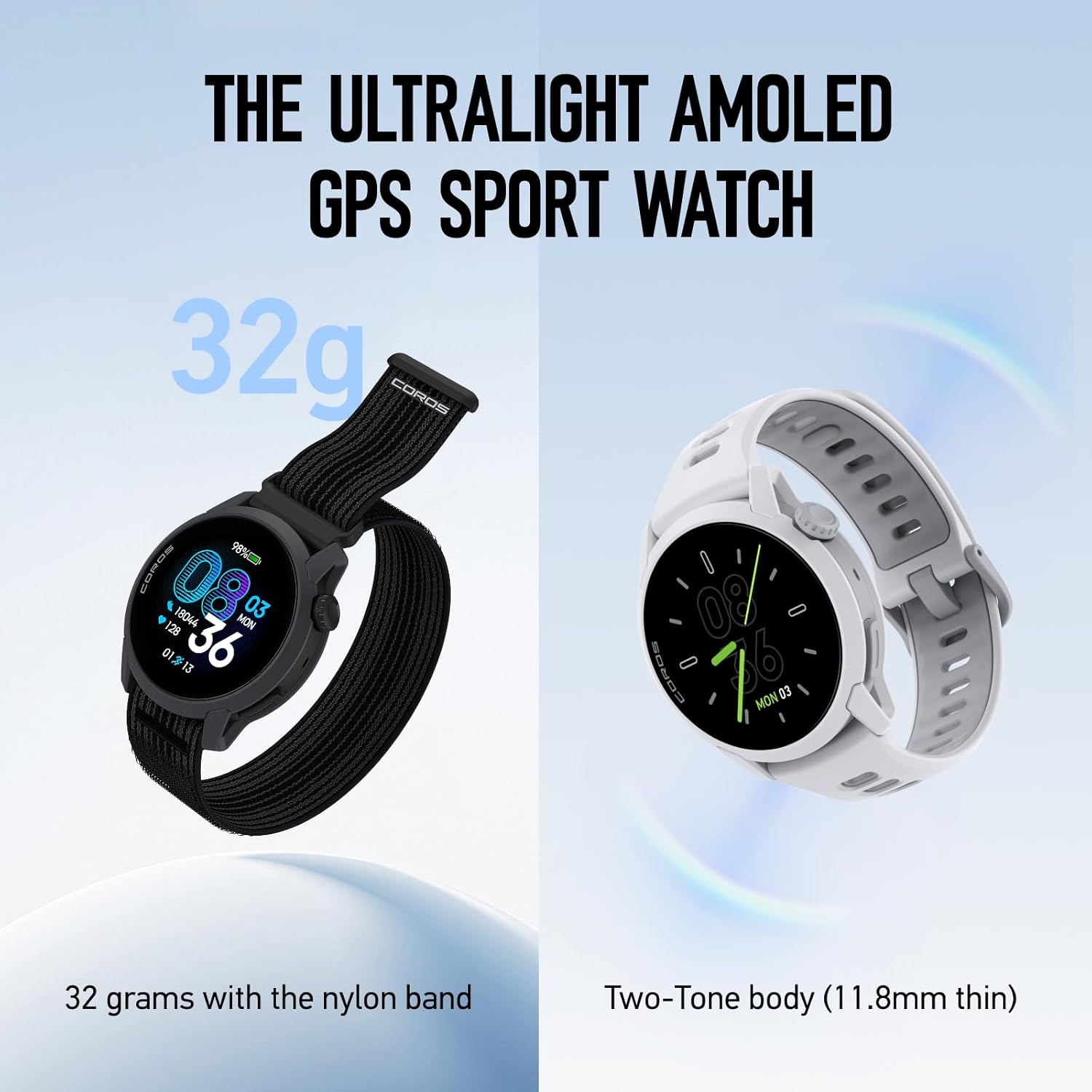
The COROS angle is worth naming here. COROS has emerged as a legitimate Garmin alternative with a compelling price-to-performance ratio. Runners who have switched from Garmin to the COROS PACE 4 — including athletes with a decade or more on Garmin hardware — consistently cite paying roughly one-third the price of a comparable Garmin for equivalent GPS and training-load functionality. If your primary need is GPS training data and you don’t require Garmin’s full ecosystem integrations, COROS deserves a comparison window before you commit.
COROS
$249.00
In stock on Amazon
Check price on AmazonThe Actual Decision: WHOOP vs. Garmin vs. Both
Here’s what published reviews, spec comparisons, and platform-level analysis actually support:
By the numbers:
| Feature | WHOOP | Garmin Forerunner 55 | Garmin Forerunner 965 |
|---|---|---|---|
| GPS | None | Yes | Yes |
| HRV Tracking | Daily continuous | HRV Status | Advanced HRV Status |
| Sleep Scoring | Detailed | Basic | Detailed |
| Cost Model | Subscription-based | One-time hardware | One-time hardware |
| Display | None | Yes | Yes (AMOLED) |
The practical split looks like this:
If your training problem is pacing, route planning, and structured workout execution — you’re building a base, targeting a half-marathon PR, or you need split data to run workouts intelligently — a GPS watch is the non-negotiable tool. WHOOP cannot replace this function. A Garmin, COROS, or comparable GPS watch belongs on your wrist first.
If your training problem is recovery management — you’re running 50-plus miles per week, stacking hard workouts, dealing with inconsistent sleep, or you’ve had a history of overtraining — WHOOP addresses something a GPS watch doesn’t. The granular HRV baseline and daily recovery score give you a signal that Garmin’s Body Battery and HRV Status approximate but don’t replicate at the same depth.
Do serious runners actually wear both? Yes. Competitive age-group runners and sub-elite athletes commonly run a dual-device setup: WHOOP on one wrist for 24/7 physiological monitoring, Garmin or COROS on the other during runs for GPS and pace data. Outside Online’s “Do Recovery Trackers Actually Work?” addresses this pattern directly — among athletes who treat recovery monitoring as a serious training variable, the two devices are doing genuinely different jobs. Whether the combined cost makes sense depends entirely on your training volume and how seriously you’re willing to invest in recovery intelligence.
Frequently Asked Questions
Does WHOOP track GPS running routes or just general activity and recovery? WHOOP has no GPS. It does not map routes, measure real-time pace, or log distance during a run. It tracks strain, which reflects cardiovascular effort, but it cannot tell you how far or how fast you went. WHOOP buyers consistently know and accept this before purchasing — it is a deliberate feature-scope decision, not a hardware limitation to work around.
Is WHOOP worth the subscription cost for a recreational runner versus a dedicated Garmin? Honestly, probably not — unless recovery management is a specific gap in your current setup. If you’re running three to four days a week with a GPS watch that already gives you basic sleep and heart rate data, the additional granularity WHOOP provides may not translate to meaningfully different training decisions. The subscription cost calculus shifts in WHOOP’s favor when you’re training at higher volume, dealing with sleep disruption, or have experienced overtraining and want a concrete daily signal to calibrate intensity.
Can I wear WHOOP and a Garmin at the same time, and do serious runners actually do this? Yes to both. WHOOP is worn on one wrist continuously; a GPS watch is worn on the other during training. Competitive runners who want 24/7 physiological monitoring alongside real-time GPS data regularly run this dual-device setup. The WHOOP band is low-profile enough that it doesn’t interfere with watch operation. The combined cost is real — factor in the WHOOP subscription plus watch hardware — but for athletes treating their training with professional-level rigor, the two devices are genuinely complementary rather than redundant.
How accurate is wrist-based heart rate on Garmin Forerunner models during actual running? Garmin’s optical heart rate sensors are reliable at steady aerobic paces but lose accuracy during high-intensity intervals, particularly when arm swing is aggressive. DC Rainmaker’s Garmin Forerunner reviews document this pattern across multiple device generations — it is a physics problem inherent to wrist-based optical HR, not a Garmin-specific flaw. Runner’s World’s Best GPS Running Watches guide echoes this finding across wrist-based HR broadly. Pairing any Garmin with a chest strap heart rate monitor eliminates the issue for athletes training seriously by heart rate zones.
What does WHOOP’s recovery score actually measure and how should runners use it? WHOOP’s recovery score is primarily built around heart rate variability measured during sleep, cross-referenced with resting heart rate, respiratory rate, and sleep performance. The score is benchmarked against your personal baseline, which WHOOP establishes over the first few weeks of use. A green recovery score suggests your autonomic nervous system is well-rested and primed to absorb hard training. Red suggests your body is under load and hard efforts may not be productive. Outside Online’s “Do Recovery Trackers Actually Work?” emphasizes using these scores as one input among several — perceived exertion, mood, and muscle soreness remain valid signals — rather than as a rigid go/no-go override.
The Bottom Line
If you only own one device: buy a GPS watch. Route tracking, pace data, and structured workout support are the mechanical foundation of running training. WHOOP cannot substitute for that.
If you already own a GPS watch and feel like you’re guessing on recovery: WHOOP is solving a real problem. The subscription cost is the genuine friction point — run the annual math against what better recovery management would actually be worth to your training.
If you’re on a budget and need GPS functionality: look hard at COROS before defaulting to Garmin. The price gap between comparable devices is significant enough that long-time Garmin users who’ve made the switch consistently describe it as a rational decision, not a compromise.
The cleanest decision rule: if the question you’re asking is “how hard should I run today,” get WHOOP. If the question is “where did I run and how fast,” get a Garmin. If you’re asking both questions seriously, you might just end up with both.