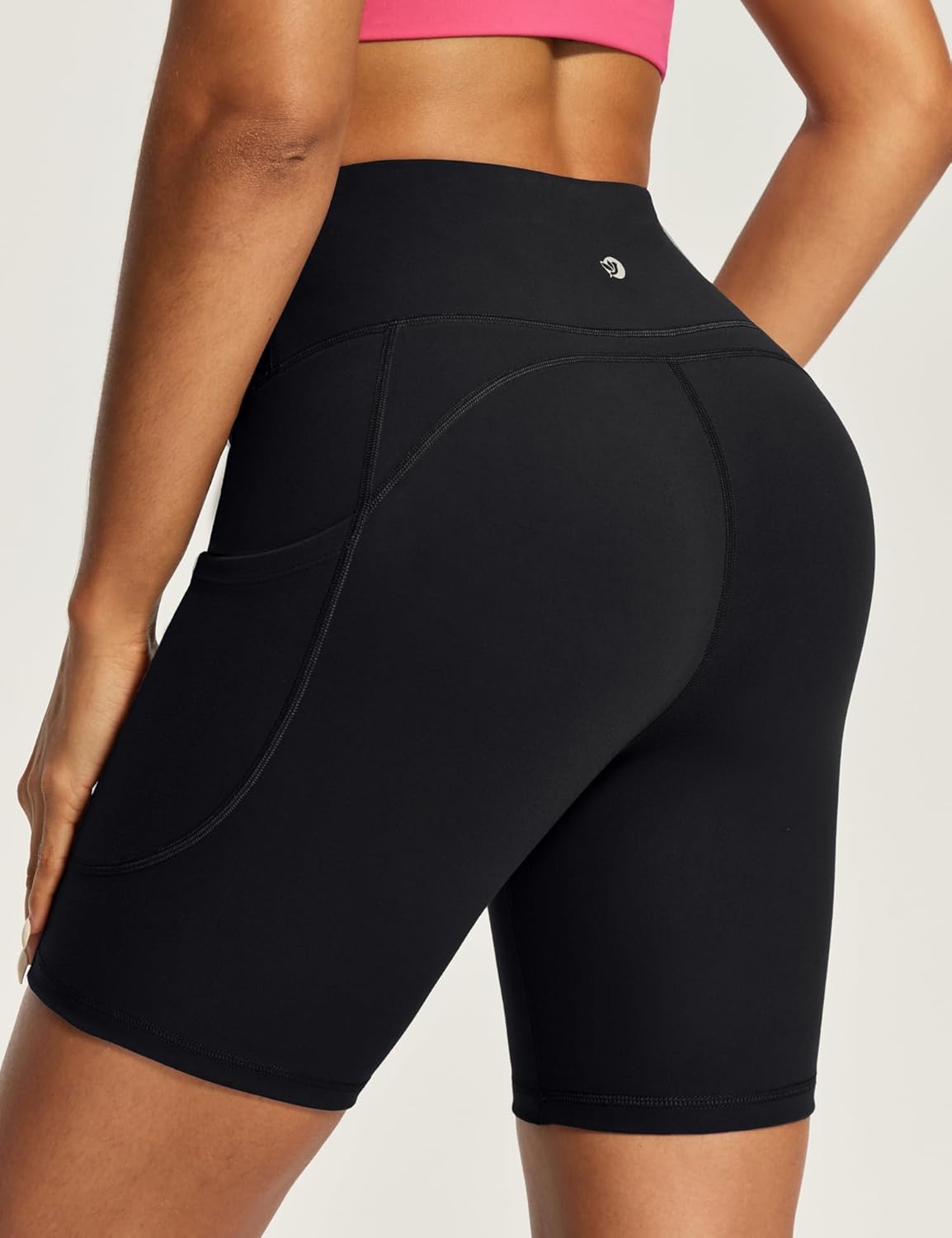
If you’ve ever abandoned a pair of shorts mid-training cycle — maybe the liner shifted on a long run, or the waistband crept down during a tempo workout — you already understand why this gear decision matters more than it looks on a product page. Running shorts are the piece of kit you wear on every single run, from a 20-minute shakeout jog (an easy, slow recovery run) to a full marathon. The wrong pair creates friction — literally and figuratively — while the right pair disappears on your body so you can focus on effort and pace. This guide breaks down the variables that actually move the needle: liner construction, inseam length, waistband design, fabric weight, and price-tier tradeoffs. Whether you’re building your first real training wardrobe or optimizing a multi-short rotation for a 26.2, the decision framework here is designed to give you a clear answer, not just a list.
| EDITOR'S PICKCRZ YOGA High Waisted Split Run… | Mid-tierTHE GYM PEOPLE Womens High Wais… | Budget pickbaleaf Women's 8"/ 5"/ 3" Biker… | |
|---|---|---|---|
| Inseam | 3" | — | 3"/5"/8" |
| Liner | Comfy mesh liner | Mesh liner | — |
| Pockets | — | Zipper pockets | Pockets |
| Style | Split | — | Biker |
| Material | — | — | Spandex |
| Price | $23.80 | $19.89 | $14.23 |
| See on Amazon → | See on Amazon → | See on Amazon → |
The Variables That Actually Matter (And the Ones That Don’t)
Shopping for running shorts is one of those categories where marketing language does real damage. “Buttery soft” and “four-way stretch” appear on shorts that fall apart in eight weeks and shorts that last three years. Here’s the signal worth paying attention to.
Liner vs. No Liner
The built-in liner — the thin, underwear-style brief sewn into the interior of most running shorts — is the single biggest fit variable. It determines whether you need to wear separate underwear (you generally shouldn’t while running; cotton underwear traps moisture and dramatically increases chafing risk), how the short sits during dynamic movement, and how the short performs over distances beyond 10 miles.
Liners come in two main constructions:
Brief-style liners are the most common. They resemble a small bikini brief sewn to the interior waistband. They work well for distances up to about a half marathon for most runners, but owners across aggregated reviews on RunRepeat consistently flag brief liners as the primary failure point on longer efforts — particularly when inseam length is short and the liner doesn’t extend far enough to prevent inner-thigh chafe.
Boy-short or compression liners extend further down the thigh, typically 3–5 inches, and grip the leg rather than floating loose. Runner’s World’s 2025 gear guide notes that compression-style liners earn the highest satisfaction ratings from marathon and ultra runners specifically because they eliminate the “liner-riding-up” complaint that brief liners generate at high mileage. The tradeoff: compression liners add warmth, which matters in summer racing.
No liner at all — the split-short or unlined short category — exists primarily for runners who prefer to manage this layer themselves with compression shorts or a fitted tight underneath. This is a legitimate choice, especially for track work and shorter tempo runs where you want maximum airflow and minimum layering.
Inseam Length: The Fit Spectrum
Inseam length (the measurement from the crotch seam to the hem, down the inner thigh) dictates coverage, perceived modesty, and friction risk. The current market clusters around four lengths:
| Inseam | Common Use Case | Chafe Risk* |
|---|---|---|
| 2–3 in | Track, short tempo runs | Moderate–High on long runs |
| 4–5 in | Everyday training, half marathon | Low–Moderate |
| 6–7 in | Long runs, marathon, trail | Low |
| 8+ in | Ultra distances, high chafe risk runners | Very Low |
*Chafe risk ratings based on aggregated owner feedback via RunRepeat’s 2024–2025 apparel review dataset.
Outside Online’s running apparel editorial frames this as a simple rule of thumb: for anything over 90 minutes, most runners should size up one inseam tier from their usual preference. What feels like plenty of coverage at mile 5 often doesn’t at mile 15.
Waistband Design: The Overlooked Variable
The waistband is where most runners tolerate a problem they could solve. The options:
Elastic + drawstring: Maximum adjustability. Preferred by runners with a larger gap between hip and waist measurements. The drawstring allows micro-adjustment mid-run. The tradeoff is bulk — some drawstrings create a pressure point under a racing vest or hydration pack.
Wide flat waistband (no drawstring): The dominant construction in premium shorts from brands like Lululemon, Tracksmith, and Satisfy Running. These rely on a precise fit to stay put. Owners consistently report they feel cleaner during runs but require getting the size right — there’s no drawstring to compensate for a borderline fit.
High-rise waistband: Increasingly common in the $60–$110 tier. Podium Runner’s feature on running apparel fit notes that high-rise construction measurably reduces waistband slippage on runners with a defined waist-to-hip ratio, and offers better compatibility with GPS watches and running vests because the waistband sits above where packs typically cinch.
The Price Tier Framework: Where to Spend, Where to Save
Running shorts range from under $30 to over $120. Here’s an honest breakdown of what each tier actually buys you.
Entry Tier: $25–$45
Options in this range from brands like Brooks, New Balance, and Nike’s base line provide functional brief liners and decent four-way stretch fabrics. For runners under 30 miles per week and distances up to 10K, this tier delivers real value. The failure mode at this price is liner durability: owners across review aggregations report brief liners in this tier beginning to degrade (stretch out, lose shape) around the 6–9 month mark with regular use. If you’re running five days per week, that’s not a long runway.
If X, then Y: If you’re early in building a training habit, run fewer than four days per week, or primarily race distances of 10K or shorter, the entry tier is the rational call. Buy two pairs and rotate them.
Mid Tier: $50–$80
This is where the quality curve bends meaningfully. Brands like Rabbit, Oiselle, On Running, and Brooks’ premium line sit here. Fabrics are notably lighter, liners are better-constructed (many move to the compression brief style at this price), and waistband engineering improves substantially. Runner’s World’s 2025 gear guide names this tier as the sweet spot for half-marathon and marathon training, citing the combination of durability (18–24 months of regular use is a common owner-reported lifespan) and functionality.
Pockets also become reliable at this tier. A small key pocket or phone-accessible side pocket is nearly universal in mid-tier shorts — not a premium add-on. For race day, a secure pocket for a gel or credit card matters.
If X, then Y: If you’re training for a half marathon or marathon and running four or more days per week, this is your baseline. Budget for two pairs of different inseams — one 4-inch for tempo days, one 6-inch for long runs.
Premium Tier: $85–$130+
Tracksmith’s All-Day Short, Satisfy Running’s Justice Short, and Lululemon’s Speed Up line represent the upper end. The engineering at this tier is legitimately different — seam placement is mapped to reduce friction at specific anatomical pressure points, fabrics are proprietary blends optimized for moisture transfer rather than generic “wicking” polyester, and liner construction receives the same design attention as the exterior shell.
Satisfy Running’s shorts in particular — reviewed by Outside Online as among the most technically considered in the field — use a liner construction that multiple owners describe as “the first liner that’s never caused a problem over 20+ miles.” The aesthetic element is also real at this price: Satisfy and Tracksmith shorts hold their visual integrity after dozens of washes in a way that entry-tier shorts do not.
The honest caveat: premium shorts require you to know your fit. Most are not adjustable. If you’re between sizes in a brand or haven’t worn that brand’s shorts before, the premium tier is a harder purchase to get right on the first try.
If X, then Y: If you’re a competitive age-group runner, targeting marathon PRs, or regularly running over 50 miles per week, the premium tier is where fit and durability stop being abstract concerns and start being training variables. One pair of Tracksmith or Satisfy shorts that fits perfectly is worth more than three pairs of entry-tier shorts that produce a blister at mile 18.
Race Day vs. Training Day: The Two-Short Framework
One of the most consistent patterns in high-mileage runners’ gear setups — visible across gear reviews at Runner’s World and community discussions tracked by RunRepeat — is the separation of training shorts from race-day shorts.
This isn’t just superstition. There are two functional reasons:
-
Race-day shorts should be tested at race pace before race day. A short that performs well at easy training pace sometimes behaves differently at tempo or race effort — stride length increases, hip movement changes, and an ill-fitting liner can migrate in ways it never does on long slow runs. Podium Runner specifically recommends running at least two workouts at goal pace in your race-day shorts before the race.
-
Training shorts accumulate wear. Fabrics soften and liners stretch. A short in its sixth month of five-days-per-week use has a different fit profile than a fresh pair. Designating one pair as race-day shorts and rotating training shorts separately extends the functional life of both.
The practical setup for marathon and half-marathon training blocks:
- 2 mid-tier shorts for training rotation (alternate by inseam for different run types)
- 1 premium or best-fitting mid-tier short reserved for race day and key workouts
- Retire training shorts to “easy day only” status rather than throwing them out — they have years left at lower-intensity use
The Decision Rule
Here’s the framework in plain terms:
Under 30 miles/week, distances up to 10K: Entry tier ($25–$45), brief liner, 3–4 inch inseam. Don’t overthink it.
Half-marathon and marathon training, 30–50 miles/week: Mid tier ($50–$80), compression liner, 4–6 inch inseam for long runs. Buy two pairs. Own at least one pair with a secure pocket.
Competitive age-group, 50+ miles/week, or chafe-prone runners: Premium tier ($85–$130), compression liner, 6–7 inch inseam or longer. Test your race-day pair at race pace before the event. The price per run at this mileage is genuinely low — a $110 pair worn 200 times costs $0.55 per run.
The one thing that doesn’t scale by price: you have to run in them before you commit to them for race day. No spec sheet — including this one — substitutes for 90 minutes at goal pace.