If you’ve been staring at a product page trying to figure out whether a pair of running shorts comes with an actual built-in underwear panel or just a loose mesh layer that flops around — you’re not alone, and the confusion is completely justified. The word “liner” gets used to describe at least three different constructions across the women’s running shorts market, and each one behaves differently on the road. A liner in this context means a secondary layer of fabric sewn inside the outer short, intended to replace underwear and prevent chafing (skin irritation from repeated friction during movement). The three main short styles that include some version of this liner are biker shorts (longer compression-style shorts, usually mid-thigh), split shorts (a traditional track-style short with a v-notch hem for range of motion), and 2-in-1 shorts (a looser outer layer worn over a snug inner short). This guide cuts through the noise on all three, naming the tradeoffs so you can buy with confidence.
What “Liner” Actually Means — and Why Buyers Keep Getting Surprised
This is the piece of information that gets buried in every product description, and it matters more than most shoppers realize before they open the package.
Reviewers of THE GYM PEOPLE shorts — a popular entry-level option — consistently flag surprise at how large and loose the mesh liner is compared to what they expected. At least one reviewer in aggregated feedback noted they planned to remove the liner entirely, because it behaved more like a second layer of fabric than a supportive brief-style panel. That reaction isn’t a product failure; it reflects a genuine category mismatch between what buyers picture when they read “lined” and what they actually receive.
Here’s the practical spectrum:
Mesh brief liner — The most common construction in traditional running shorts and many split shorts. A lightweight, open-weave panel that provides minimal coverage and is primarily intended to eliminate the need for separate underwear. This is what most short-style running bottoms use. Breathable, light, but not compressive.
Compression brief liner — Found in higher-quality 2-in-1 designs and some biker-short hybrids. A fitted, stretchy panel that hugs the body like a true undergarment. Reviewers consistently describe this construction as the one that stays put and prevents chafing on runs longer than an hour.
Full compression inner short — The defining feature of a 2-in-1 short. Rather than a panel, there’s a complete inner short — its own waistband, leg openings, and coverage — worn underneath the looser exterior layer. This is the most supportive construction and the most expensive to execute well.
Runner’s World, in its 2025 edition of “Best Running Shorts for Women,” draws a clear line between these constructions in their sizing and fit guidance, noting that the gap between consumer expectation and actual liner design is one of the most common sources of returns in the category.
Style-by-Style Breakdown: The Real Tradeoffs
Biker Shorts
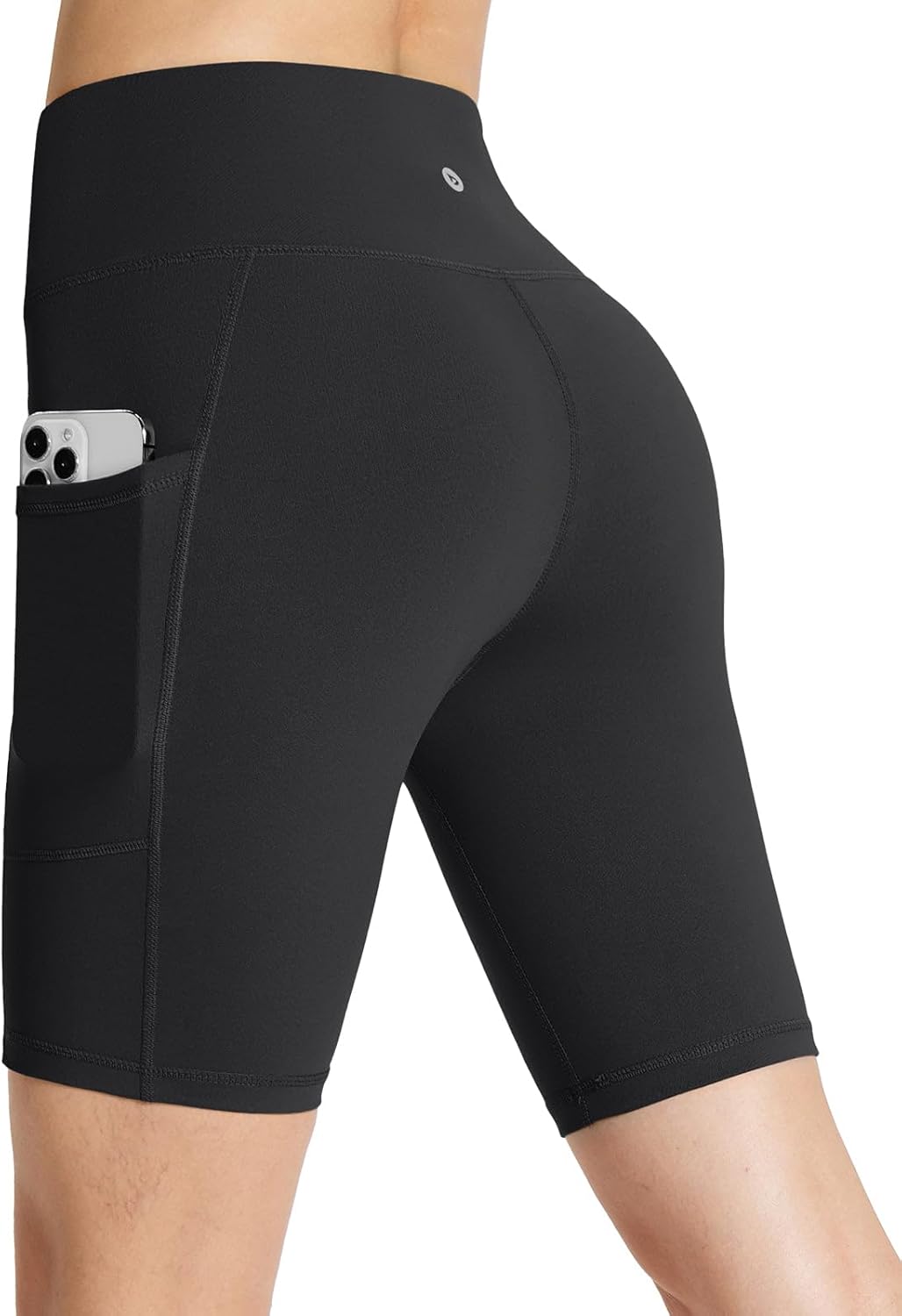
Biker shorts are compression shorts that typically extend 7–9 inches down the thigh, made from a four-way stretch fabric (meaning it stretches in both directions, which matters for running stride). They don’t have a separate liner — the compression fabric is the coverage layer, worn either alone or under a looser outer short.
The case for them: Owners of IUGA biker shorts are among the most loyal repeat buyers in this category. Multiple reviewers report being on their third or fourth pair, with the consistent praise landing on two specific features: a waistband that doesn’t roll down mid-run, and leg openings that don’t ride up. For runners who’ve fought with either of those failure modes, those details aren’t small. The longer leg length also makes biker shorts the default choice for runners who chafe at the inner thigh — the compression fabric covers the zone where skin-on-skin contact typically causes problems.
The tradeoff: They run warmer than any other style. In summer heat or humidity above 70°F, the compression coverage that solves chafing becomes a heat-retention liability. They’re also less versatile across race formats — most road race rules don’t restrict them, but some ultra trail events specify minimum brief coverage separately.
Best for: Long training runs, runners with inner-thigh chafing, cold-weather running, and anyone who wants a single bottom they can also wear to strength training without changing.
baleaf
$14.23
In stock on Amazon
Check price on AmazonSplit Shorts
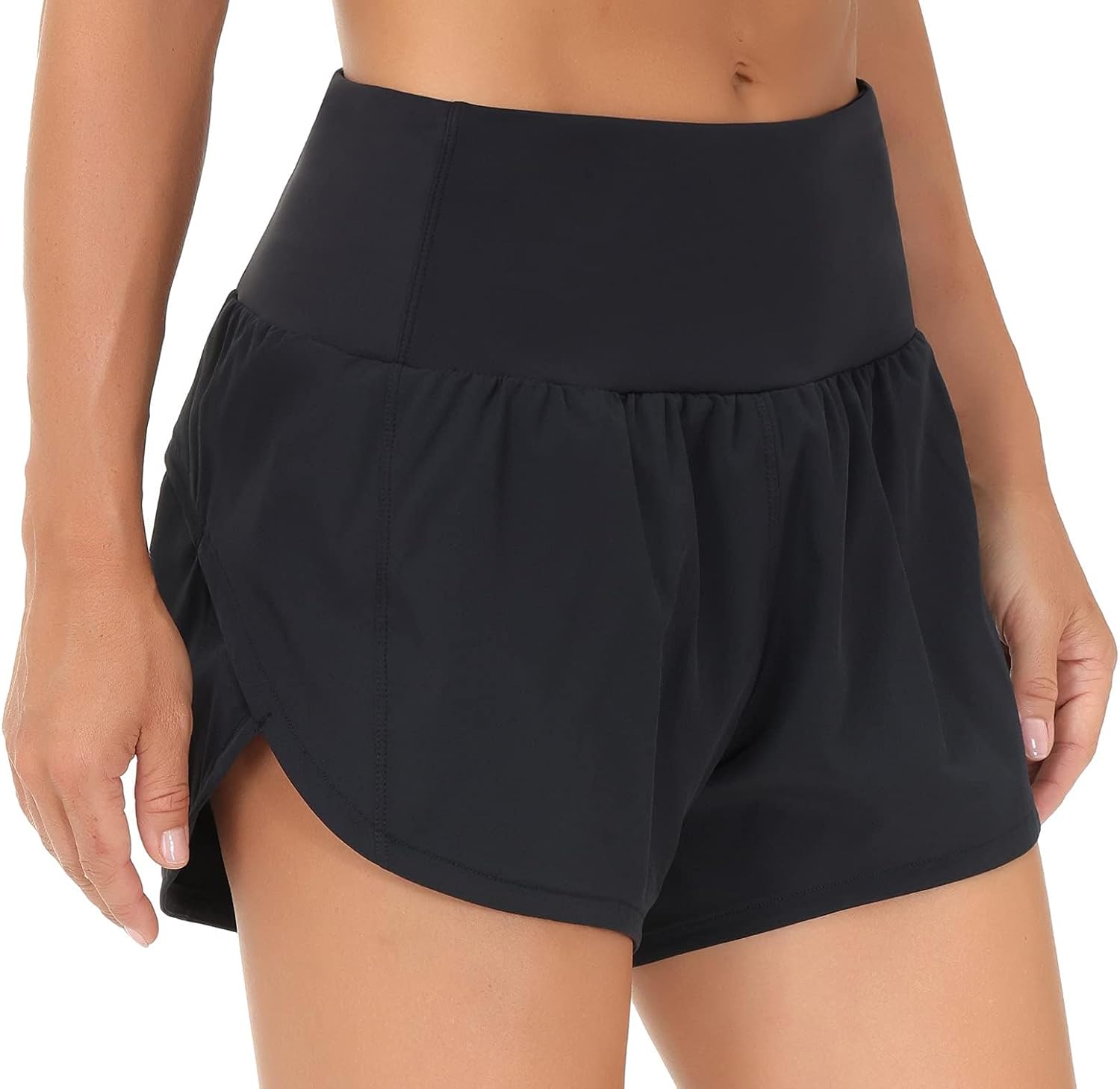
The split short is the traditional competitive running short — a lightweight, loose outer shell with a v-shaped notch cut into each side of the hem, which creates the freedom of movement that runners need when the stride opens up. Most include the mesh brief liner described above.
The case for them: These are the fastest-feeling shorts on the market because they’re built around airflow and minimal restriction. Podium Runner’s gear guide “How to Choose Running Shorts” notes that the split hem specifically reduces fabric interference with hip flexor drive at higher cadences — relevant for anyone running tempos or racing. They’re also the lightest option by a significant margin.
The tradeoff: That loose, breezy mesh liner is what catches buyers off guard. On a 5K or tempo run, it doesn’t matter. On a half marathon or longer, a mesh panel that shifts even slightly becomes a significant chafing risk. Split shorts require either a good fit on the liner or a separate investment in anti-chafe balm (bodyglide, petroleum-based, or similar) for anything over about 60 minutes.
Best for: Speed work, racing, and shorter runs in hot conditions where maximum airflow is the priority.
THE
$19.89
In stock on Amazon
Check price on Amazon2-in-1 Shorts
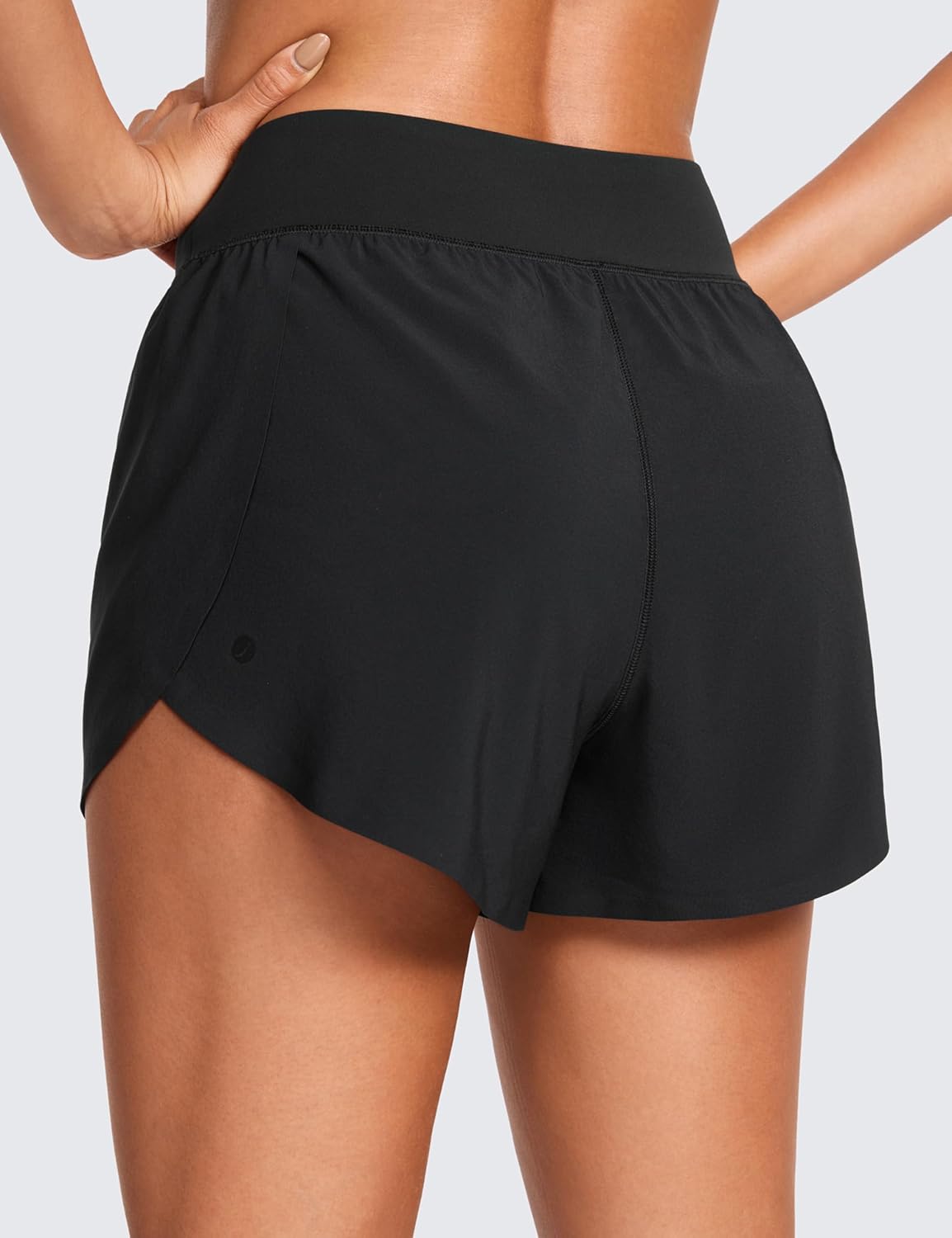
The 2-in-1 is the most engineered option: a complete inner compression short — its own waistband, leg coverage, and support structure — worn under a looser, typically 3–5 inch outer shell. The outer layer has all the visual and aerodynamic properties of a traditional running short; the inner layer handles all the support and coverage work.
The case for them: This is the only category where we have confirmed race-day validation from actual buyers. CRZ YOGA 2-in-1 shorts show up in multiple reviews from runners who wore them specifically for half marathons, with at least one reviewer noting that built-in grip strips on the inner waistband kept the compression layer stationary for the full 13.1 miles. That’s meaningful data — if a liner is going to fail, it fails hardest under race conditions. Owners of BALEAF 2-in-1 designs also consistently highlight deep pockets as a standout feature, with phone-sized cargo capacity that reviewers describe as genuinely functional rather than decorative.
The tradeoff: Warmth and cost. Two layers always run warmer than one, and the inner short adds construction complexity that raises the price floor. They also take longer to dry after washing, which matters if you’re doing daily double sessions.
Best for: Long runs, half marathon and marathon training, runners who want to carry their phone without an armband, and anyone who’s had bad liner experiences with other styles.
CRZ
$23.80
In stock on Amazon
Check price on AmazonBy the Numbers
| Style | Typical Coverage | Liner Type | Relative Warmth | Pocket Depth |
|---|---|---|---|---|
| Biker Short | Mid-thigh | Compression fabric = the short | High | Varies |
| Split Short | Mid-glute | Mesh brief panel | Low | Usually minimal |
| 2-in-1 | Mid-glute outer / mid-thigh inner | Full inner compression short | Medium | Often deep |
Outside Online’s 2025 “Best Running Shorts” roundup corroborates the warmth ranking, noting that biker-length compression fabric consistently scores highest in heat retention across tested categories, while split shorts score lowest — a useful reference point if you’re training in variable climates.
The Versatility Factor No One Talks About
A notable pattern across aggregated reviews for CRZ YOGA and THE GYM PEOPLE shorts: a meaningful number of owners specifically mention wearing these to non-athletic activities — errands, travel, casual socializing. This isn’t accidental. This audience is optimizing for gear that earns its closet space across multiple contexts, not just the 45 minutes of an actual run.
Per RunRepeat’s aggregated consumer review database for women’s running apparel (accessed May 2026), multi-context wearability consistently ranks among the top five purchase motivators in this category — above brand reputation and below fit, in that order. If you’re evaluating these shorts partly as everyday bottoms that happen to work for running, 2-in-1 designs and biker shorts both pass that test more cleanly than split shorts, which read as unambiguously athletic due to their silhouette.
Frequently Asked Questions
What is the difference between a biker short and a 2-in-1 running short? A biker short is a single-layer compression short — the compression fabric is the entire garment. A 2-in-1 short is two garments built together: a fitted compression inner short and a looser outer shell. Biker shorts provide more total leg coverage; 2-in-1s give you the look of a traditional running short with the support of compression underneath.
Do any of these liner styles prevent chafing on long runs? The full compression inner short in a 2-in-1 design does the most work against chafing, because it’s fitted, stays in place, and covers the inner thigh completely. Biker shorts solve the same problem through compression coverage. Mesh brief liners in split shorts are the most variable — fit and liner placement determine whether they help or make chafing worse on runs over an hour. Anti-chafe balm is still worth carrying as a backup on any run over 90 minutes regardless of liner style.
Which shorts have the best pockets for a phone? BALEAF owners consistently flag deep, functional pockets as the brand’s standout feature — reviewers describe carrying a full-size phone without the pocket bouncing or sagging mid-run. CRZ YOGA 2-in-1 owners also report functional phone storage. Split shorts, by design and weight philosophy, typically have the shallowest pockets or none at all.
Do these waistbands actually stay up during a run? IUGA biker short owners specifically cite the waistband as the reason they keep repurchasing — multiple reviewers on their third or fourth pair describe it as the most roll-resistant waistband they’ve found at the price point. CRZ YOGA 2-in-1 reviewers credit the grip strips on the inner waistband for keeping the liner stationary through a full half marathon. Waistband behavior varies significantly by brand and construction; if this has been a pain point for you, look specifically for reviews that address it by name rather than assuming all shorts perform equally.
Are these shorts appropriate to wear outside of the gym? Yes, for biker shorts and 2-in-1 styles — owners regularly report wearing both styles for errands, travel, and all-day casual use without any awkwardness. Split shorts read as more specifically athletic due to their silhouette and side notch, so they’re a harder sell outside a running context. If versatility matters to your buying decision, it’s worth factoring in — several buyers specifically chose a style over a competing option because it pulled double duty outside training.
If X, Then Y: The Decision Rule
If your priority is chafe prevention on long training runs, go 2-in-1 — specifically one with grip strips on the inner waistband.
If your priority is speed and airflow for race day or tempo work, go split short and add anti-chafe balm.
If your priority is all-day wearability and inner-thigh coverage, go biker short and look specifically for a waistband that buyers describe as non-rolling.
If you’re building out a training rotation for half marathon or marathon prep, the honest answer is you’ll eventually want at least two of these styles — a 2-in-1 or biker short for long run days and a split short for speed sessions. They solve different problems, and trying to find one short that does everything equally well usually means settling on compromises in all directions.