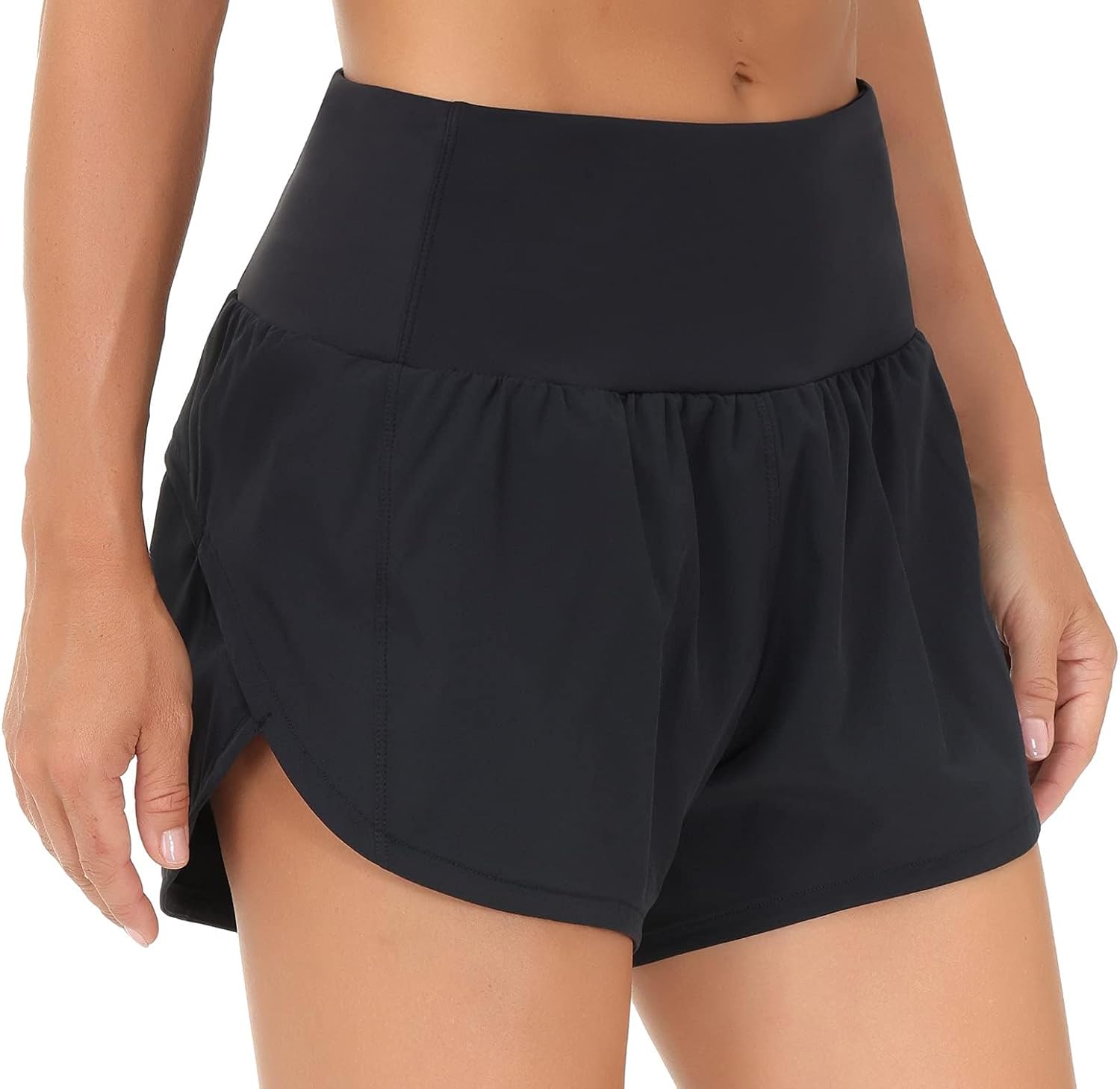
If you’ve ever gotten three miles into a run and spent the rest of it yanking your waistband back up, you already understand the core problem with women’s running shorts: the category is full of options that look great in photos and fail in motion. Running shorts — the lightweight bottoms designed specifically for the repetitive, high-movement demands of running — have three functional components that either work together or silently wreck your run: the waistband (the elastic or structured band at your hips that holds everything up), the liner (the built-in brief or compression layer inside), and the pockets (increasingly, a phone-sized pouch that needs to carry real weight without bouncing). None of these features announce themselves on a product page the way color options do. But across thousands of real-runner reviews, they’re exactly what separates a short you reach for every week from one that ends up at the back of your drawer. This guide breaks down what the review data actually shows — so you can make a smarter decision before you buy.
| EDITOR'S PICKCRZ YOGA Dolphin Athletic Short… | Mid-tierTHE GYM PEOPLE Womens High Wais… | Budget pickbaleaf Women's 8"/ 5"/ 3" Biker… | |
|---|---|---|---|
| Inseam | 3" | — | 8"/5"/3" |
| Liner | — | ✓ | — |
| Pockets | ✓ (zip) | ✓ (zip) | ✓ |
| Material | — | — | Spandex |
| Quick Dry | ✓ | ✓ | — |
| Price | $23.80 | $19.89 | $14.23 |
| See on Amazon → | See on Amazon → | See on Amazon → |
The Waistband Is the Whole Game
Here’s the pattern that emerges when you read enough women’s running short reviews: five-star ratings are almost never about a standout feature. They’re about the absence of a problem. And the problem that generates the most noise — by a significant margin — is a waistband that rolls, slides, folds, or migrates downward during a run.
A high-waist design (generally, a waistband that sits at or above the natural waist rather than at the hip) is marketed as the solution to this. And it often is — but only when the construction backs it up. Reviewers of the IUGA biker short consistently name the waistband stability as the reason they repurchased, phrasing it in ways that reveal how low the baseline expectation has become: “it actually stays up,” “I didn’t have to pull it up once.” That framing — praising a garment for doing the thing it’s supposed to do — tells you something important about the category norm.
What causes rolling? The main culprits are insufficient elastic width, a waistband that’s too narrow relative to the hip-to-waist differential, and fabric that lacks enough structure to resist the mechanical forces of your stride. Wide-waistband designs (typically 3 inches or more of bonded or double-layered elastic) distribute tension more evenly and resist the folding that causes roll-down. For runners with a pronounced hip-to-waist ratio, this engineering detail matters more than brand reputation.
A note on body proportion: A pattern that shows up consistently in short-torso reviews — and it’s worth naming directly — is that a high-waist short designed for an average torso can feel overwhelming or disproportionate on a shorter frame. If your torso is short (roughly, if you find standard shirt lengths tend to bunch at your hips), look for brands that offer a “high rise” rather than an “ultra high rise” option, or check whether the waistband height is listed in inches rather than just labeled “high waist.” The difference between a 9-inch and a 12-inch rise can be dramatic on a 5’2” frame.
Liner Construction: The Detail Nobody Explains on the Product Page
The liner — the brief-style layer sewn into the interior of a running short — is probably the most under-specified component in the category. Most product listings describe it with a single word, if at all. But the liner’s construction determines whether you can run commando (without separate underwear), whether it will ride up and bunch mid-run, and whether it provides enough compression to feel secure.
There are two fundamentally different liner philosophies in the women’s running short market:
The compression liner (common in biker-style shorts and some 2-in-1 designs) is form-fitting, made from a stretch fabric that grips lightly and moves with your body. Reviewers report that this style stays flat, doesn’t bunch, and handles sweat well. The tradeoff is that sizing matters more — too small and it cuts; too large and it loses its anchoring function.
The non-compression liner (common in budget-tier 2-in-1 shorts) is cut more like a loose brief sewn into the shell. The GYM PEOPLE 2-in-1 short surfaces this tension sharply: multiple reviewers note the liner is unexpectedly loose and non-compressive, catching buyers off guard who expected a snug fit based on the product description. One reviewer reported they planned to cut it out entirely and run in separate underwear instead. This is a preview of a short that doesn’t work as a standalone garment for most runners.
Split short liners — found in the classic running split short style, the kind with a 3–4 inch inseam and a wide leg opening — are typically minimal triangular briefs rather than full-coverage compression layers. They prioritize airflow and freedom of movement over security. For runners accustomed to longer inseams or more coverage, this can feel like not enough. For runners who run hot and want maximum ventilation, it’s exactly right.
By the Numbers
| Liner Type | Typical Inseam | Best For | Common Complaint |
|---|---|---|---|
| Compression (biker) | 4–7 inches | Long runs, chafe-prone runners | Sizing runs small |
| 2-in-1 brief | 3–5 inches | Everyday training | Loose fit, may require underwear |
| Split short brief | 2.5–3.5 inches | Hot weather, speed work | Minimal coverage |
The CRZ Yoga split short earns credibility in the race-day conversation specifically because reviewers validate it against real distance: multiple owners report using it through a half marathon with zero chafing, which is the practical stress test that matters for this category. That’s the kind of signal worth weighing.
Pockets: Weight, Position, and the Physics of Phone Bounce
Phone pockets in running shorts are a relatively recent addition to the category, and the engineering hasn’t fully caught up with the expectation. The problem is physics: a phone weighs 6–7 ounces. In a pocket positioned at the hip or thigh, every stride generates a small downward and lateral force. Multiply that by 10,000 steps in a 10-mile run and you understand why “my phone bounces constantly” is one of the most frequent complaints in the category.
The design variables that determine whether a phone pocket actually works:
Pocket placement: Rear pockets (at the small of the back) benefit from the waistband’s structural support and keep weight centered over your hips. Side hip pockets are convenient for access but create more lateral movement. Thigh pockets — popular in biker-style shorts — sit lower on the leg and often bounce more unless the pocket fabric is compression-grade and the phone fits snugly.
Pocket depth and fit: A pocket that’s the right size for your phone but no larger is a compression pocket — the phone has nowhere to move. An oversized pocket lets the phone shift, which generates bounce. Check whether a product listing specifies pocket dimensions, and if possible, match them to your phone’s actual size.
The waistband-pocket connection: The most effective phone pockets are integrated into the waistband structure itself rather than sewn as a separate panel onto the shorts fabric. This anchors the weight to the same structure that supports your hips, rather than hanging it off thinner shell material.
If you’ve tried everything and still experience bounce, the practical fix is to put your phone in a separate running belt or armband — but a well-designed short should solve this without accessories.
Sizing Nuance by Body Type: The Guidance That Prevents Returns
Aggregate reviewer data on the BMJL 2.5-inch short surfaces a sizing pattern that’s genuinely useful and rarely stated this directly: runners with a straighter leg and hip profile can size true to the label, but runners with larger glutes should size up. This isn’t a quality problem — it’s a pattern driven by the way the short’s inseam and seat are cut. Sizing down to fit the waist means the seat fabric is under tension, which pulls the liner up and can cause the leg openings to bind.
This logic applies broadly across the category:
- If your primary fit challenge is waist (it gaps or slides), consider size down or look for an adjustable drawstring waistband.
- If your primary fit challenge is seat or thighs (it binds or pulls), size up and use the waistband to compensate.
- For biker-style shorts specifically, compression liner sizing runs snug by design — don’t size up based on liner feel alone, or the waistband will be too large to stay up.
Runners with shorter torsos should pay close attention to rise height in inches rather than relying on the “high waist” label, which is applied inconsistently across brands.
Frequently Asked Questions
Why does my running shorts waistband keep rolling down and how do I fix it?
Rolling is almost always a structural problem, not a fit problem. The waistband fabric doesn’t have enough width or rigidity to resist the mechanical forces of your stride. Fixes: move to a wider waistband (3 inches or more), look for bonded or double-layer construction, or try sizing down one in the waistband while staying in your normal size in the leg — some brands allow this with separate size dimensions. If the short is already the right size, a body-tape strip along the inside of the waistband is a short-term race-day patch.
What is the difference between a split short liner and a 2-in-1 liner for running?
A split short liner is a small triangular or brief-style panel sewn inside a short with a wide, open leg slit — it provides minimal coverage and maximum airflow. A 2-in-1 liner is a full brief or compression short layer sewn inside a longer-inseam shell, designed to replace underwear entirely. Split short liners prioritize ventilation; 2-in-1 liners prioritize security and chafe prevention.
Can I wear biker shorts for running or are they only for cycling and yoga?
Yes, biker shorts work well for running — and for many runners, especially those prone to inner-thigh chafing, they’re the better option. The compression fabric moves with your stride, the longer inseam (typically 6–7 inches) prevents thigh friction, and reviewers of running-specific biker shorts like the IUGA consistently report them performing well through long training runs. The main adjustment is heat management: biker shorts are warmer than split shorts in hot weather.
How do I keep my phone from bouncing in running shorts pockets?
Start with pocket fit: your phone should fit snugly with minimal room to shift. If the pocket is oversized, a thin foam insert or folded bandana can fill the gap. Waistband-integrated back pockets tend to bounce less than side hip pockets because the weight sits over a more stable structure. If the short’s pocket design fundamentally doesn’t work for your phone size, a running waist belt is a more reliable fix than fighting the pocket design.
Should I size up or down in CRZ Yoga running shorts?
Based on aggregated reviewer feedback, CRZ Yoga runs close to true size for most body types, and buyers who size down for a snugger liner fit report the waistband staying secure. Runners with a larger seat relative to their waist should consider sizing up in the short and accepting slightly more waistband room — the alternative (sizing down for waist fit) creates seat tension that can cause the liner to ride up.
Are biker shorts or 2-in-1 shorts better for long runs over 10 miles?
For long distances, the consensus in reviewer data favors biker shorts with a compression liner over traditional 2-in-1 designs with a loose brief liner. Compression liners stay flat and don’t bunch over extended mileage, which matters more at mile 11 than mile 2. The CRZ Yoga split short is the exception worth noting: its liner construction is validated by half-marathon reviewers as genuinely chafe-free, making it competitive with biker shorts for longer efforts — with the tradeoff of less thigh coverage.